Futures
Topic: Advanced Cancer Diagnostics
Summary
The intersection of technology and healthcare is increasingly evident, with numerous innovations aimed at improving diagnosis, treatment, and patient experience. A significant focus is on artificial intelligence (AI) and its applications in medical imaging and diagnostics. UC Davis Health is co-leading a national study to evaluate AI’s effectiveness in interpreting mammograms, aiming to enhance breast cancer detection while reducing patient anxiety. Similarly, an AI model called SLIViT has been developed to analyze 3D medical images faster than human specialists, optimizing resource use in medical imaging.
The use of AI extends beyond imaging. A Canadian study highlights the success of an AI-based early warning system, Chartwatch, which has reduced unexpected patient deaths by monitoring health parameters and providing timely alerts. However, concerns arise regarding the misuse of AI in healthcare, as seen in cases where flawed systems have led to premature denial of care for patients.
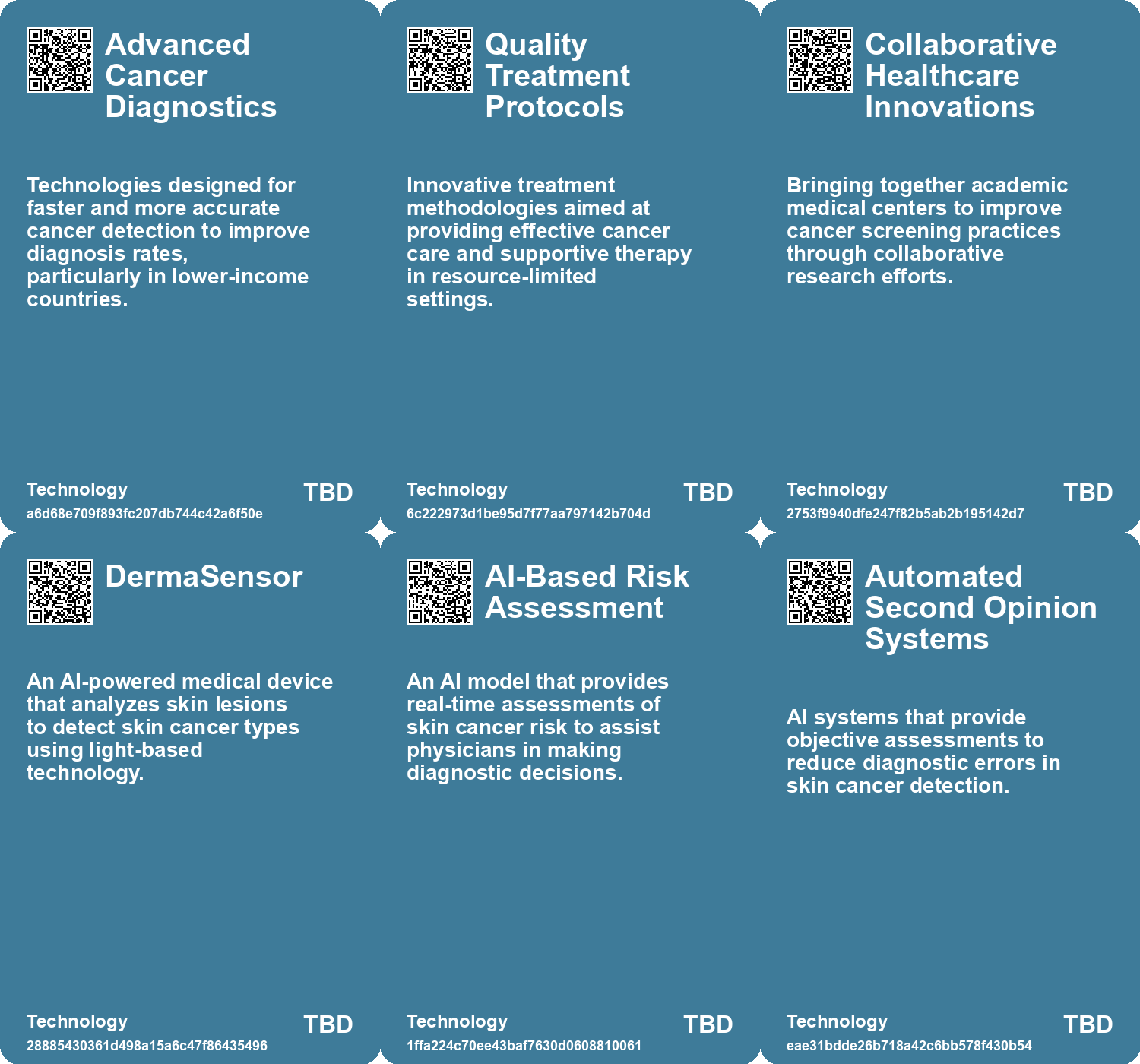
Innovative devices are also making strides in cancer detection. DermaSensor, an FDA-approved AI-powered device, analyzes skin lesions to provide real-time cancer risk assessments, potentially revolutionizing skin cancer screening. Researchers are exploring non-invasive methods for breast cancer screening through sweat analysis, showing promising results in identifying cancer biomarkers. Additionally, a study reveals that pigeons can accurately distinguish between cancerous and healthy breast tissue, suggesting new avenues for image-based diagnostic technologies.
The healthcare landscape is also witnessing advancements in treatment delivery. Heman Bekele, a young innovator, has created an affordable soap that delivers a cancer-fighting drug, significantly reducing treatment costs. Researchers at Karolinska Institutet have developed nanorobots that target cancer cells while sparing healthy ones, demonstrating a 70% reduction in tumor growth in mice.
Emerging technologies are reshaping surgical procedures. A groundbreaking ultrasound method allows for 3D printing of biocompatible structures inside the body without incisions, potentially transforming invasive surgeries into safer, minimally invasive options. Another technique, Deep Tissue In Vivo Sound Printing, enables the creation of complex structures in tissue using focused ultrasound, paving the way for advancements in regenerative medicine.
Access to healthcare remains a critical issue, particularly in lower-income regions. A new analysis predicts a dramatic rise in cancer cases and deaths worldwide, emphasizing the need for improved diagnosis and treatment in these areas. The Open Source Imaging Initiative aims to make MRI technology more accessible by developing open-source designs, addressing the high costs that limit availability in many regions.
The integration of technology in healthcare also raises ethical concerns, particularly regarding genetic discrimination. As genetic testing becomes more common, individuals may face challenges in accessing necessary care due to insurance practices based on DNA results. This highlights the need for stronger protections against discrimination in the healthcare system.
Overall, the ongoing advancements in technology, particularly AI and innovative medical devices, are poised to reshape the healthcare landscape, improving diagnosis, treatment, and access while also raising important ethical considerations.
Seeds
| name | description | change | 10-year | driving-force | |
|---|---|---|---|---|---|
| 0 | Affordable Cancer Treatment Solutions | Development of low-cost alternatives to expensive cancer treatments. | Transitioning from high-cost healthcare barriers to more affordable, accessible options. | More patients, especially in low-income regions, can afford cancer treatments. | Global disparities in healthcare access prompting innovation for affordability. |
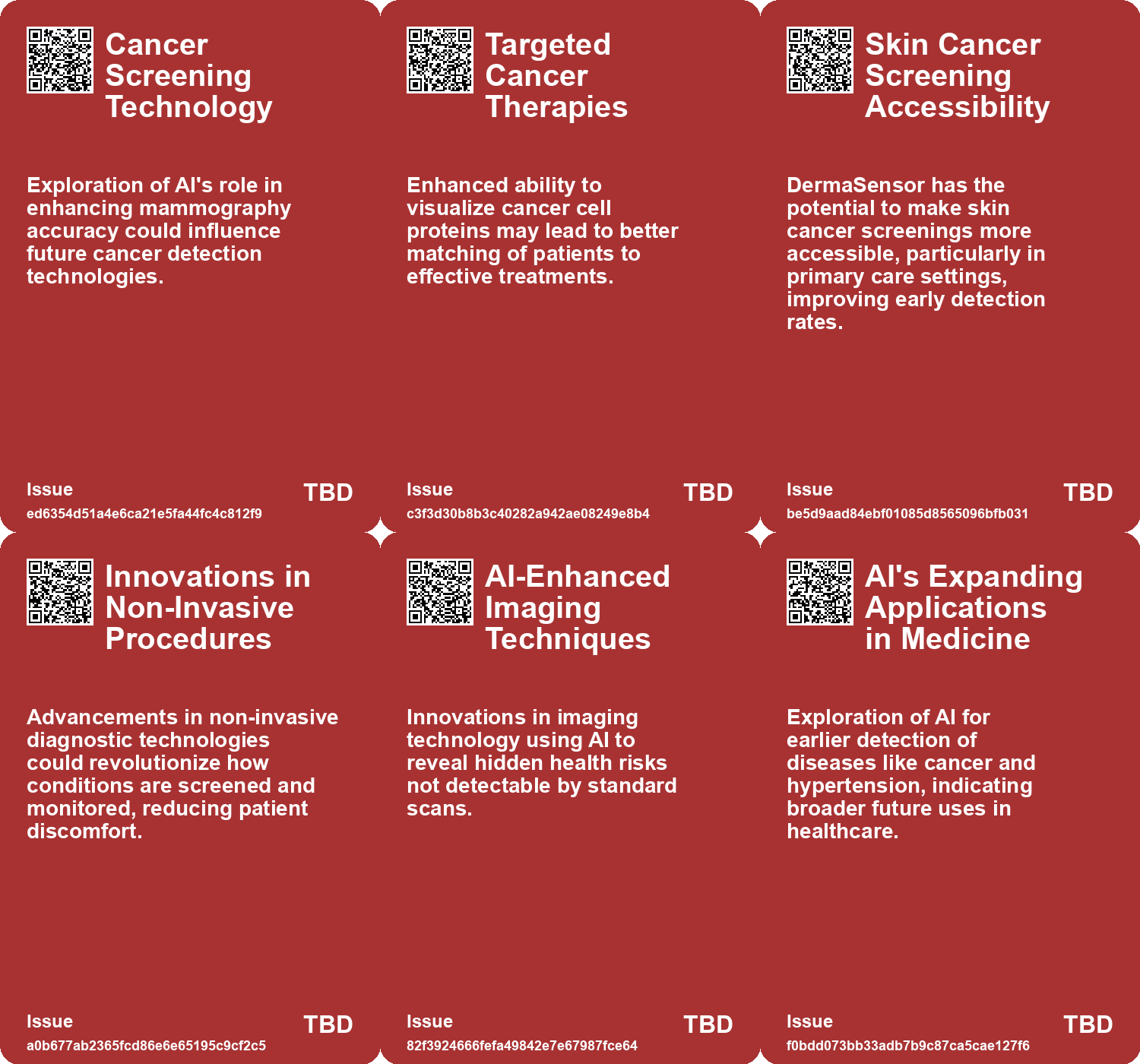
| 1 | AI in Mammogram Interpretation | AI aiding radiologists in reading mammograms for better accuracy. | Shifting from traditional mammogram interpretation to AI-assisted methods. | AI could lead to standardized and enhanced mammogram readings across healthcare settings. | The need for improved accuracy in breast cancer detection and reduced anxiety for patients. |
| 2 | AI-Powered Medical Devices | Emergence of AI-driven tools in healthcare for diagnostics and patient care. | Shift from traditional diagnostic methods to AI-assisted evaluations. | AI tools could become standard in routine medical assessments across various specialties. | Need for quicker, more accurate diagnostics to improve patient outcomes. |
| 3 | Integration of AI in Primary Care | AI tools enhancing capabilities of primary care physicians in diagnostics. | Increase in reliance on AI for diagnostic support in primary care settings. | Primary care may evolve to include integrated AI systems for real-time health assessments. | Need to improve diagnostic accuracy and efficiency in primary care environments. |
| 4 | Focus on Non-Invasive Procedures | Shift towards less invasive diagnostic techniques in medicine. | Move from invasive procedures like biopsies to non-invasive scanning methods. | Patients could experience a lower burden of invasive diagnostics with better early detection. | Patient preference for less invasive medical interventions. |
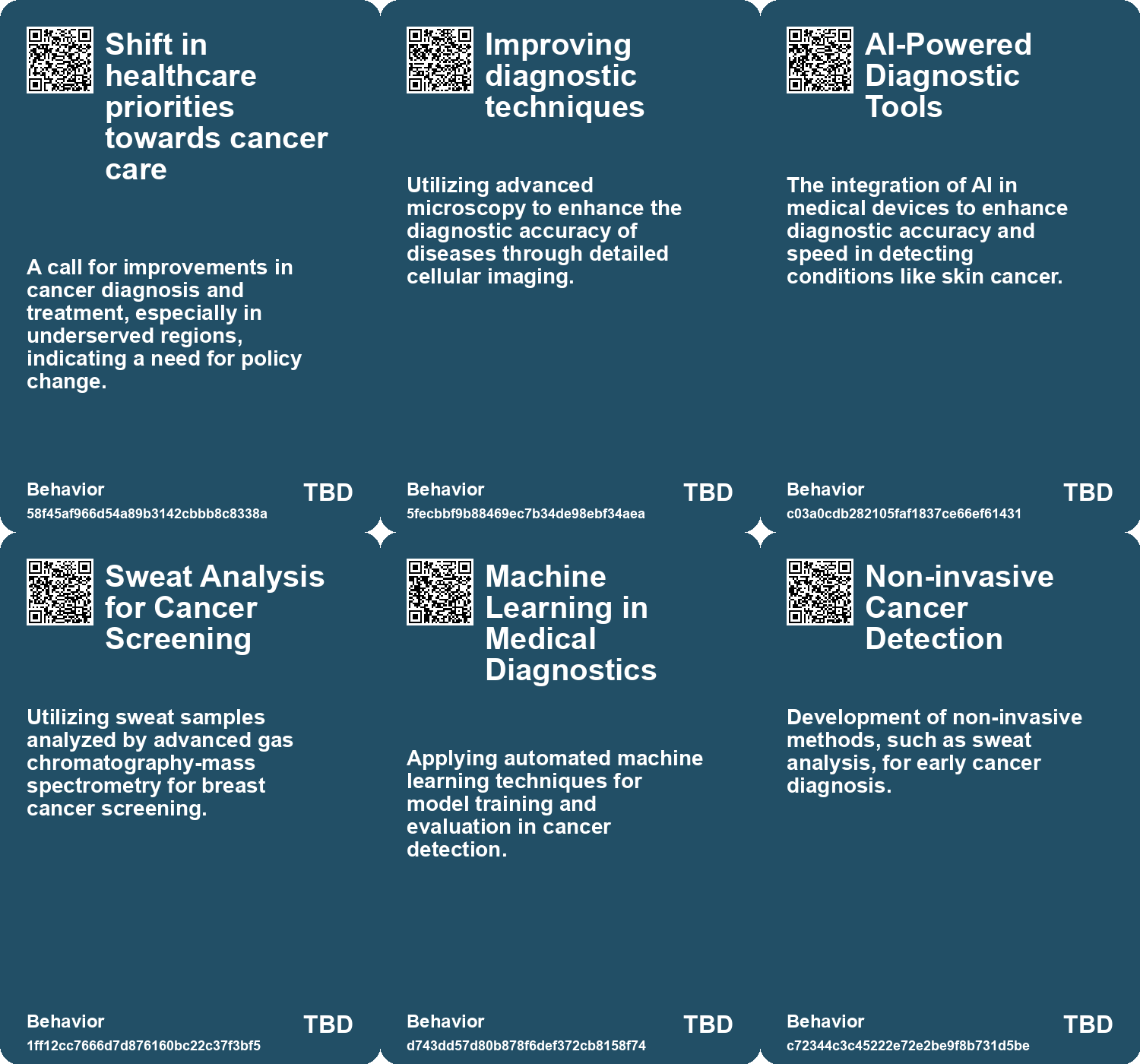
| 5 | Breast Cancer Detection via Sweat Analysis | Utilizing sweat samples for breast cancer screening through advanced gas chromatography-mass spectrometry. | Transitioning from traditional screening methods to non-invasive sweat analysis for early breast cancer detection. | In a decade, sweat analysis could become a routine, non-invasive method for early breast cancer diagnosis. | The growing demand for less invasive medical testing methods that reduce patient discomfort and increase accessibility. |
| 6 | Shift Towards Non-Invasive Cancer Screening | Increased interest in non-invasive methods for cancer detection, including sweat analysis. | Moving away from invasive procedures to more patient-friendly screening options. | By 2033, non-invasive screening could become standard practice, improving patient compliance and outcomes. | Patient preferences and advancements in technology are driving the shift towards non-invasive diagnostic methods. |
| 7 | Increased Research on Human Olfactory Detection | Exploring the potential of olfactory detection methods for identifying cancer and other diseases. | From limited research to expanded studies on the use of olfactory cues in medical diagnostics. | In ten years, olfactory detection could be a complementary approach in diagnosing various diseases, including cancers. | The unique capabilities of animals and technology in scent detection are being recognized for medical applications. |
| 8 | Increased Use of Technology in Medicine | The integration of advanced technology, like ultrasound, into medical practices is enhancing diagnostic capabilities. | From traditional methods to embracing advanced imaging technology in trauma care. | Healthcare will increasingly rely on advanced imaging technologies for faster, more accurate diagnoses. | The need for improved patient outcomes and efficiency in emergency care is pushing this technological shift. |
| 9 | Pigeons in Medical Diagnosis | Pigeons show potential in distinguishing cancerous tissue, matching human diagnostic abilities. | Shift from solely human-based diagnostics to including animal-assisted methods in pathology. | Pigeons could be integrated into diagnostic processes, improving speed and potentially reducing costs. | The need for innovative and cost-effective solutions in medical diagnostics. |
Concerns
| name | description | |
|---|---|---|
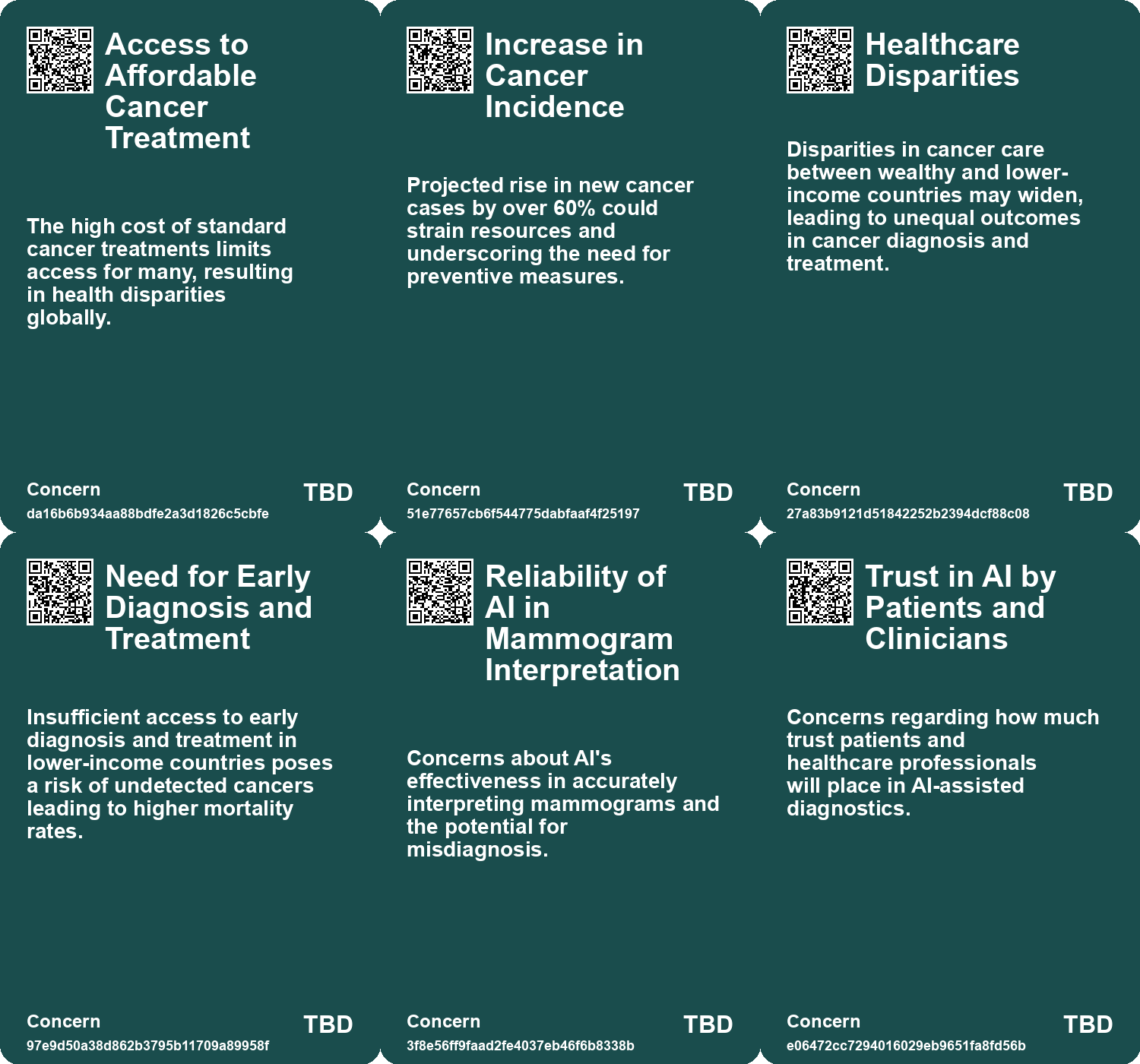
| 0 | Access to Affordable Cancer Treatment | The high cost of standard cancer treatments limits access for many, resulting in health disparities globally. |
| 1 | Increase in Cancer Incidence | Projected rise in new cancer cases by over 60% could strain resources and underscoring the need for preventive measures. |
| 2 | Healthcare Disparities | Disparities in cancer care between wealthy and lower-income countries may widen, leading to unequal outcomes in cancer diagnosis and treatment. |
| 3 | Need for Early Diagnosis and Treatment | Insufficient access to early diagnosis and treatment in lower-income countries poses a risk of undetected cancers leading to higher mortality rates. |
| 4 | Reliability of AI in Mammogram Interpretation | Concerns about AI’s effectiveness in accurately interpreting mammograms and the potential for misdiagnosis. |
| 5 | Trust in AI by Patients and Clinicians | Concerns regarding how much trust patients and healthcare professionals will place in AI-assisted diagnostics. |
| 6 | Reliability and Accuracy of AI Diagnostics | With AI algorithms analyzing health data, there is a concern about the accuracy and reliability of diagnoses made based on potentially erroneous data interpretations. |
| 7 | Reliability of Non-invasive Screening Methods | The performance of sweat analysis using gas chromatography-mass spectrometry for cancer detection may vary, impacting diagnosis accuracy. |
| 8 | Targeting Accuracy | Further research is required to enhance targeting of specific cancer types, raising concerns about efficacy and safety. |
| 9 | Reliability of Animal Diagnostic Methods | While promising, reliance on animal diagnostics may lead to misdiagnosis if not carefully validated against human standards. |
Cards
Concerns
Behaviors
Issue
Technology
Links
- Innovative Nanorobots Developed to Target and Kill Cancer Cells in Mice
- Innovative Scientific Breakthroughs in Health and Sustainability: From Mini-Brains to Microplastics
- Remote Echocardiograms Via 5G Network Show High Diagnostic Accuracy at ESC Congress 2024
- Teen Inventor Heman Bekele Develops Affordable Soap to Combat Skin Cancer
- Navigating Medical Choices and Risk Predictions in B. Pladek’s “Yellow”
- Revolutionary Ultrasound Method Promises Safer, Less Invasive Surgical Procedures
- AI Early Warning System Reduces Unexpected Hospital Deaths by 26% in Canadian Study
- The Evolution of Ultrasound Technology in Emergency Medicine: A Life-Saving Innovation
- Revolutionizing Skin Cancer Detection: The Impact of DermaSensor, an AI-Powered Medical Device
- Adrian Aoun’s Forward Health Launches CarePods to Transform Healthcare Accessibility
- Tottus Offers Affordable Mammograms for Breast Cancer Awareness Month
- Exploring Sweat Samples for Breast Cancer Screening Using Gas Chromatography-Mass Spectrometry
- Innovative 3D Printing Technique Revolutionizes In-Body Medical Applications
- Understanding Genetic Discrimination: The Legal Risks of Genetic Testing and Insurance Denials
- Trained Pigeons Match Human Accuracy in Breast Cancer Detection Study
- Imagining the Future of Healthcare: AI, Aging Well, and Urban Health
- UCLA’s SLIViT AI Model Transforms 3D Medical Image Analysis and Patient Outcomes
- AI System Developed for Determining Sex Using Panoramic Radiographs with High Accuracy
- AI System Aims to Predict Heart Attack Risks and Save Lives in the UK
- Open Source Imaging Initiative: Making MRI Technology Affordable and Accessible Globally
- Projected Surge in Global Cancer Cases and Deaths: Focus on Lower-Income Countries
- The Dangers of AI Misuse in the U.S. Healthcare System and Its Impact on Elderly Care
- The Consequences of Poor Software Design in Healthcare: A Specialist’s Perspective
- UC Davis Health Leads $16 Million Study on AI in Mammogram Interpretation for Breast Cancer Detection
- How African Farmers Are Leveraging Satellite Data to Enhance Crop Yields and Combat Climate Change
- Revolutionary Ultrasound Sticker by MIT Engineers Promises Continuous Imaging of Internal Organs