Futures
Topic: Biomimetic Designs
Summary
The intersection of technology and biology is increasingly shaping our understanding of design, health, and sustainability. A new approach called Cyborg Botany merges electronic functionalities with plant biology, allowing for responsive interactions between humans and plants. This innovative design exploration utilizes nanowires within plant structures to enable touch and motion sensing, showcasing the potential for plants to serve as interactive devices.
In the realm of regenerative design, there is a growing emphasis on ethical responsibility in our ecological actions. Reports highlight the need for thoughtful urban planning that restores planetary health while promoting social equity. This aligns with the call for alternative design approaches that prioritize sustainability and the socio-ecological impacts of our choices, moving beyond traditional human-centric models.
Synthetic biology continues to advance, with researchers exploring the storage of digital information in DNA and the creation of synthetic cells. However, concerns arise over the development of “mirror bacteria,” which could pose significant risks to ecosystems and human health. Experts advocate for caution in this field, emphasizing the need for safety measures to protect public trust.
Wearable technology is evolving, with innovations that integrate seamlessly into daily life. The potential for augmented reality and AI to enhance social interactions is significant, yet challenges remain in ensuring these technologies are user-friendly and unobtrusive. This trend reflects a broader movement towards merging human and machine capabilities.
In robotics, researchers are making strides with lifelike robotic skin and biohybrid robots that utilize living organisms for control. These advancements could revolutionize applications in healthcare and environmental monitoring, highlighting the potential for integrating biological systems into technological designs.
The development of new antibiotics from soil samples addresses the urgent need for effective treatments against resistant bacteria. This discovery underscores the importance of exploring natural resources for innovative medical solutions. Similarly, AI-driven approaches are being used to design novel antimicrobial proteins, showcasing the potential of technology to enhance healthcare.
Finally, breakthroughs in bioplastics and enzyme technology aim to tackle the global plastic waste crisis. Innovations in creating strong, recyclable plastics from bamboo cellulose and the development of plastic-eating enzymes represent promising steps towards sustainable manufacturing and waste management. These efforts reflect a growing recognition of the need for environmentally friendly solutions in various industries.
Seeds
| name | description | change | 10-year | driving-force | |
|---|---|---|---|---|---|
| 0 | Bamboo-derived bioplastics | Development of a plastic from bamboo that replicates properties of traditional plastics. | From reliance on oil-based plastics to bioplastics made from renewable materials like bamboo. | In 10 years, bamboo-derived plastics could become a mainstream alternative for certain applications. | Environmental concerns and desire for sustainable materials drive innovation in bioplastic production. |
| 1 | Bioengineering for Drug Discovery | Utilization of biological computers to enhance drug discovery and disease modeling. | From traditional drug testing methods to innovative, biologically driven approaches. | Potential reduction in animal testing and improved drug development timelines and success rates. | Need for more effective and ethical approaches in biomedical research and drug development. |
| 2 | Cyborg Botany | Integration of synthetic circuitry with plants for enhanced interaction capabilities. | Shifting from traditional electronic devices to biologically integrated systems for interaction. | In 10 years, plants may serve as multifunctional interactive devices in various environments. | The desire for sustainable, responsive technology that harmonizes with nature. |
| 3 | Build-a-Cell Community | A collaborative initiative aimed at developing synthetic living cells. | Emergence of community-focused synthetic biology research efforts. | Collaborative networks may accelerate advancements in synthetic biology and applications. | The collaborative approach enhances innovation and knowledge sharing in research. |
| 4 | Regulatory Framework for Synthetic Biology | Proposed regulations to guide synthetic biology research, especially mirror life. | Emerging frameworks for regulating high-risk synthetic biology research. | In a decade, specific guidelines may govern synthetic biology research to mitigate risks. | Increasing awareness of biosecurity and ethical implications drives regulatory developments. |
| 5 | Eco-friendly bioelectronics | Development of sustainable sensors printed on biological surfaces. | From conventional sensors with wasteful production to eco-friendly, low-waste bioelectronics. | Widespread use of imperceptible bioelectronics in daily life, enhancing health monitoring and interaction with environments. | Increasing demand for sustainable technologies and personalized health monitoring solutions. |
| 6 | Integration of AI and Biology | A shift towards combining biological principles with artificial intelligence development. | From top-down AI approaches to bottom-up, biologically-inspired models. | AI systems may evolve to exhibit more complex, life-like behaviors and adaptability. | The recognition that biological evolution offers insights into creating more effective AI systems. |
| 7 | Sustainable Agriculture Solutions | Biohybrid robots could improve agricultural practices. | Move towards more sustainable, responsive farming techniques. | Integration of biohybrid robots in agriculture could reduce chemical usage and environmental damage. | Growing concerns over climate change and the environmental impact of traditional farming. |
| 8 | Emerging Interdisciplinary Research | Collaboration between biology and engineering in robotics development. | Expansion of interdisciplinary approaches in robotics and automation. | More universities will integrate biology and engineering programs for innovative robotics solutions. | The need for multifaceted solutions to complex problems in robotics. |
| 9 | Bio-based Materials | Growing trend towards developing sustainable materials through biological processes. | Shift from fossil fuel-based materials to bio-derived alternatives. | In 10 years, bio-based materials may dominate several industries, reducing environmental impact. | Environmental sustainability and resource scarcity drive the need for alternative materials. |
Concerns
| name | description | |
|---|---|---|
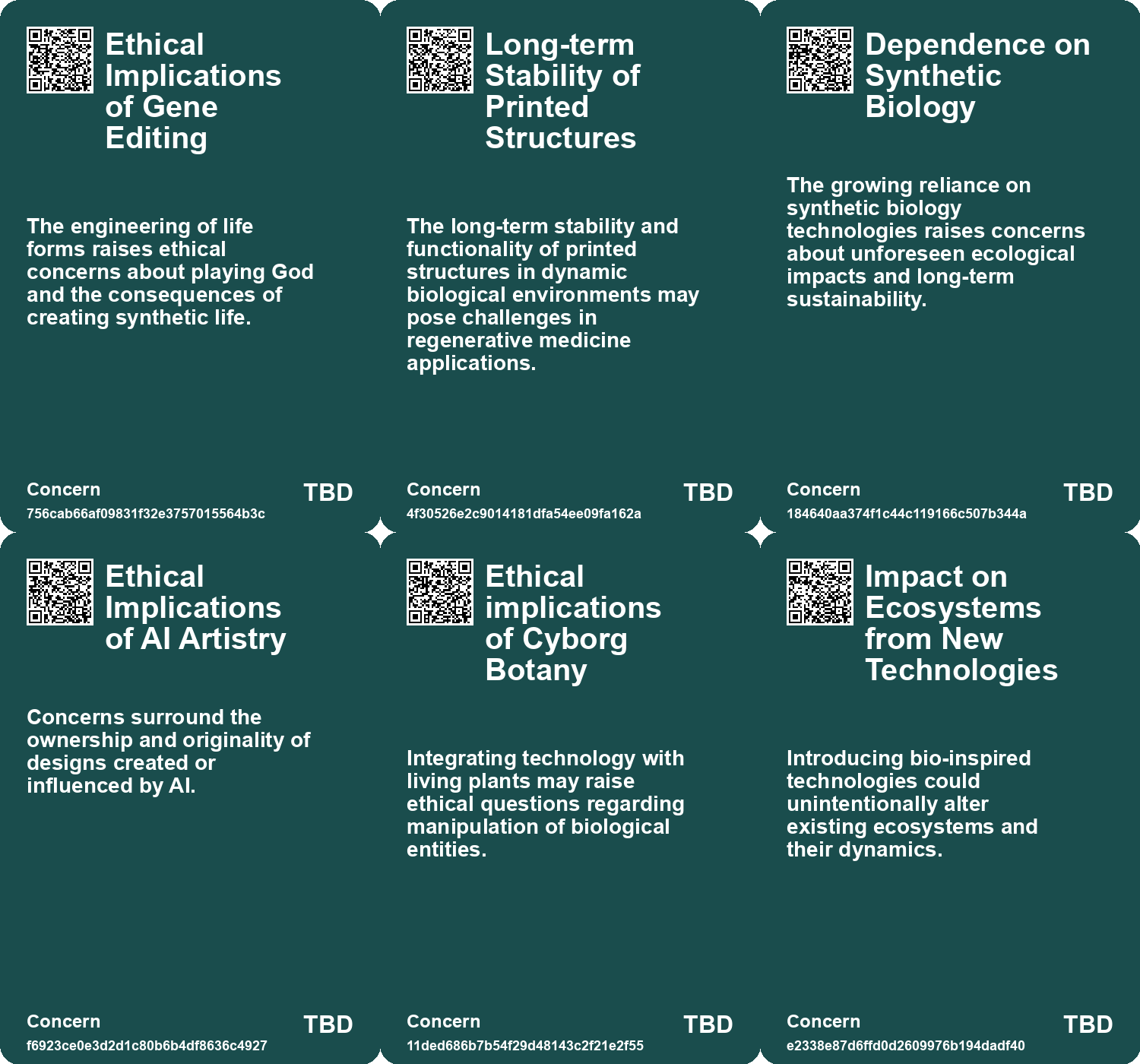
| 0 | Ethical Implications of Gene Editing | The engineering of life forms raises ethical concerns about playing God and the consequences of creating synthetic life. |
| 1 | Long-term Stability of Printed Structures | The long-term stability and functionality of printed structures in dynamic biological environments may pose challenges in regenerative medicine applications. |
| 2 | Risks of Overreliance on Biological Models | Reliance on biological computing for drug discovery may neglect the nuances of human biology and lead to inadequate treatments. |
| 3 | Dependence on Synthetic Biology | The growing reliance on synthetic biology technologies raises concerns about unforeseen ecological impacts and long-term sustainability. |
| 4 | Ethical implications of Cyborg Botany | Integrating technology with living plants may raise ethical questions regarding manipulation of biological entities. |
| 5 | Impact on Ecosystems from New Technologies | Introducing bio-inspired technologies could unintentionally alter existing ecosystems and their dynamics. |
| 6 | Biological Safety and Biosecurity | Synthetic proteins could pose risks if released unintentionally or used maliciously, leading to uncontrollable microbial behavior or bioweaponry. |
| 7 | Ethical Implications of AI in Biotech | The use of AI for protein design raises questions about the moral implications and regulatory oversight of biotechnological advancements. |
| 8 | Feasibility of More-than-Human Design | Questions about the practical application of more-than-human design could lead to incomplete integration of ecological considerations in practice. |
| 9 | Environmental Impact of Biohybrids | Deployment of biohybrid robots in natural ecosystems could disrupt local environments or introduce unforeseen consequences. |
Cards
Concerns
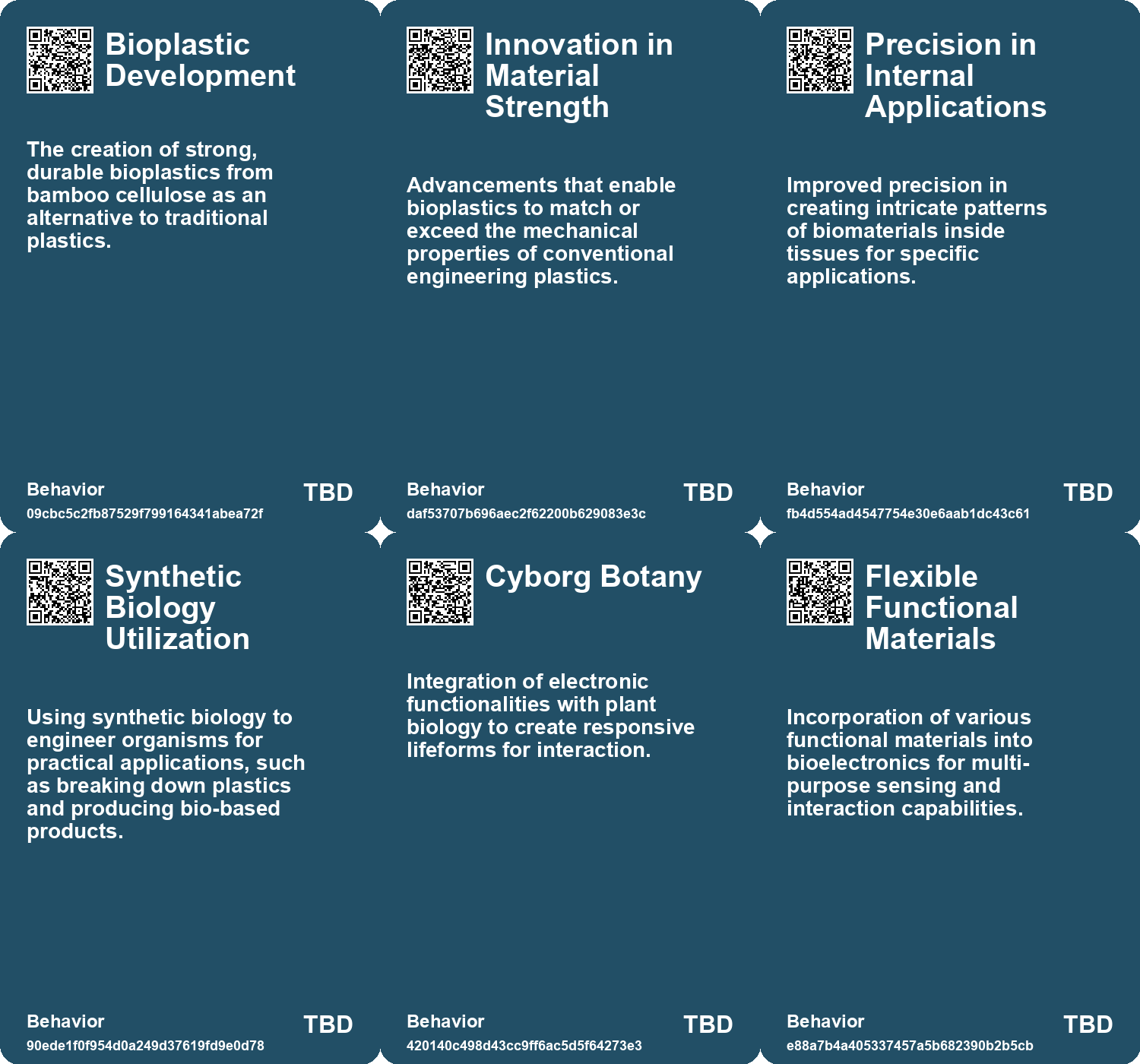
Behaviors
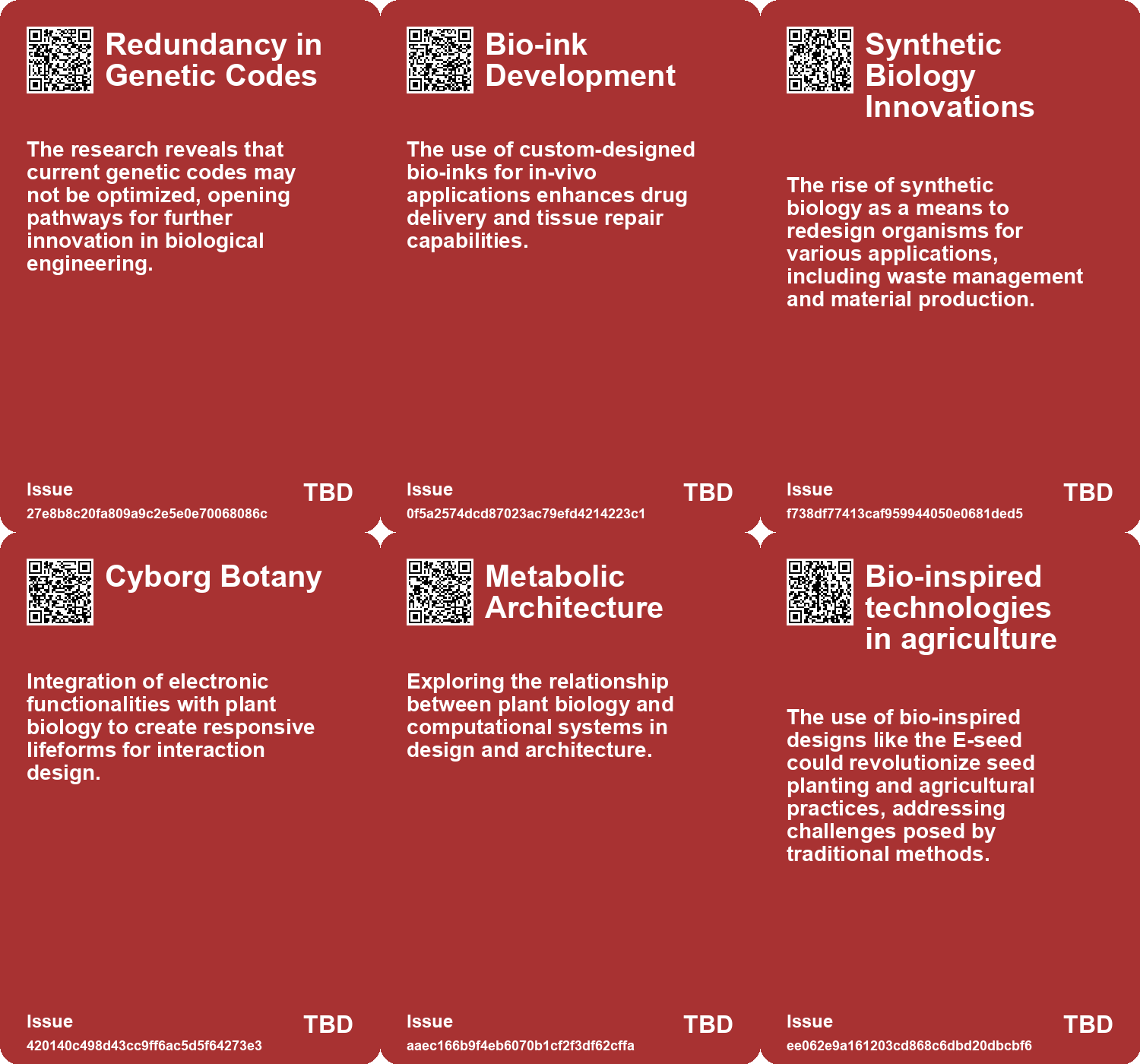
Issue
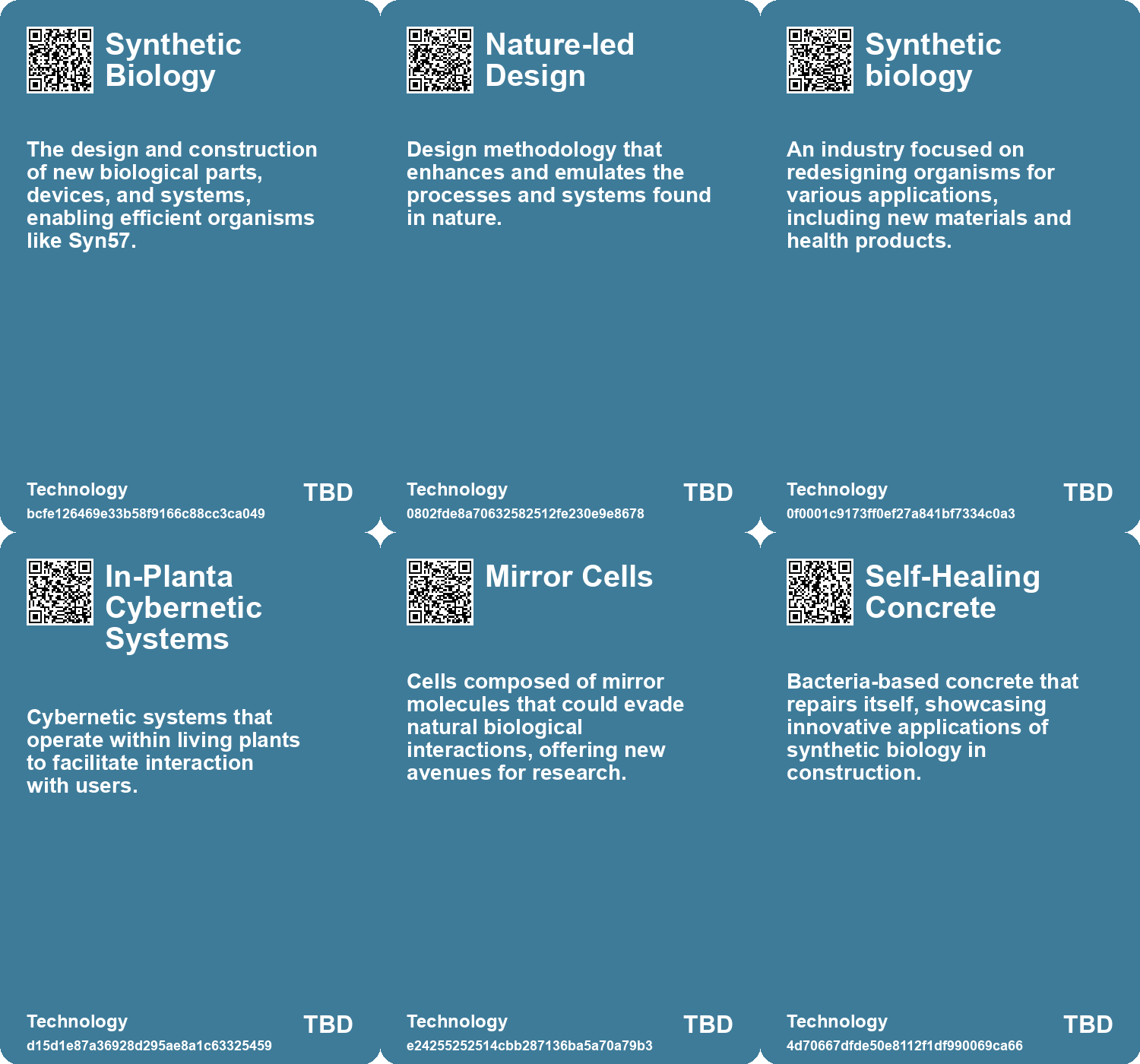
Technology
Links
- Innovative Scientific Breakthroughs in Health and Sustainability: From Mini-Brains to Microplastics
- Reimagining Design: Moving Beyond Human-Centricity for Sustainability
- Exploring Regenerative Design for Harmonious Coexistence with Nature
- Innovative E-seed Technology Enhances Aerial Seeding Inspired by Nature
- Innovative Eco-Friendly Sensors for Health Monitoring and Environmental Applications
- Scientists Create Syn57: A Revolutionary Strain of E. coli with Fewer Codons
- Exploring Cultural Heritage Through AI: Armenia’s Pavilion at Venice Biennale 2025
- Cognitive Mimetics and Human Digital Twins: Innovative Tools for AI Design
- Tom Ray’s Journey from Evolutionary Biology to Artificial Life Creation
- Breakthrough Discovery of New Antibiotic Molecule from Soil Samples
- The Future of Wearable Technology: Merging Cyborg Lifestyles with Daily Life
- AI-Driven Gene Editing: Introducing OpenCRISPR-1 for Enhanced Precision in Human Genomes
- Exploring Healing-Centric Design in the Age of Emerging Technologies
- Urgent Call to Ban Research on Potentially Dangerous Mirror Cells by Biologists
- Innovative 3D Printing Technique Revolutionizes In-Body Medical Applications
- Cyborg Botany: Merging Technology with Plant Sensing and Interaction
- AI-Powered Profluent Develops Bacteria-Killing Proteins with Novel Designs
- Monash University Develops DishBrain: A Semi-Biological Chip with Learning Capabilities
- The Risks and Ethical Considerations of Research on Mirror Bacteria in Synthetic Biology
- Innovative Bamboo-Derived Plastic: A Sustainable Alternative to Conventional Plastics
- Engineers Create Biohybrid Robot Controlled by Living Mushroom for Enhanced Mobility and Sensing
- Development of Lifelike Robotic Skin Using Living Human Cells: A New Technique
- Cortical Labs Launches World’s First Biological Computer: The CL1
- Exploring the Bio Revolution: Opportunities, Risks, and Future Implications
- DeepMind’s AI Uncovers 2.2 Million New Crystal Structures for Material Science
- Epoch Biodesign Secures $11 Million to Develop Plastic-Eating Enzymes for Waste Reduction