Futures
Topic: Culinary Brand Activations
Summary
The intersection of community engagement and consumer behavior is increasingly evident across various sectors. Brands like Oma’s Soep and Nike are pioneering initiatives that foster connections among different age groups and local communities. Oma’s Soep’s campaign in Amsterdam encourages conversations between generations, while Nike’s traditional canteen in Guangzhou serves as a gathering place for runners, emphasizing local culture and community involvement.
The evolution of marketing strategies reflects a shift towards inclusivity and broader audience engagement. Brands are moving away from age-based segmentation, as seen in amusement parks targeting older adults and toy companies designing products for ‘kidults.’ This trend highlights a recognition of diverse interests that transcend generational boundaries, allowing for more inclusive products and experiences.
Retail is undergoing a transformation as consumers seek offline experiences amid digital fatigue. Designers and retailers are prioritizing in-person interactions, with some opting for printed catalogs over online shops. This movement underscores a desire for deeper connections and meaningful experiences, as brands invest in creating curated environments that enhance the shopping journey.
The rise of cloud kitchens illustrates the complexities of modern dining. While they offer convenience, concerns about food quality and transparency have emerged. The case of Ramjani Khan, who operates multiple cloud kitchens in Bangalore, raises questions about regulation and consumer protection in this rapidly growing sector.
Social media platforms are also evolving, with users expressing frustration over the shift from authentic content to curated, professionalized posts. This has led to a rise in private sharing and niche communities, as users seek safer environments for self-expression. The decline of traditional platforms like Instagram signals a broader trend towards more genuine online interactions.
The concept of the “symbolic economy” is gaining traction, where consumption is tied to identity performance rather than traditional supply and demand. Brands are increasingly seen as moral authorities, shaping identities and communities in a world where trust in traditional institutions is waning. This shift emphasizes the importance of narratives and brand engagement over mere utility.
As the landscape of marketing continues to evolve, the integration of AI in decision-making processes is becoming crucial. The emergence of Agentic Experience (AX) highlights the need for brands to adapt to a machine-mediated world, where autonomous systems play a significant role in shaping consumer interactions.
Finally, the pressure on creative individuals to develop personal brands and engage in self-promotion reflects the changing dynamics of artistic integrity in a competitive market. The rise of social media has complicated the relationship between creativity and commercial viability, often prioritizing visibility over artistic expression. This trend raises important questions about the future of creativity in an increasingly commercialized landscape.
Seeds
| name | description | change | 10-year | driving-force | |
|---|---|---|---|---|---|
| 0 | Technological Integration in Consumption | Brands integrating technology to enhance consumer engagement and identity reinforcement. | Transition from simple product marketing to technologically enriched brand experiences. | The consumer experience will increasingly blend technology and branding to reinforce identity. | Advances in technology present opportunities for deeper consumer engagement and loyalty. |
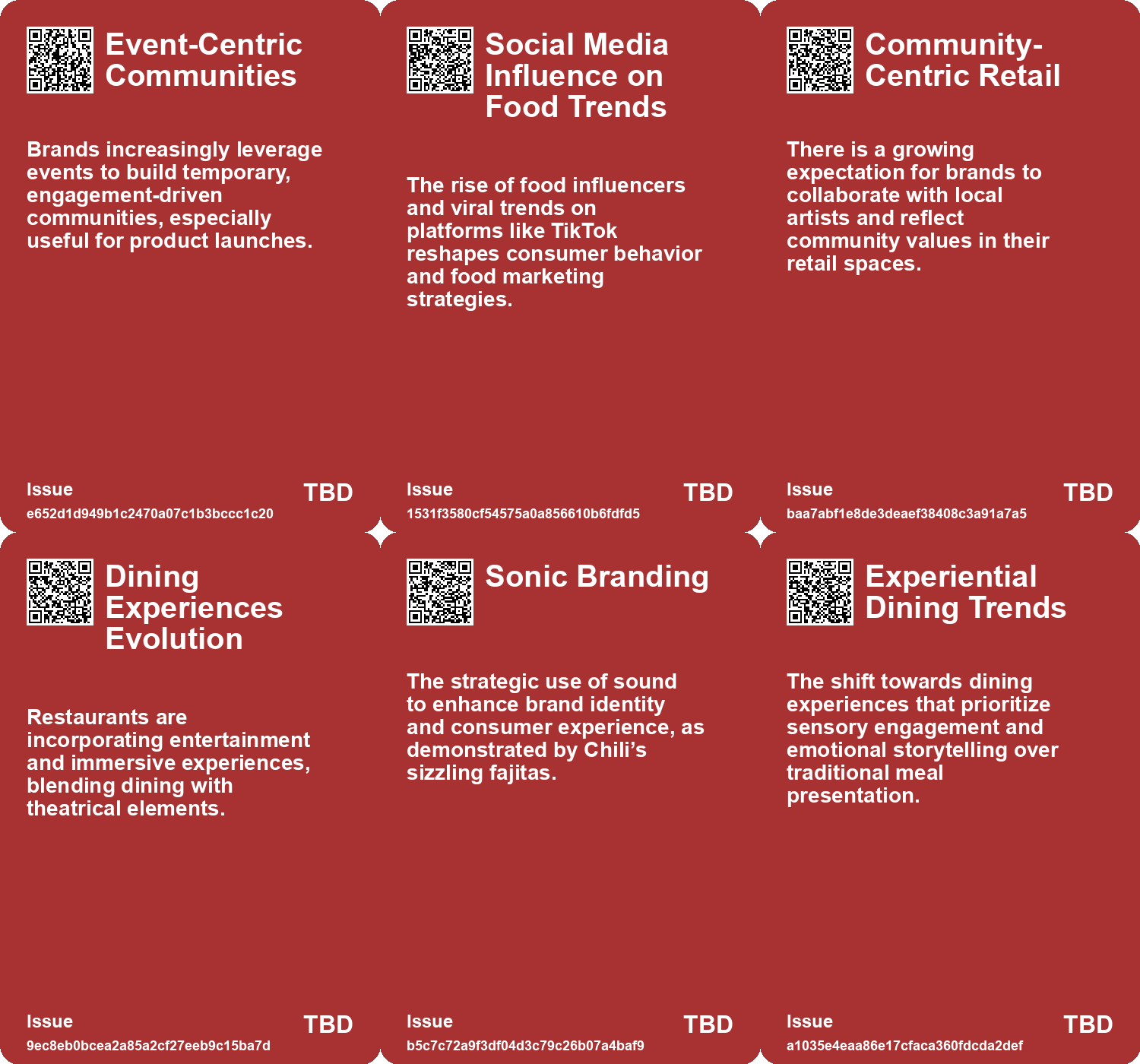
| 1 | Emphasis on Experiential Marketing | Brands are leveraging events to foster community connections and enhance customer relationships. | Moving from static marketing to dynamic, experience-driven brand interactions. | Events will become primary channels for fostering brand loyalty through community engagement. | The need for more immersive and interactive customer experiences in marketing. |
| 2 | Community Participation Over Management | Brands are encouraged to view social media as a platform for community participation. | A move from one-way communication to active community involvement in brand narratives. | Social media will evolve into community-driven platforms where brands co-create with consumers. | The desire for more authentic interactions and shared ownership in brand stories. |
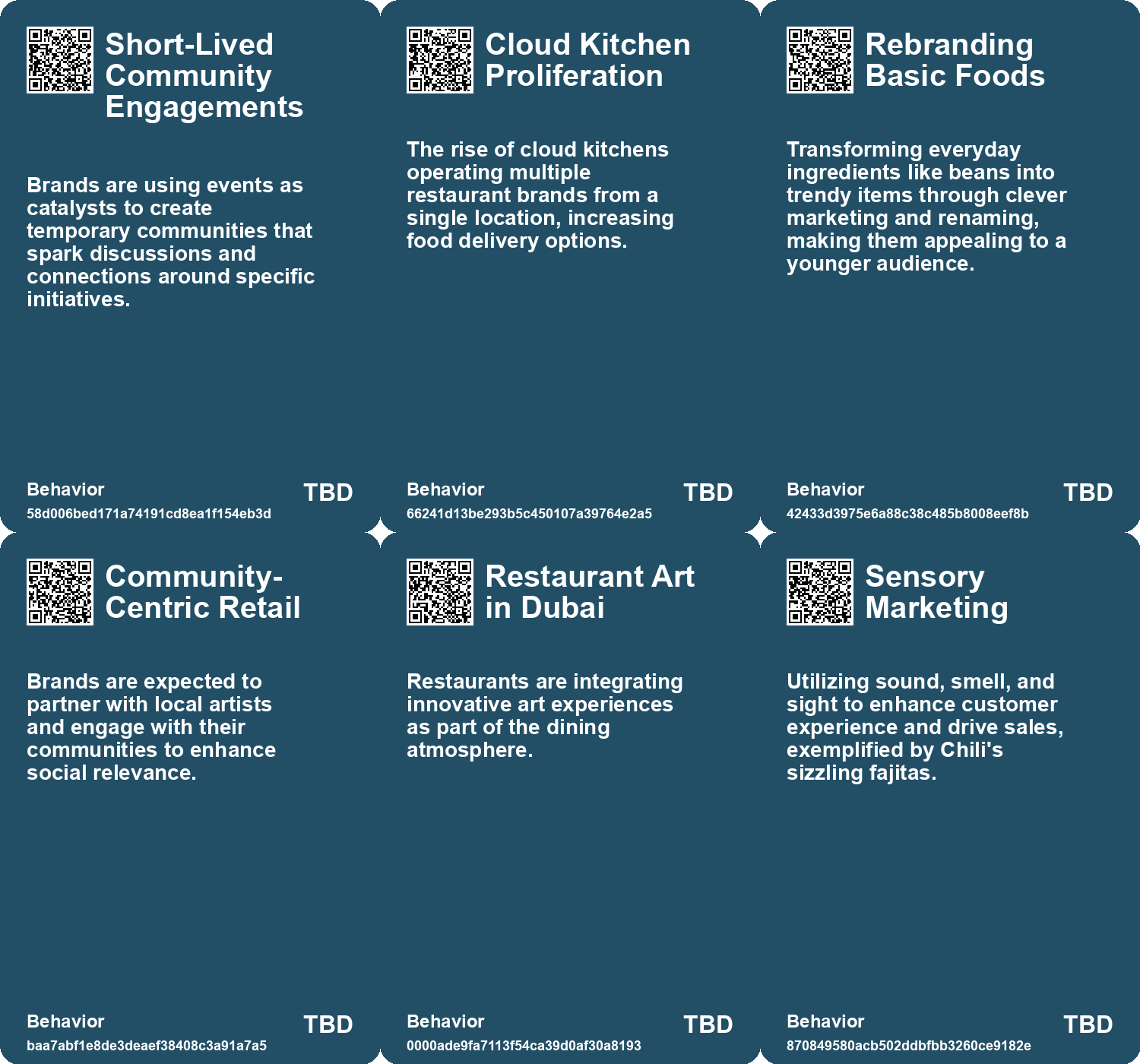
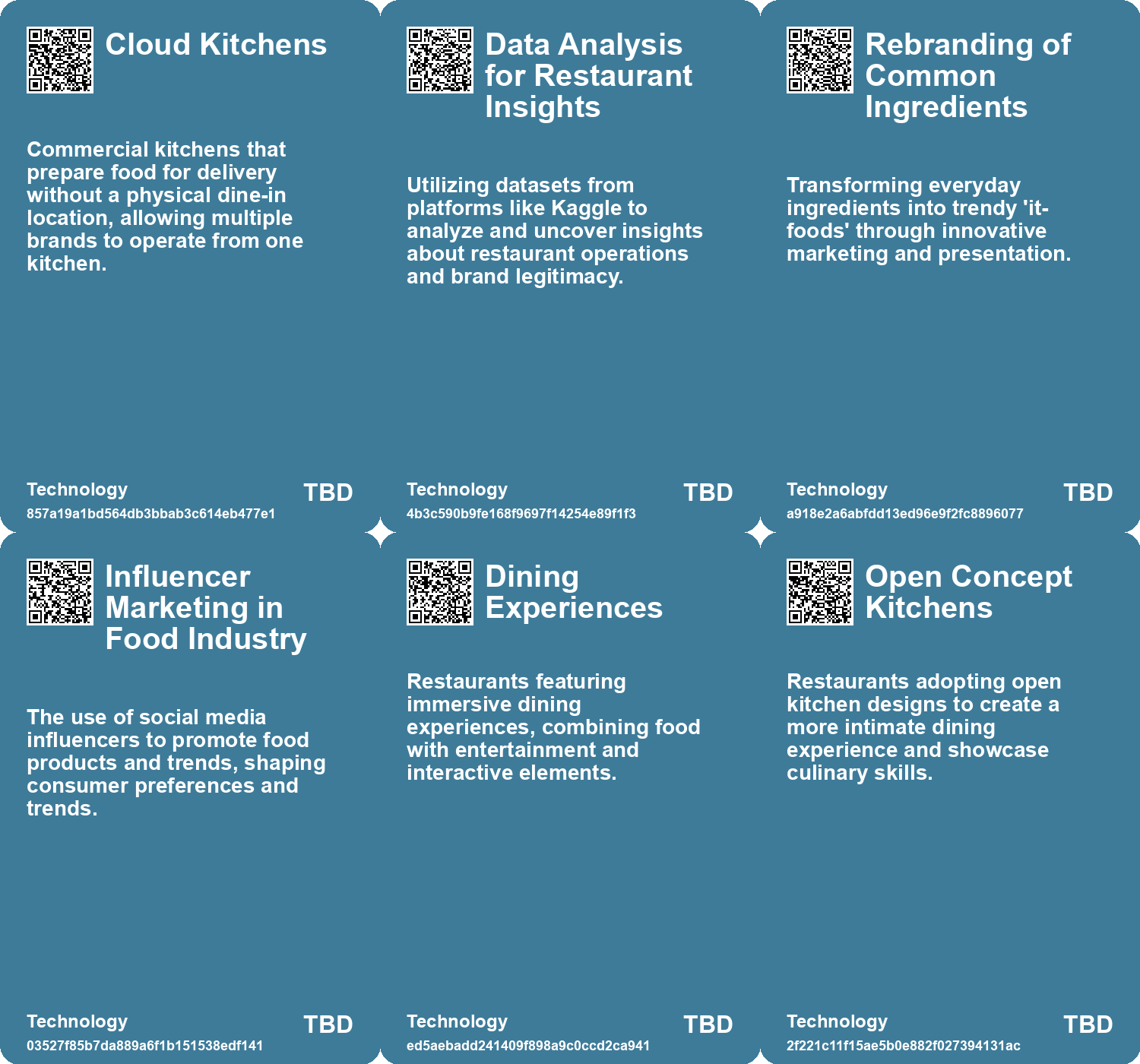
| 3 | Rise of Cloud Kitchens | Increase in cloud kitchens operating multiple brands from a single location. | Shift from traditional restaurants to cloud kitchens offering diverse brands from one kitchen. | In a decade, dining experiences may primarily involve ordering from varied cloud kitchens instead of traditional restaurants. | Growing demand for food delivery services and convenience during and post-pandemic. |
| 4 | Social Media Influencer Impact | Influencers drive food trends, making previously mundane items popular. | Transition from traditional food marketing to influencer-driven trends. | Influencers may dominate the food industry, dictating trends and consumption habits. | The power of social media platforms in shaping consumer preferences. |
| 5 | Community-Centric Retail Spaces | Brands are expected to collaborate with local artists and communities. | Transition from generic store designs to community-focused, unique retail experiences. | Retail spaces will be local art and culture hubs, reflecting community values and identity. | Gen Z’s increasing awareness of social responsibility and community involvement. |
| 6 | Dining Out Experience Transformation | Restaurants are enhancing dining with glamorous elements and open kitchens. | Shifting from traditional dining to immersive and entertaining dining experiences. | Dining will likely integrate more entertainment and immersive elements, redefining restaurant norms. | Consumer demand for unique and memorable dining experiences drives this trend. |
| 7 | Innovative Restaurant Experiences | Restaurants are integrating local art and innovative designs into dining experiences. | From standard dining environments to artistic and interactive culinary experiences. | Dining venues will likely become cultural spaces, merging food with artistic expression. | Consumer desire for holistic experiences that combine art and dining motivates this change. |
| 8 | Sonic Branding in Culinary Experience | Restaurants increasingly use sound to enhance dining experiences and trigger customer cravings. | Shift from visual and taste-focused marketing to incorporating sound as a key element in food experiences. | Sonic branding will become a standard practice in restaurants, influencing customer choices and dining experiences. | The desire for multisensory experiences in dining, enhancing emotional connections and customer loyalty. |
| 9 | Experiential Dining | Malls are emphasizing unique dining experiences to attract visitors. | Dining at malls is evolving from a secondary activity to a primary attraction. | Malls will become known for their diverse and engaging dining options, not just retail. | The desire for memorable experiences and social interactions around meals. |
Concerns
| name | description | |
|---|---|---|
| 0 | Consumer Skepticism | As brands engage in localization, there is a potential for consumer skepticism regarding the authenticity of their intentions and messages. |
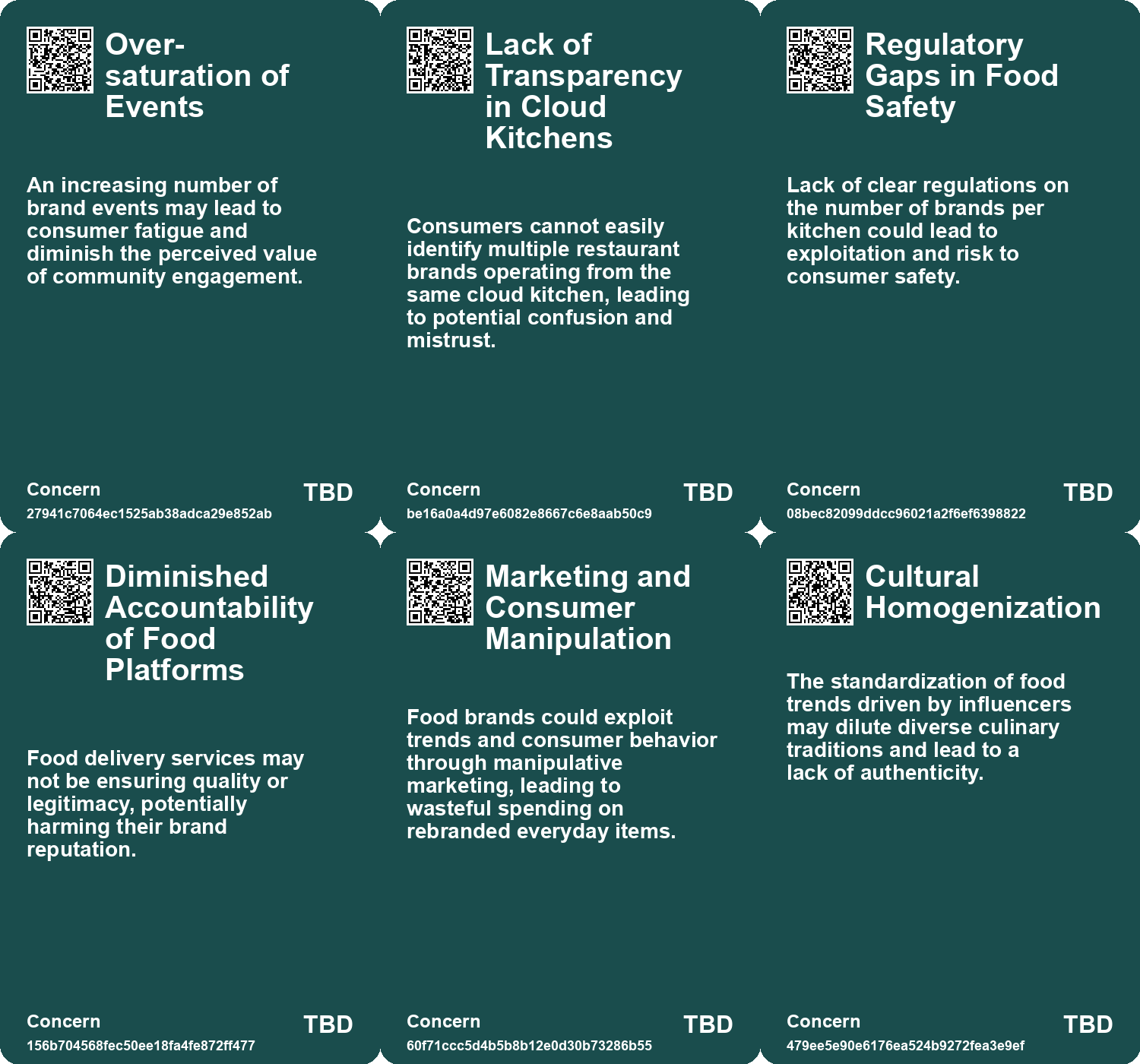
| 1 | Over-saturation of Events | An increasing number of brand events may lead to consumer fatigue and diminish the perceived value of community engagement. |
| 2 | Lack of Transparency in Cloud Kitchens | Consumers cannot easily identify multiple restaurant brands operating from the same cloud kitchen, leading to potential confusion and mistrust. |
| 3 | Regulatory Gaps in Food Safety | Lack of clear regulations on the number of brands per kitchen could lead to exploitation and risk to consumer safety. |
| 4 | Diminished Accountability of Food Platforms | Food delivery services may not be ensuring quality or legitimacy, potentially harming their brand reputation. |
| 5 | Marketing and Consumer Manipulation | Food brands could exploit trends and consumer behavior through manipulative marketing, leading to wasteful spending on rebranded everyday items. |
| 6 | Cultural Homogenization | The standardization of food trends driven by influencers may dilute diverse culinary traditions and lead to a lack of authenticity. |
| 7 | Micro-Influencing as a New Norm | Brands must adapt to the micro-influencing trend where consumers expect to engage as experts rather than passive recipients of marketing. |
| 8 | Cultural Appropriation in Culinary Trends | Revival of traditional cuisines may result in cultural appropriation if not authentic to the communities they represent. |
| 9 | Social Media Influence | The reliance on social media for brand interaction can create pressure on consumers to portray a lifestyle tied to fast food consumption. |
Cards
Concerns
Behaviors
Issue
Technology
Links
- The Revival of Malls: How Gen Z is Reshaping Shopping Destinations
- How Taco Bell Captures Gen Z: Innovative Marketing and Brand Loyalty
- Tasty Treat Launches AI Service to Help Bangladeshis Determine Their Birth Dates
- The Burden of Self-Promotion: Navigating Art in the Age of Personal Branding
- Oma’s Soep Launches Campaign to Combat Loneliness Through Grocery Store Interactions
- The Rise and Implications of Cozy Lit in the Age of Digital Distraction
- Blank Street: Revolutionizing Coffee with Zero-Emission Carts and Affordable Prices in NYC
- Understanding Gen Z Shopping Preferences: The Shift Towards Community and Experience in Retail
- The Fourth Era of Brand Communities: Integrating Events with Marketing Strategies
- Breaking Free from Self-Sabotage in Innovation: A Call for Reflection and Action
- Exploring the Future of B2B Marketing in an AI-Driven Landscape
- The Shift to Offline Engagement: Emphasizing Exclusivity in Marketing Strategy
- Exploring Trends and Innovations in Greek Agtech: A Newsletter Overview
- The Shift from Public Instagram to Private Community Sharing: A New Era in Social Media
- The Rise of the Symbolic Economy: Identity Through Consumption in a Globalized World
- Critique of Millennial Branding in Consumer Packaging and Its Impact
- The Sizzling Sound: How Chili’s Turned Fajitas into a Sensory Experience That Captivated the World
- The Evolving Role of Brand Publishing in Investment Banking and Media Landscape
- Exploring the Top Urban Trends for 2024: A Global Perspective from Time Out Editors
- The Rise of Pickles: A Reflection of Gen Z’s Food Trends and Social Dynamics
- The Gas Stove Trend: Influencer Marketing Masks Health Risks and Environmental Concerns
- Nike ouvre une cantine traditionnelle à Guangzhou pour les runners
- Future Trends Post-2024: Declining Democracies and Emerging Cultural Shifts
- Embracing Active Participation: The Future of Marketing Strategy Beyond Research
- Brands Embrace Age Diversity: Engaging Consumers Across Generations
- Exploring the Rise of Cloud Kitchens and the Issues of Transparency in Food Delivery Services
- The Shift from E-commerce to In-Person Retail Experiences in Fashion