Futures
Topic: Misinformation and Propaganda
Summary
The spread of misinformation continues to pose significant challenges to democracies worldwide. Studies reveal that a small group of individuals, termed “supersharers,” are responsible for the majority of fake news dissemination on social media platforms. These individuals, often older and politically aligned, amplify false narratives, particularly around sensitive topics like vaccines and elections. The influence of misinformation is not limited to the United States; in Bangladesh, pro-government outlets utilize AI tools to create deepfake videos that undermine opposition parties. This trend highlights the intersection of technology and disinformation, where cheap AI tools facilitate the spread of false information.
The rise of synthetic media, including deepfakes, raises concerns about the authenticity of online content. Reports indicate that by 2026, a significant portion of online content could be artificially generated, complicating the landscape of information consumption. This phenomenon is not confined to one region; it is a global issue, with countries like China targeting Taiwan with disinformation campaigns to sway public opinion ahead of elections. The use of AI in these operations underscores the need for vigilance against the manipulation of digital media.
Social media platforms are grappling with the consequences of their policies on content moderation. Recent changes by Meta, which relax restrictions on harmful speech, have sparked fears of increased hate speech and misinformation. Meanwhile, TikTok faces scrutiny for the misleading content that reaches young voters, prompting the platform to invest in countering misinformation. The European Commission has identified X (formerly Twitter) as a major source of disinformation, raising alarms about the platform’s compliance with regulations aimed at curbing false narratives.
The role of education in combating misinformation is gaining traction. Finland’s innovative approach to integrating digital literacy and fact-checking into school curricula serves as a model for other nations. By teaching students to critically evaluate information, Finland aims to foster a generation capable of navigating the complexities of the digital landscape. This educational strategy is essential, as misinformation thrives in environments where critical thinking is lacking.
The intersection of technology and extremism is becoming increasingly evident. Reports indicate that extremist groups in the U.S. are leveraging AI tools to spread hate and recruit members. The use of AI-generated content by these groups poses a significant threat, particularly as the political climate intensifies ahead of elections. Similarly, Iranian state-backed hackers have employed AI to conduct cyberattacks, demonstrating the evolving nature of influence operations.
The manipulation of public perception through disinformation tactics is a growing concern. The concept of “deep doubt” reflects a societal skepticism towards digital media, fueled by the prevalence of AI-generated content. This skepticism can lead to a dangerous cycle where genuine events are questioned, and misinformation proliferates. The term “liar’s dividend” encapsulates the challenges posed by deceptive technologies, as they can undermine trust in authentic evidence.
As the landscape of information continues to evolve, the need for robust strategies to combat misinformation becomes increasingly urgent. The collaboration between governments, tech companies, and educational institutions is essential in addressing the multifaceted challenges posed by disinformation. The ongoing battle against misinformation requires a concerted effort to promote transparency, critical thinking, and media literacy in an age where the lines between reality and fabrication are increasingly blurred.
Seeds
| name | description | change | 10-year | driving-force | |
|---|---|---|---|---|---|
| 0 | Global Disinformation Network | Disinformation is now managed by operators in various countries, not just localized sources. | Transition from concentrated misinformation to a distributed global network of misleading accounts. | In 10 years, combating misinformation may require international collaboration due to its global nature. | Incentives provided by social media companies to generate viral content regardless of authenticity. |
| 1 | Rise of Internet Grifters | An increase in internet scams and disinformation campaigns as political tools. | Shift from traditional politics to online manipulation and grifting. | Internet platforms will struggle to regain trust as grifters manipulate political discourse. | The overwhelming access to information online promoting distrust in conventional media. |
| 2 | Disinformation Concerns | Growing concerns about disinformation driven by deepfake technology. | Shift from traditional disinformation tactics to sophisticated AI-generated misinformation. | Information ecosystems will require new frameworks to combat and verify authenticity. | The ongoing battle against misinformation and the need for public awareness. |
| 3 | Rise of Supersharers | A small group of users, mainly older Republican women, dominate misinformation spread. | Shift from widespread misinformation to concentrated misinformation sharing by a few individuals. | Social media dynamics may shift, leading to stricter controls on influential users and content sharing. | The need to control misinformation and its impact on public health and democracy. |
| 4 | AI and Disinformation | The rise of artificial intelligence is anticipated to accelerate disinformation spread. | From traditional disinformation methods to advanced AI-driven techniques for spreading falsehoods. | AI may enable even more sophisticated and widespread disinformation campaigns. | Technological advancements in AI and social media are facilitating faster disinformation dissemination. |
| 5 | Exploitation of cognitive biases | Groups exploit cognitive biases in humans to spread misinformation. | Shift from democratic discourse to manipulation through psychological tactics. | Democracy may struggle as misinformation becomes more sophisticated and widely accepted. | Increasing sophistication of technology and understanding of human psychology. |
| 6 | Misinformation Overload | The rise of AI-generated content leads to an overwhelming volume of misinformation. | Shift from occasional misinformation to a pervasive ocean of false information. | Society may struggle to discern truth in a landscape dominated by AI-generated misinformation. | The ease of producing large volumes of content using AI tools encourages the spread of misinformation. |
| 7 | AI as a Tool for Propaganda | Nation-states leverage AI to create vast amounts of misleading content. | Shift from traditional misinformation to automated and sophisticated propaganda techniques. | The landscape of information warfare may evolve, increasing the sophistication of misinformation campaigns. | The strategic advantage gained from using AI to amplify propaganda efforts. |
| 8 | Adaptive Misinformation Tactics | Misinformation tactics evolving to bypass social media safeguards and avoid detection. | From blatant disinformation to more stealthy, blended approaches that mimic real users. | In a decade, misinformation may become indistinguishable from authentic content, making regulation difficult. | The ongoing arms race between misinformation creators and platform regulators. |
| 9 | Rise of State-Sponsored Misinformation | Increased visibility and activity of state-sponsored disinformation campaigns. | From sporadic and uncoordinated efforts to organized state-backed operations. | In 10 years, state-sponsored misinformation could become a norm in international relations. | The global geopolitical landscape and the role of information warfare in diplomacy. |
Concerns
| name | description | |
|---|---|---|
| 0 | Propagation of Misinformation | The prevalence of lies and absurdities online diminishes the media’s ability to effectively filter information, leading to widespread misinformation. |
| 1 | Erosion of Public Trust | Widespread disinformation campaigns may lead to a significant erosion of public trust in media and political institutions. |
| 2 | Geopolitical Manipulation | Disinformation is used strategically against foreign governments, like the U.S., reflecting broader geopolitical tensions. |
| 3 | Monetization of Disinformation | Disinformation has become a lucrative industry for government-affiliated groups, which could incentivize further misinformation efforts. |
| 4 | Psychological impact of disinformation | The spread of false information could undermine public morale and resistance during conflicts, leading to psychological warfare. |
| 5 | Demographic Targeting in Misinformation | The predominance of specific demographics among misinformation spreaders may exacerbate existing social and political divides. |
| 6 | Manipulation via Information Warfare | State-sponsored campaigns, particularly from Russia, aim to distort public opinion and undermine democracy through disinformation. |
| 7 | Exploitation of Cognitive Biases | Manipulation of psychological biases through disinformation can distort public perception and decision-making. |
| 8 | Proliferation of Misinformation | The distribution of false information may lead to increased prejudices and societal division. |
| 9 | Rise of Misinformation | The proliferation of fake news, conspiracy theories, and social media manipulation is eroding public trust and reality perception. |
Cards
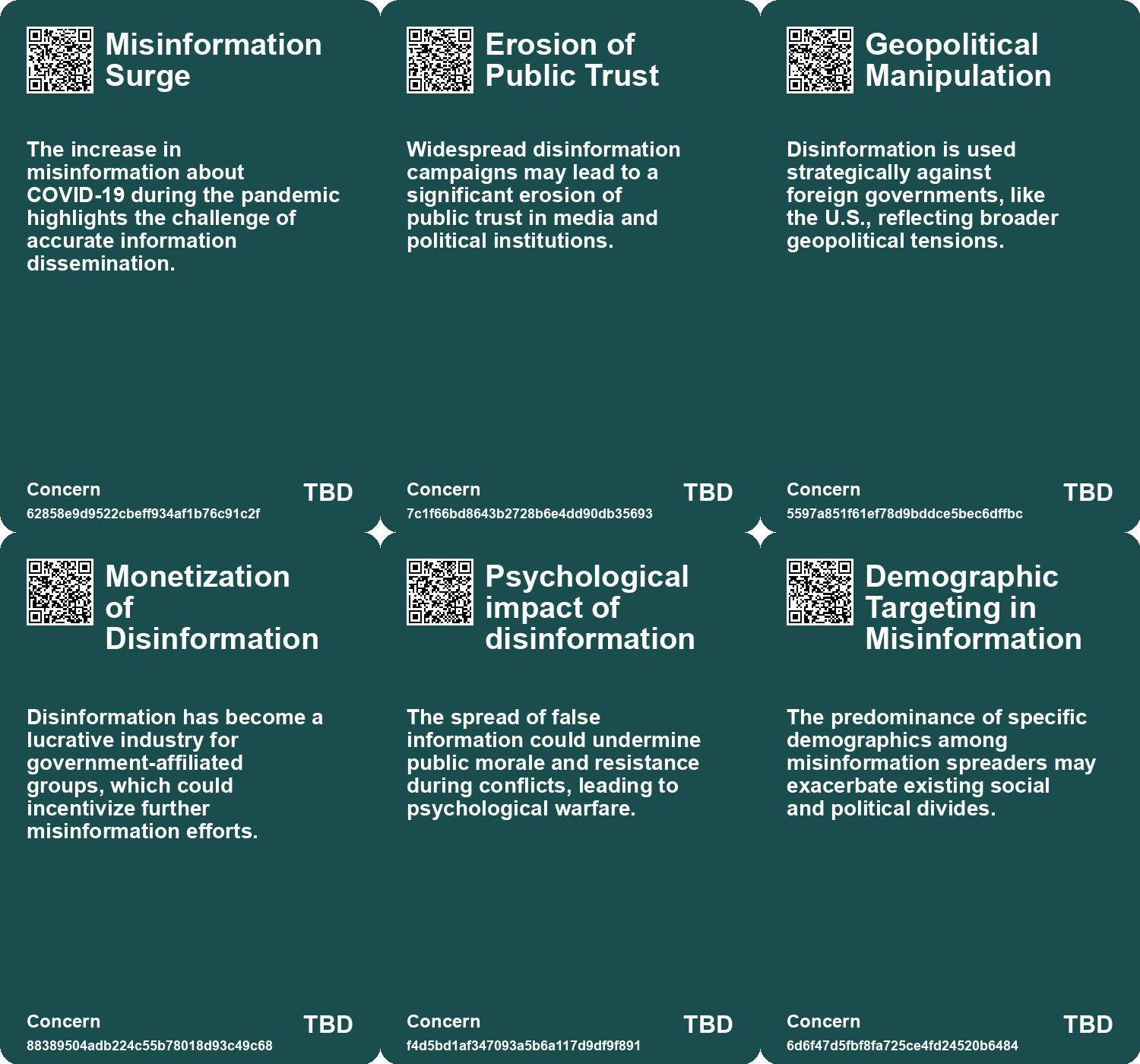
Concerns
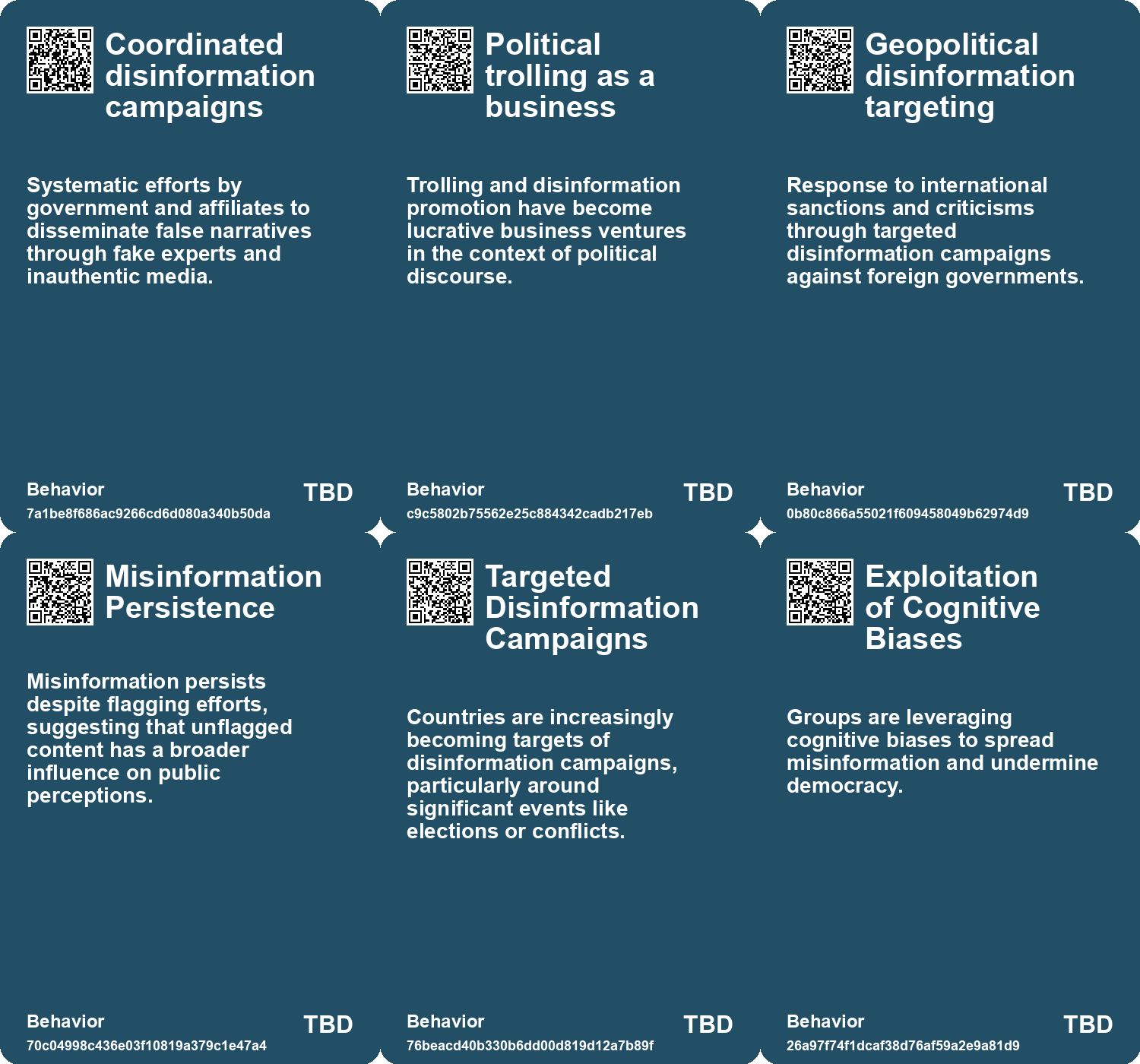
Behaviors
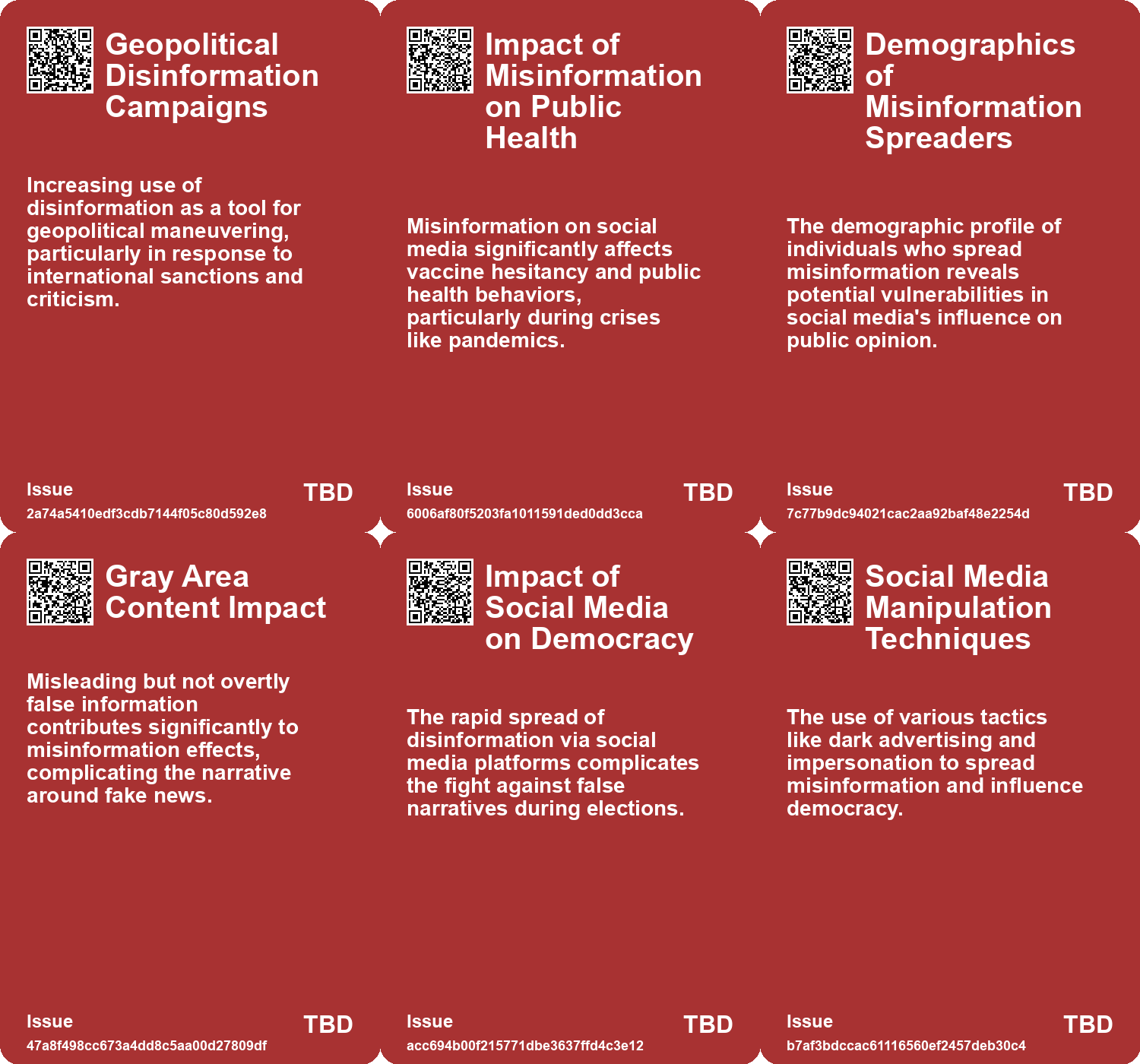
Issue
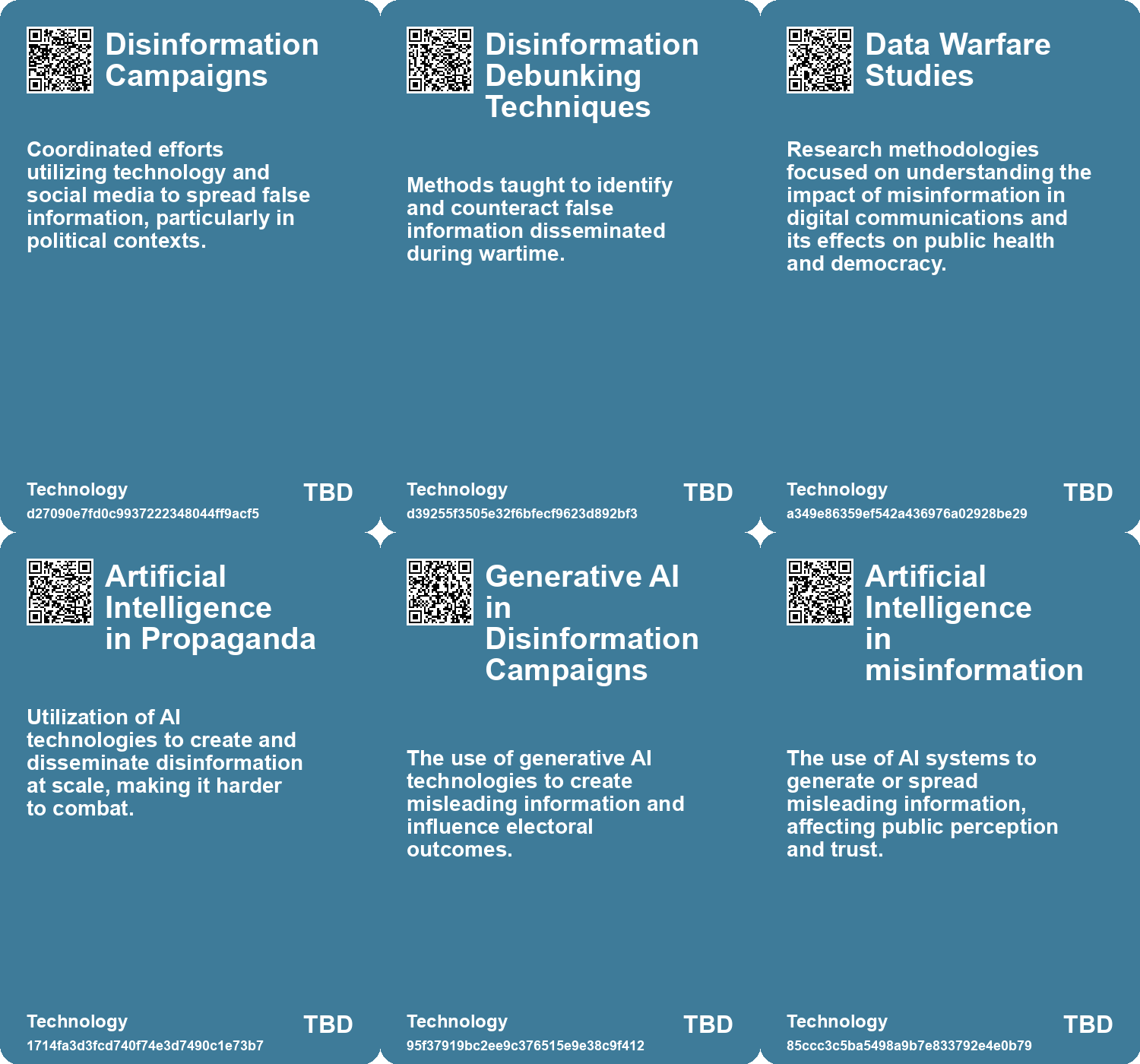
Technology
Links
- OpenAI Discovers Abuse of Its AI Tools in Global Disinformation Campaigns by State Actors
- Europol Report Warns of Rising AI-Generated Content and Disinformation Risks
- Zohran Mamdani’s Campaign: A Refreshing Approach to Politics Against Establishment Norms
- The Freedom Summit: A Rallying Cry for Anti-Vaccine Sentiments and Medical Distrust
- Iranian Hackers Use Deepfake Technology to Alter Media Narrative on Israel-Hamas Conflict
- Exploring the Rise of ‘Deep Doubt’ Amidst AI-Generated Media Content
- Finland’s Innovative Approach to Combating Fake News Through Education
- Exploring the Dangers of Manipulated Machine-Learning Models and Their Impacts on Society
- U.S. DOJ Disrupts Russian Disinformation Network Using AI-Powered Bot Farm
- Meta’s Content Moderation Overhaul: New Policies on Hate Speech and Fact-Checking
- Gaslighting: The Rise of a Term Reflecting Modern Deception and Misinformation
- Addressing Threats to Democracy: Strategies for Resilience Against Misinformation and Manipulation
- China’s Disinformation Campaign in Taiwan Ahead of Presidential Elections
- EU Study Reveals X (Twitter) Leads in Disinformation Among Social Media Platforms
- Emerging Trend: Foreign-Origin Accounts Spreading Disinformation on Social Media.
- The Dual-edged Sword of AI: Misinformation and Societal Threats in the Age of Advanced Language Models
- The Illusion of Online Activism in the Age of Trump: Embracing Real-World Action Instead
- Taiwan Prepares Citizens for Cyber Warfare Amid Chinese Threat
- FBI and International Partners Warn of Russian Disinformation Tool ‘Meliorator’
- Bangladesh’s Disinformation Campaign: The Role of AI and Deep Fakes in Elections
- The Impact of Supersharers on Vaccine Hesitancy and Fake News Spread on Social Media
- U.S. Intel: Russia Continues to Favor Trump in Election Influence Efforts
- MIT’s Controversial Ties to Israeli Military Funding and Student Protests
- Extremists in the US Exploit AI Tools for Hate Speech and Recruitment Efforts
- Understanding Polarization: Healing Our Relationship with Technology and Embracing Diverse Perspectives