Futures
Topic: Networking in New Locations
Summary
The evolution of connectivity is a prominent theme, highlighted by the transformative impact of Wi-Fi technology on how people communicate and access information. This shift is reshaping traditional telecom models and fostering grassroots movements for broader internet access. The rise of public networks reflects a growing demand for affordable connectivity, signaling a significant change in the landscape of communication.
The challenges of remote work and cybersecurity are also central to current discussions. Companies like Google have adapted to remote work by implementing zero trust networking, which enhances security in a decentralized environment. However, the cybersecurity job market faces uncertainty, with layoffs and budget cuts affecting the industry. Despite this, there remains a demand for skilled professionals, emphasizing the need for effective networking and data-driven job searches.
Urban spaces are undergoing a transformation as public libraries emerge as viable alternatives to coworking spaces like WeWork. Libraries are adapting to meet the needs of remote workers by offering amenities that foster community engagement. This shift reflects a broader trend of reimagining public spaces to enhance social interaction and collaboration.
The impact of climate change is increasingly evident, with communities facing challenges related to habitability and social trust. The importance of building strong community ties is underscored as a means to adapt to environmental changes. Initiatives aimed at reducing loneliness and fostering connections among different age groups highlight the role of local businesses and public spaces in addressing social isolation.
The phenomenon of geographic arbitrage is gaining traction as remote work opportunities expand. Individuals are exploring ways to earn income in stronger economies while living in lower-cost areas. This strategy requires careful budgeting and financial planning to maximize savings and achieve financial goals.
Cultural trends in urban environments reveal a growing uniformity in the aesthetics and experiences offered by coffee shops, bars, and restaurants. This raises questions about the impact of globalization on local culture and the potential loss of individuality in urban spaces. The rise of innovative coffee startups, like Blank Street, reflects a desire for affordable, high-quality options while also raising concerns about the implications for traditional vendors.
Finally, the importance of transparency and security in global communications is highlighted by Western powers’ efforts to secure submarine cables against potential threats from foreign entities. This initiative emphasizes the need for trusted partnerships and accountability in the management of critical infrastructure.
Seeds
| name | description | change | 10-year | driving-force | |
|---|---|---|---|---|---|
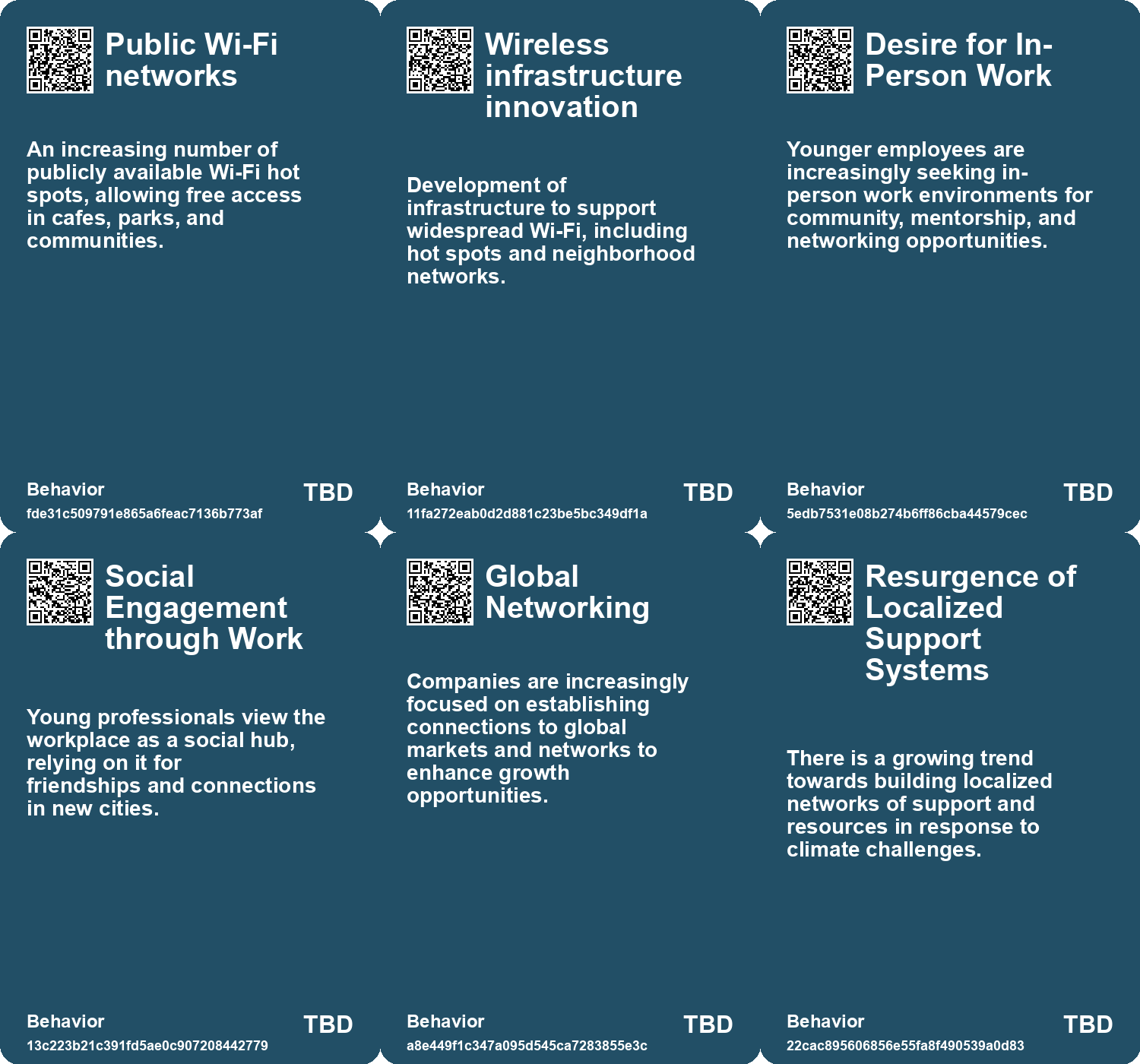
| 0 | Public Wi-Fi Growth | Rise of open-access hotspots in public spaces, promoting community internet access. | Moves from private, subscription-based access to free public Wi-Fi networks. | Widespread availability of free internet access in urban areas, empowering local communities. | Need for connectivity in public spaces to enhance social and economic activities. |
| 1 | Revival of Neighborhood Gatherings | Communities are increasingly reviving outdoor gatherings to foster connections among neighbors. | From isolated individuals to more connected neighbors through intentional gatherings. | Communities may prioritize social interaction and shared spaces as vital for social health. | Growing awareness of isolation and the need for community support networks. |
| 2 | Local-Global Business Linkages | Communities are adapting to connect local businesses with global markets. | Shift from isolated local economies to integrated global networks. | In ten years, local economies may thrive through global partnerships and collaborations. | The need for local businesses to compete on a global scale drives this change. |
| 3 | Footloose Companies Attraction | Communities are working to attract companies that can easily relocate. | Shift from stable, long-term businesses to attracting adaptable, global companies. | In ten years, communities may prioritize flexibility and responsiveness in business attraction strategies. | Global mobility of companies necessitates communities to enhance their appeal and support. |
| 4 | Demand for Higher Speed Internet | There is a growing demand for faster internet services in rural communities. | Shift from slow, unreliable internet options to high-speed fiber-optic connections. | Rural areas will likely have access to high-speed internet comparable to urban centers. | Increased digital reliance for work, education, and entertainment drives demand for faster services. |
| 5 | Flexibility in Job Hunting | Job hunting from afar has become normalized for many professionals. | From in-person job searches to remote applications and interviews. | An increase in remote job opportunities available to a wider audience. | The shift in workplace dynamics and increased remote job offerings. |
| 6 | Economic Revitalization through Public Spaces | Public spaces are being used to revitalize local economies and support businesses. | Shifting focus from solely recreational spaces to multifunctional spaces that drive economic activity. | Public spaces will become central to economic development strategies, fostering local entrepreneurship. | Recognition of the economic potential of well-designed public spaces spurs investment. |
| 7 | Expansion of Nightclubs and Entertainment Venues | New nightclubs are opening, revitalizing the nightlife scene with advanced technology and experiences. | Shifting from a dwindling nightlife scene to a resurgence of vibrant club culture. | Nightlife will likely feature diverse venues with immersive experiences, attracting varied audiences. | Demand for enhanced entertainment options and social experiences drives this trend. |
| 8 | Increased Security Concerns | Growing awareness of security and privacy risks in location-based services. | Shift from passive data collection to active measures for user opt-out options. | Stricter regulations and user controls over data collection practices by tech companies. | Rising public concern over privacy violations and data misuse. |
| 9 | Libraries as Coworking Spaces | Public libraries are evolving to serve as coworking hubs for remote workers and entrepreneurs. | Shift from traditional library use to multifunctional coworking spaces and community hubs. | In 10 years, libraries may be primary spots for remote work and community engagement. | The increasing need for social connection and dedicated workspaces in a digital age drives this change. |
Concerns
| name | description | |
|---|---|---|
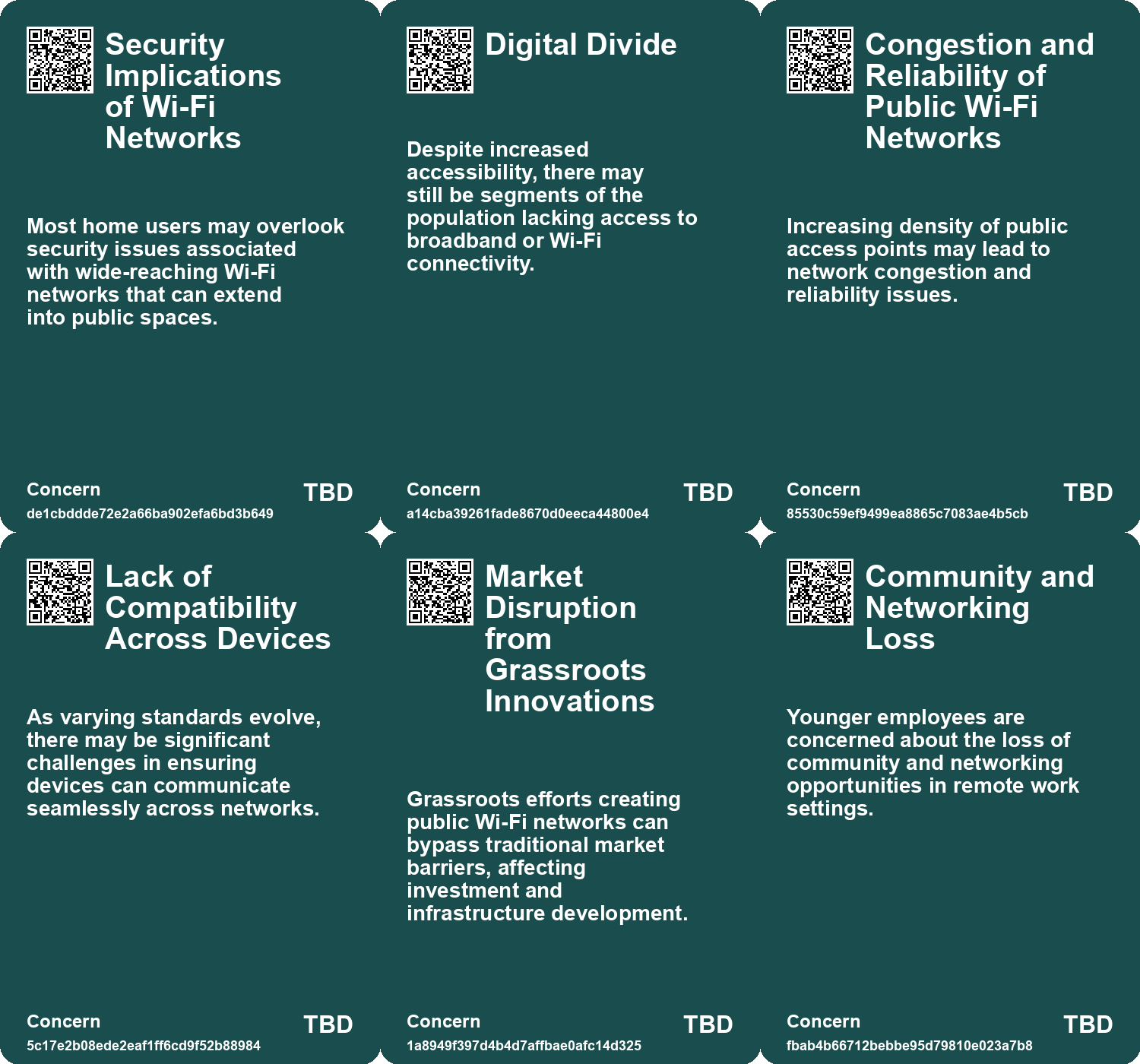
| 0 | Security Implications of Wi-Fi Networks | Most home users may overlook security issues associated with wide-reaching Wi-Fi networks that can extend into public spaces. |
| 1 | Digital Divide | Despite increased accessibility, there may still be segments of the population lacking access to broadband or Wi-Fi connectivity. |
| 2 | Congestion and Reliability of Public Wi-Fi Networks | Increasing density of public access points may lead to network congestion and reliability issues. |
| 3 | Lack of Compatibility Across Devices | As varying standards evolve, there may be significant challenges in ensuring devices can communicate seamlessly across networks. |
| 4 | Market Disruption from Grassroots Innovations | Grassroots efforts creating public Wi-Fi networks can bypass traditional market barriers, affecting investment and infrastructure development. |
| 5 | Community and Networking Loss | Younger employees are concerned about the loss of community and networking opportunities in remote work settings. |
| 6 | Dependence on Remote Work | The growth of geographic arbitrage increases reliance on remote work, which could be threatened by future policy changes or economic shifts. |
| 7 | Job Market Volatility | Changes in employment policies regarding remote work may lead to instability for those who relocate for geographic arbitrage. |
| 8 | Need for Innovative Community Engagement | Companies must explore innovative ways to foster community interactions and mitigate social isolation. |
| 9 | Resource Limitations in Smaller Libraries | Smaller libraries may struggle to accommodate an influx of remote workers due to limited space and resources. |
Cards
Concerns
Behaviors
Issue
Technology
Links
- Innovative Approaches to Public Space Transformation in U.S. Cities
- The Impact of Urban Design on Public Space Usage and Social Interaction
- U.S. and Allies Plan to Secure Submarine Cables, Excluding Chinese Technology
- US Military Personnel’s Movements Tracked, Raising National Security Concerns Over Data Brokers
- Challenges and Opportunities in the 2023 Cybersecurity Job Market: Insights and Strategies
- Public Libraries Transforming into Coworking Spaces: Opportunities and Challenges Ahead
- Exploring the Homogenization of Urban Culture Through Coffee Shops and Bars Across America
- Jared Mauch’s Success Story: Building a Rural FTTH ISP in Michigan
- The Decline of Third Places: Starbucks and the Erosion of Community Spaces
- Oma’s Soep Launches Campaign to Combat Loneliness Through Grocery Store Interactions
- The Revolutionary Impact of Wi-Fi Technology on Connectivity and Internet Access
- Connecting Local Economies to Global Markets: Insights from Rosabeth Moss Kanter’s Analysis
- Blank Street: Revolutionizing Coffee with Zero-Emission Carts and Affordable Prices in NYC
- Google’s Transition to Remote Work and the Evolution of Information Security
- Cybersecurity Incident Suspends Wifi at Multiple UK Train Stations Following Islamophobic Attack
- China’s Urbanization Strategy: Building Sustainable City Clusters for 100 Million Inhabitants
- China’s Urban Future: The Rise of City Clusters and Sustainable Development Strategies
- The Generational Divide in Work Preferences: Young Professionals Favor In-Office Jobs
- Exploring the Top Urban Trends for 2024: A Global Perspective from Time Out Editors
- Apple and Starlink Respond to Geo-Location Privacy Concerns Raised by Research
- Navigating Climate Change: The Need for Community Resilience and Social Trust
- Rediscovering the Internet: Exploring Alternative Paths and Local Connections in Digital Spaces
- Transforming a San Francisco Neighborhood Through Simple Community Engagement Traditions
- Navigating the Climate Crisis: The Importance of Community and Social Trust in Adapting to Change
- Rethinking Public Space Design: Beyond Moveable Chairs
- Understanding Geographic Arbitrage: A Guide to Smart Relocation and Savings