Futures
Topic: Neurodivergent Expression & Inclusion
Summary
The intersection of neurodiversity and technology is increasingly recognized as a vital area for innovation and inclusion. Organizations are beginning to understand that neurodivergent individuals can bring unique cognitive strategies that enhance team performance, particularly in fields like artificial intelligence. Advocates like Roberto Moreno emphasize the importance of mentorship and support systems for neurodivergent engineers, highlighting the need for organizations to address discrimination and foster inclusive environments.
Designing spaces that accommodate individuals with autism is another critical theme. The Autism ASPECTSS Design Index outlines essential criteria for creating environments that cater to the sensory needs of autistic individuals. This approach extends to the broader concept of universal design, which seeks to include users with invisible disabilities. The emphasis on accessibility reflects a growing awareness of the social stigma faced by those with conditions that are not immediately visible.
The emergence of new research on autism subtypes reveals the complexity of neurodevelopmental conditions. By identifying distinct genetic variants and traits, researchers are paving the way for more personalized treatment approaches. This understanding is crucial for medical professionals, who often lack training in recognizing the overlap between conditions like autism and ADHD, known as AuDHD.
Generative AI is reshaping creative industries, presenting both opportunities and challenges. While it offers new tools for artistic expression, concerns about the exploitation of artists’ work are rising. The need for a framework that protects data rights and consent is becoming increasingly urgent as AI-generated content proliferates. This shift in the creative landscape is accompanied by a broader discussion about the implications of AI in education and knowledge acquisition, as traditional learning methods are challenged by new technologies.
The concept of neophilia, or the love of novelty, is examined in the context of personal fulfillment. Emphasizing the value of nuance over constant change, this perspective encourages individuals to appreciate the subtleties of their experiences rather than seeking new ones. This theme resonates with the idea of community care and intergenerational engagement, which are becoming essential in fostering meaningful connections in an increasingly digital world.
The exploration of artificial intelligence extends to its ethical implications, particularly in decision-making processes. Scenarios involving robots highlight the complexities of AI transparency and the moral dilemmas faced in real-world applications. As technology advances, the need for thoughtful regulation and ethical considerations becomes paramount.
Finally, the study of metamorphosis in insects sheds light on the complexities of brain development and memory. Research on fruit flies reveals significant changes during transformation, raising questions about the continuity of memory across life stages. This biological insight parallels discussions about the evolution of technology and its impact on human cognition, suggesting that understanding natural processes can inform our approach to artificial systems.
Seeds
| name | description | change | 10-year | driving-force | |
|---|---|---|---|---|---|
| 0 | Changing Medical Guidelines | Updating diagnostic criteria acknowledging the dual diagnosis of autism and ADHD is evolving. | Shifting from outdated medical guidelines to more inclusive diagnostic criteria for ADHD and autism. | Mental health professionals will routinely consider dual diagnoses as part of standard practice. | Pressure from research findings and community advocacy for better representation in diagnostic manuals. |
| 1 | Data-driven design assessments | Using collected data to evaluate the effectiveness of design strategies for neurodiverse individuals. | From anecdotal evidence to data-backed design decisions. | Design strategies will be more effective and tailored based on empirical data from user experiences. | The increasing importance of evidence-based design in architecture and urban planning. |
| 2 | Expansion of ASPECTSS Design Index | The ASPECTSS Design Index has expanded to include more criteria beyond autism. | From a limited focus on autism to a broader inclusive design framework. | Design practices will be more comprehensive, addressing various sensory and accessibility needs. | The push towards universal design principles that benefit all users. |
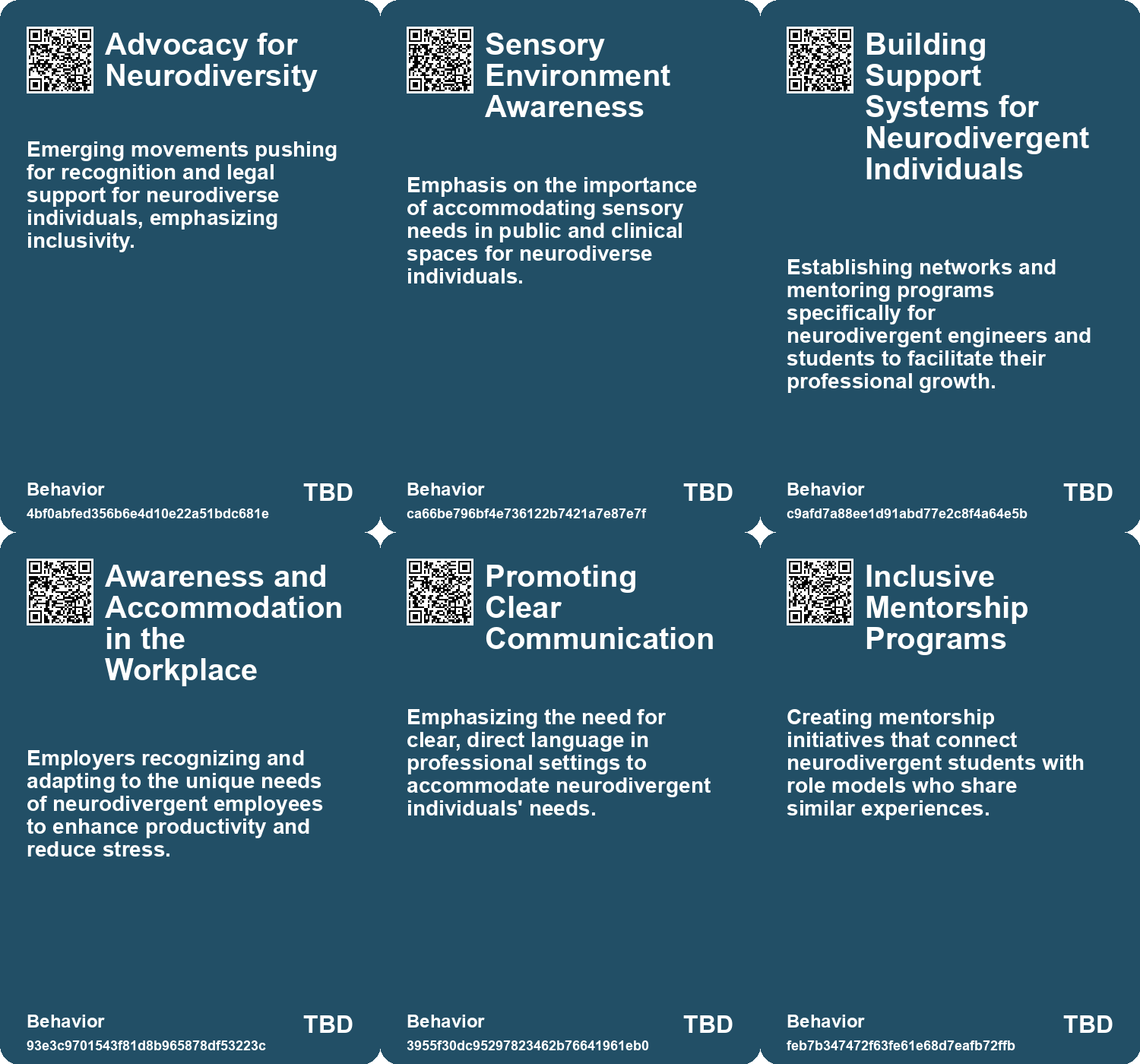
| 3 | Mentorship Programs for Neurodivergent Individuals | IEEE could create mentorship programs specifically for neurodivergent students. | Transition from generic mentorship programs to targeted initiatives for neurodivergent individuals. | In 10 years, mentorship programs could be tailored to support neurodivergent students, enhancing their career development. | The need to address the unique challenges faced by neurodivergent individuals in STEM fields. |
| 4 | Clear Communication in Professional Organizations | Moreno suggests clearer regulations and bylaws to accommodate neurodivergent members. | Moving from ambiguous language and interpretations to clear and direct communication in professional settings. | In 10 years, professional organizations may adopt clearer communication practices, benefiting all members, especially neurodivergent individuals. | The recognition of communication barriers faced by neurodivergent individuals in professional environments. |
| 5 | Recognition of Neurodivergent Needs in Workplaces | Employers are encouraged to accommodate neurodivergent employees’ unique working styles. | Shift from a one-size-fits-all approach to a more individualized understanding of employee needs. | In 10 years, workplaces may implement more personalized employee accommodations, enhancing productivity and job satisfaction. | The increasing emphasis on diversity and inclusion in the workplace. |
| 6 | Use of Technology for Organization | Moreno recommends using tools like Kanban and Pomofocus for organization among neurodivergent students. | Transition from traditional organizational methods to technology-driven solutions for productivity. | In 10 years, there may be widespread adoption of specialized apps and tools designed for neurodivergent individuals to enhance productivity. | The rapid advancement of technology catering to diverse learning and working styles. |
| 7 | Fluidity of Identity | Growing acceptance of diverse and contextual identities beyond generational labels. | Shift from fixed generational labels to recognizing diverse, evolving identities. | In ten years, identity will be seen as multifaceted and dynamic, shaping social interactions. | Desire for individual authenticity and complexity in self-identification. |
| 8 | Neurodiversity as a Competitive Advantage | Organizations embracing neurodiversity may gain unique cognitive strategies. | Shift from traditional hiring practices to inclusive approaches that leverage diverse cognitive abilities. | In ten years, companies prioritizing neurodiversity could outperform their peers in innovation and problem-solving. | The growing recognition of diverse cognitive strategies as crucial for addressing complex challenges in AI-driven environments. |
| 9 | Emerging Roles for Neurodivergent Individuals | Neurodivergent individuals are taking on leadership roles in critical sectors like intelligence. | Increasing acceptance and integration of neurodivergent individuals in leadership positions. | In ten years, neurodivergent leaders could be common in various sectors, influencing decision-making processes. | The acknowledgment of unique skills among neurodivergent individuals in specialized fields such as intelligence and security. |
Concerns
| name | description | |
|---|---|---|
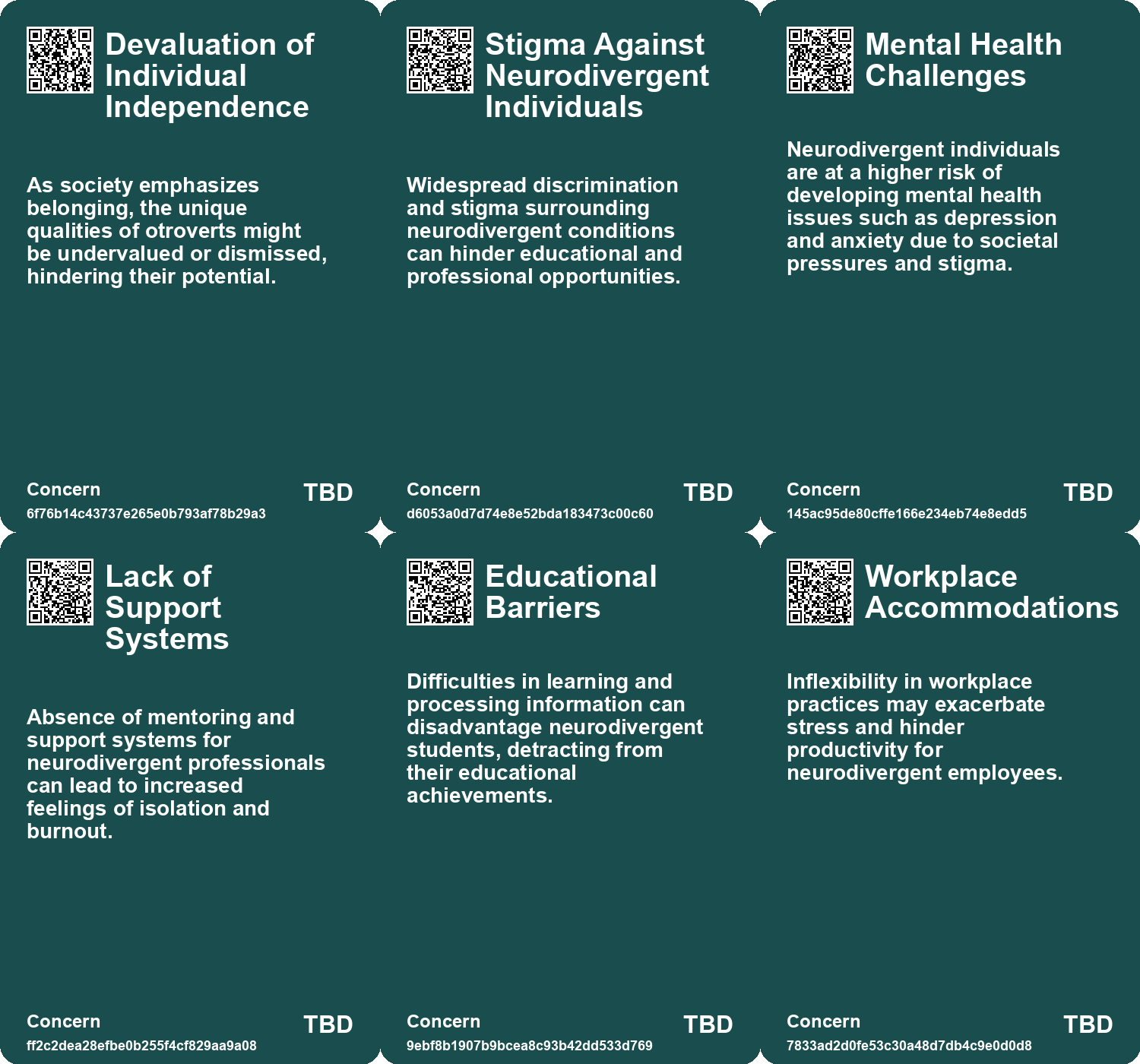
| 0 | Devaluation of Individual Independence | As society emphasizes belonging, the unique qualities of otroverts might be undervalued or dismissed, hindering their potential. |
| 1 | Stigma Against Neurodivergent Individuals | Widespread discrimination and stigma surrounding neurodivergent conditions can hinder educational and professional opportunities. |
| 2 | Mental Health Challenges | Neurodivergent individuals are at a higher risk of developing mental health issues such as depression and anxiety due to societal pressures and stigma. |
| 3 | Lack of Support Systems | Absence of mentoring and support systems for neurodivergent professionals can lead to increased feelings of isolation and burnout. |
| 4 | Educational Barriers | Difficulties in learning and processing information can disadvantage neurodivergent students, detracting from their educational achievements. |
| 5 | Workplace Accommodations | Inflexibility in workplace practices may exacerbate stress and hinder productivity for neurodivergent employees. |
| 6 | Miscommunication in Professional Settings | Arbitrary language interpretations in professional documents can lead to misunderstandings for neurodivergent individuals, causing compliance issues. |
| 7 | Overwhelming Environments | Sensory overload in various settings can significantly affect the well-being and performance of neurodivergent individuals. |
| 8 | Potential for Oversimplification in Research | Grouping autistic individuals into only four subtypes may oversimplify the condition and overlook crucial individual differences, impacting care and research. |
| 9 | Neglecting Neurodiversity in Organizations | Organizations may fail to recognize the value of neurodiversity, missing out on unique cognitive strategies that enhance creativity and problem-solving. |
Cards
Concerns
Behaviors
Issue
Technology
Links
- Study Reveals Four Distinct Subgroups of Autism Based on Genetic Variants
- The Importance of Neurodiversity in the Evolving AI Workplace
- Exploring RADAR’s Resolutions: Ten Transformative Visions for 2023
- Exploring Underserved Markets: Opportunities in Tech for Overlooked Demographics
- Roberto Moreno: Overcoming Autism Challenges to Achieve Engineering Success
- Exploring the Intersection of Computation, Biology, and Consciousness with Claire L. Evans
- The Impact of Generative AI on Creative Professions and the Need for New Data Rights Frameworks
- The Journey of AuDHD: Understanding Coexisting Autism and ADHD
- Evaluative Soliloquies: Robots Navigating Complex Human Interactions
- Exploring Collective Consciousness in a Future Driven by Mycelial Networks
- Unlocking Creativity Through Rhizomatic Thinking in Generative AI
- The Shift to Offline Engagement: Emphasizing Exclusivity in Marketing Strategy
- Exploring the Risks of Homogeneity in AI Generated Content and Its Impact on Creativity
- The Future of Brain-Computer Interfaces: Promise and Ethical Concerns
- Designing for Invisible Disabilities: The Importance of Inclusivity in Product Development
- Designing for Autism: A Comprehensive Approach to Inclusive Spaces
- The Rise of the Symbolic Economy: Identity Through Consumption in a Globalized World
- Understanding Otroverts: The Gift of Embracing Otherness and Freedom from Belonging
- A Comprehensive Taxonomy for Artificial General Intelligence Development Over 25 Years
- Exploring Insect Metamorphosis: Memory Loss and Brain Remodeling in Green Lacewings and Fruit Flies
- The Transformative Impact of Generative AI on Education and Knowledge Creation
- Exploring Neophilia and the Value of Nuance in Life Experiences
- Recent Developments in AI Regulation and Technology: A Review of Key Initiatives and Critiques
- Exploring Insect Metamorphosis: Memory Loss and Brain Remodeling in Green Lacewings and Fruit Flies
- Exploring Language, Consciousness, and the Implications of AI Development