Futures
Topic: Nostalgic Engagement
Summary
Nostalgia is a powerful force shaping contemporary culture, as many individuals reflect on simpler times before the digital age took over. This longing for the past is evident in the resurgence of 1990s and early 2000s pop culture, with millennials and even Gen Z revisiting music, films, and experiences that defined their formative years. Events like Backstreet Boys concerts evoke feelings of escapism, while platforms like Neopets are rebranding to reconnect with their original user base. The revival of vintage technology, such as flip phones and CD players, highlights a desire to disconnect from constant connectivity and embrace a more authentic experience.
The impact of technology on personal relationships is another significant theme. As schools ban smartphones, students are turning to older devices, fostering face-to-face interactions and a nostalgic shift in music consumption. However, the rise of social media has transformed personal milestones into content for public consumption, leading to concerns about the commodification of intimacy. The evolving concept of marriage reflects similar anxieties, as societal pressures and changing dynamics influence how young people view romantic relationships.
The intersection of technology and authenticity is further explored through photography and digital preservation. The value of Polaroid cameras is seen as a response to the overwhelming nature of generative AI, emphasizing the importance of realness in an age of digital manipulation. Similarly, the appreciation for vintage computing highlights the need to preserve historical technologies that can inspire future innovations.
The emotional weight of loss, both in digital and physical realms, is poignantly illustrated through the experiences of gamers and families. Blizzard Activision’s legal troubles have left millions of players mourning the loss of access to their beloved game, while a Korean documentary team’s virtual recreation of a deceased child offers a glimpse into the complexities of grief and the desire to maintain connections with loved ones through technology.
As retail adapts to changing consumer preferences, a shift towards offline experiences emerges. Designers and retailers are creating spaces that prioritize personal connections and tactile interactions, moving away from the convenience of online shopping. This trend reflects a broader desire for meaningful engagement in a world increasingly dominated by digital interactions.
The emergence of “granfluencers” challenges stereotypes around aging, showcasing the vibrancy and positivity of older generations on social media. These influencers provide a refreshing perspective on later life, connecting with audiences through humor and relatable content, and redefining narratives around aging.
Amidst these themes, the complexities of modern life are laid bare, revealing a society grappling with the balance between nostalgia, technology, and the quest for authentic connections.
Seeds
| name | description | change | 10-year | driving-force | |
|---|---|---|---|---|---|
| 0 | Millennial Nostalgia Surge | Millennials are increasingly consuming pop culture from their youth, focusing on nostalgia. | Shifting from modern entertainment to nostalgia-driven experiences. | Mainstream culture may heavily feature 90s and early 2000s elements as staples in media. | The sense of isolation and nostalgia among millennials pushing for collective experiences. |
| 1 | Millennial Escapism | Nostalgia acts as a form of escapism for millennials facing modern life challenges. | From facing current socioeconomic pressures to finding respite in the past. | Nostalgic experiences may become vital coping mechanisms for younger generations. | Economic and social struggles highlighting the desire for simpler times. |
| 2 | Nostalgia in Tech Design | Technological nostalgia is influencing the design and creation of new products. | Move from purely modern designs to those inspired by vintage technology. | Products may feature retro aesthetics paired with cutting-edge technology. | Consumer interest in blending nostalgia with modern functionality. |
| 3 | Printed Catalog Resurgence | Retailers are revisiting printed catalogs as a nostalgic and engaging shopping option. | Move from digital-only platforms to mix physical catalogs for customer engagement. | Printed catalogs could become a primary marketing tool, enhancing customer experience and anticipation. | Nostalgia for tactile shopping experiences and the desire for a more tangible connection. |
| 4 | Nostalgia for Pre-Smartphone Era | A longing for the past when communication was less invasive and more personal. | Shift from face-to-face, spontaneous interactions to constant digital connectivity and surveillance. | In ten years, people may seek more offline experiences to reconnect with themselves and others. | Desire for authentic connections and a break from overwhelming digital interactions. |
| 5 | Desire for Authenticity | A growing yearning for genuine connections and experiences in a superficial digital age. | Shift from superficial virtual relationships to deeper, authentic human connections. | In ten years, social interactions may prioritize authenticity, leading to a resurgence of local communities and face-to-face interactions. | The fatigue from the constant demands of the attention economy and virtual interactions. |
| 6 | Nostalgia-Driven Toy Sales | Parents are increasingly opting for classic toys due to nostalgic memories. | Shift from trendy, flashy toys to classic, low-tech alternatives. | Classic toys may dominate the market as parents seek nostalgic connections for their children. | A desire to share childhood experiences with the next generation drives nostalgia-driven purchases. |
| 7 | Emotional Attachment to Digital Experiences | Users feel a strong emotional connection to their childhood digital experiences. | Shift from casual gaming to deeply personal, nostalgic engagements. | The gaming industry may prioritize emotional storytelling and nostalgic connections in game design. | A cultural shift towards valuing emotional well-being and mental comfort in entertainment. |
| 8 | Nostalgia for Past Eras | A growing trend of nostalgia for the aesthetics and lifestyles of the mid-20th century. | From contemporary styles to a revival of styles reminiscent of the 1950s and 60s. | In ten years, cultural expressions may heavily draw from retro aesthetics, influencing fashion and design. | A reaction to modern complexities, seeking simplicity and familiarity in past cultural expressions. |
| 9 | Nostalgia for Analog Experiences | A yearning for simpler times without digital distractions. | Shift from limited social interactions to overwhelming digital connectivity. | Increased appreciation for non-digital interactions and experiences, fostering deeper relationships. | Desire for authenticity and meaningful connections in a hyper-connected world. |
Concerns
| name | description | |
|---|---|---|
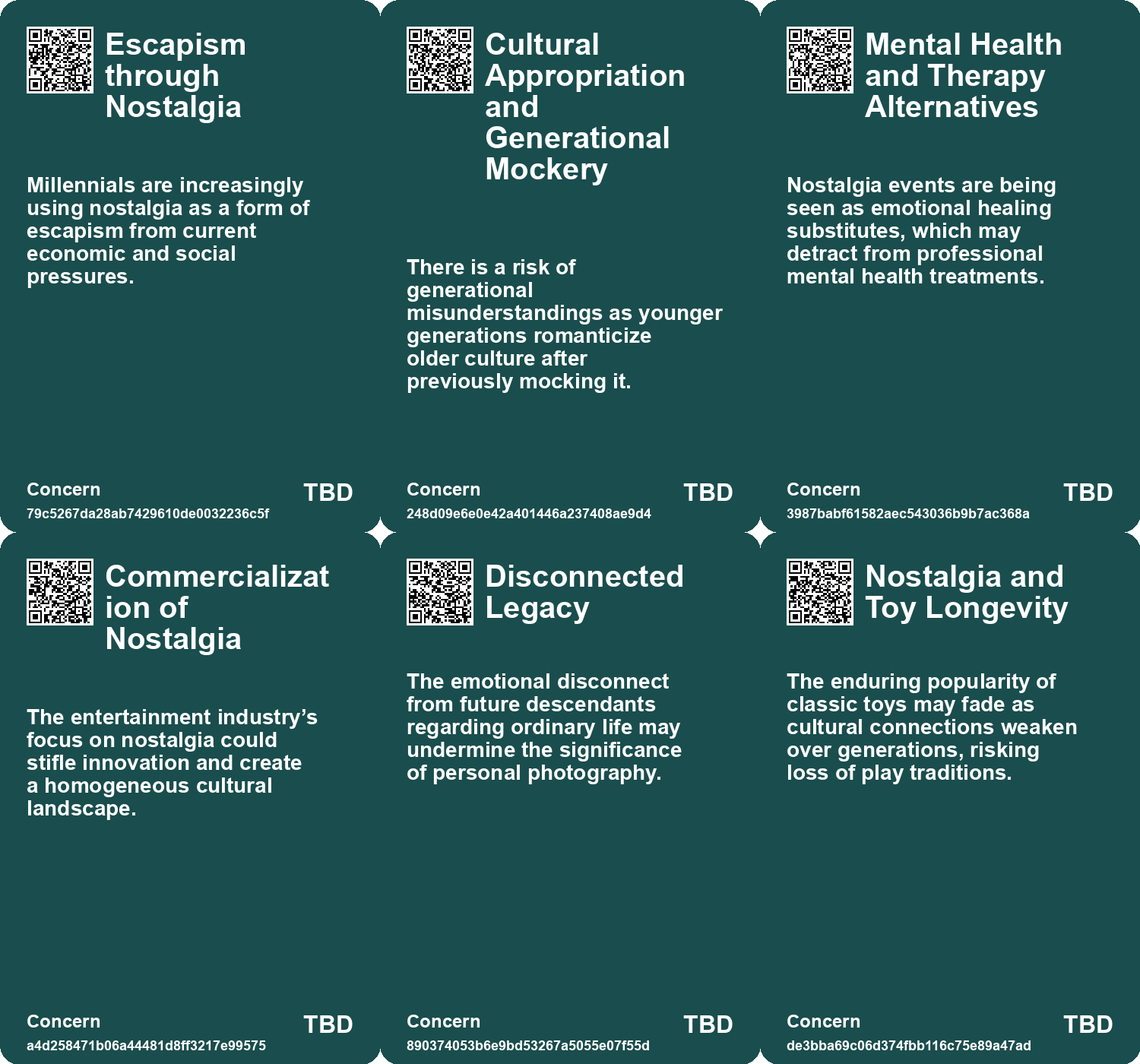
| 0 | Escapism through Nostalgia | Millennials are increasingly using nostalgia as a form of escapism from current economic and social pressures. |
| 1 | Cultural Appropriation and Generational Mockery | There is a risk of generational misunderstandings as younger generations romanticize older culture after previously mocking it. |
| 2 | Mental Health and Therapy Alternatives | Nostalgia events are being seen as emotional healing substitutes, which may detract from professional mental health treatments. |
| 3 | Commercialization of Nostalgia | The entertainment industry’s focus on nostalgia could stifle innovation and create a homogeneous cultural landscape. |
| 4 | Disconnected Legacy | The emotional disconnect from future descendants regarding ordinary life may undermine the significance of personal photography. |
| 5 | Nostalgia and Toy Longevity | The enduring popularity of classic toys may fade as cultural connections weaken over generations, risking loss of play traditions. |
| 6 | Market Dependence on Nostalgia | The reliance on nostalgia to attract users may not be sustainable in the long run. Risks include failing to engage newer generations. |
| 7 | Community Management Challenges | Balancing the interests of a nostalgic community while fostering growth poses challenges that could alienate users. |
| 8 | Nostalgia vs Reality | The longing for past periods of beauty and connection may detract from appreciating the present reality. |
| 9 | Nostalgia for Simplicity | There is a growing sentiment that the past simplicity of social interactions and media consumption was more fulfilling and less stressful. |
Cards
Concerns
Behaviors
Issue
Technology
Links
- The Revival of Malls: How Gen Z is Reshaping Shopping Destinations
- The Enduring Appeal of Classic Toys Amidst Modern Trends and Nostalgia
- The Impact of Declining Marriage Rates on American Society and Community Involvement
- Exploring the Modern Entertainment Landscape and Its Societal Implications
- Nostalgia for Pre-Smartphone Era: A Reflection on Simpler Times
- Gen Z Embraces Retro Technology for a More Authentic Summer Experience
- Reviving Neopets: Nostalgia, Community Engagement, and Economic Challenges
- The Evolution of Progress: From Glamour to Disillusionment and the Search for Meaning
- Rediscovering Forgotten Tech: The Inspiration Found in Old Magazines and Innovations
- Navigating Heritage and Modernity: The Burden of Inherited Beauty
- The Value of Everyday Photography: Capturing Life’s Absurdities and Meaning
- Exploring the Value and Preservation of Vintage Computing Technologies
- Granfluencers: Redefining Aging with Humor and Positivity on Social Media
- The Dangers of Living Life as Entertainment in the Social Media Age
- Teens Embrace Older Tech Amid School Smartphone Bans, Sparking Nostalgia and Socialization
- Nostalgia for Simplicity: The Burden of Infinite Choice in Modern Life
- The Emotional Impact of Losing Access to Virtual Worlds in Gaming
- Polaroid’s Shift: From Creativity to Authenticity in the Age of AI
- Millennials Revel in Nostalgia as Pop Culture Makes a Comeback
- Exploring the Decline of Teenage Romantic Relationships Among Gen Z and Its Implications
- Future Trends Post-2024: Declining Democracies and Emerging Cultural Shifts
- Finding Connection and Beauty in Garry Winogrand’s Photography: A Personal Reflection
- Exploring the Sociology of Marriage: Insights from Waiting to Wed and Reality TV
- The Emotional Impact of Virtual Reality and AI in Grieving Process
- The Shift from E-commerce to In-Person Retail Experiences in Fashion