Futures
Topic: Synthetic Biology
Summary
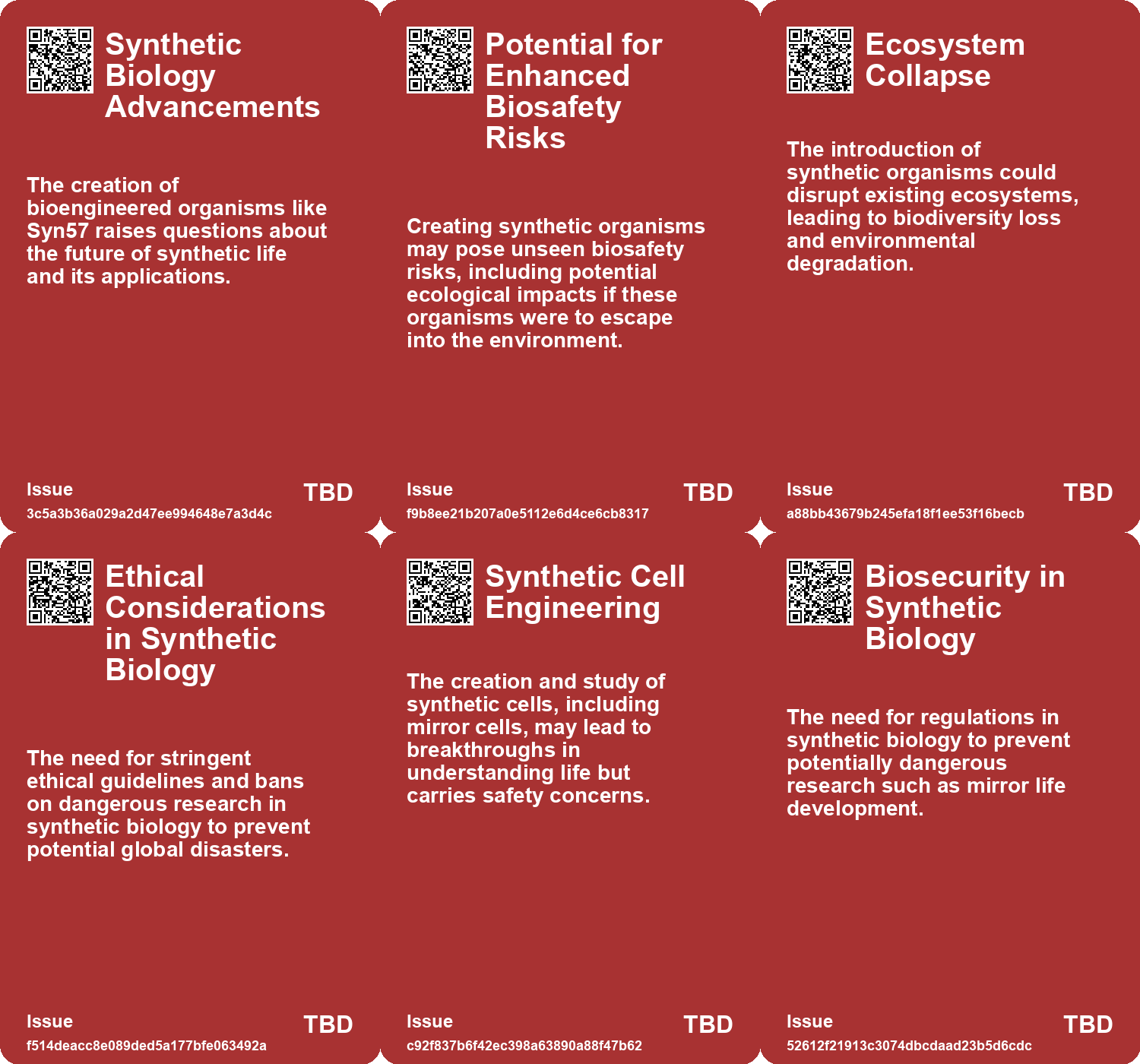
Recent advancements in synthetic biology and genetic engineering are reshaping our understanding of life and its potential applications. Researchers have made significant strides in creating synthetic organisms, such as the engineered E. coli strain “Syn57,” which operates efficiently with fewer codons than any known life form. This breakthrough opens new avenues for exploring alternative genetic codes and understanding the limits of life. However, the creation of synthetic organisms also raises concerns. A group of prominent biologists has warned about the risks associated with developing “mirror cells,” which could lead to uncontrollable pandemics and ecological damage. They advocate for restrictions on such research to prevent catastrophic consequences.
The intersection of biology and technology is further highlighted by the emergence of biohybrid systems. Engineers have developed robots that utilize living organisms, such as mushrooms, to sense and respond to their environment. This innovative approach could enhance agricultural practices and environmental monitoring. Similarly, researchers have created adaptive sensors that can be printed onto biological surfaces, offering new possibilities for healthcare and interactive technology.
Artificial intelligence is playing a crucial role in advancing biological research. AI models have been used to design programmable gene editors, improving precision in gene editing applications. Additionally, AI has enabled the discovery of over 2.2 million crystal structures, which could have significant implications for renewable energy and advanced materials. The development of Evo, a genomic large language model, demonstrates AI’s potential to decode DNA and generate new genetic sequences, further bridging the gap between biology and computation.
The concept of holobionts, which views organisms as meta-organisms composed of various species and their microbiomes, is gaining traction. This perspective emphasizes the importance of symbiotic relationships in health and ecology, highlighting the need for a deeper understanding of the microbiome’s role in the functioning of life.
The exploration of plant intelligence and communication is also a growing field of interest. Research indicates that plants exhibit behaviors akin to memory and decision-making, challenging traditional views of intelligence. This ongoing debate underscores the complexity of life and the need for further investigation into the capabilities of non-animal organisms.
In the realm of ethical considerations, projects like the Los Angeles Project aim to push the boundaries of genetic engineering in pets, raising questions about the implications of creating genetically modified animals. The conversation around responsible innovation in biotechnology is becoming increasingly important as researchers navigate the potential risks and benefits of their work.
Finally, the discovery of new antibiotic molecules from soil samples highlights the urgent need for novel treatments in the face of rising antibiotic resistance. This research underscores the potential of natural resources in developing effective therapies, emphasizing the importance of continued exploration in both environmental and medical fields.
Seeds
| name | description | change | 10-year | driving-force | |
|---|---|---|---|---|---|
| 0 | Evolutionary Redundancy Awareness | Scientists recognize and address redundancy in the genetic code through synthetic biology. | A move towards understanding and optimizing genetic codes beyond traditional evolutionary limits. | In 10 years, we may regularly create organisms with custom genetic codes for specific purposes. | The motivation to enhance biological systems and create customized organisms. |
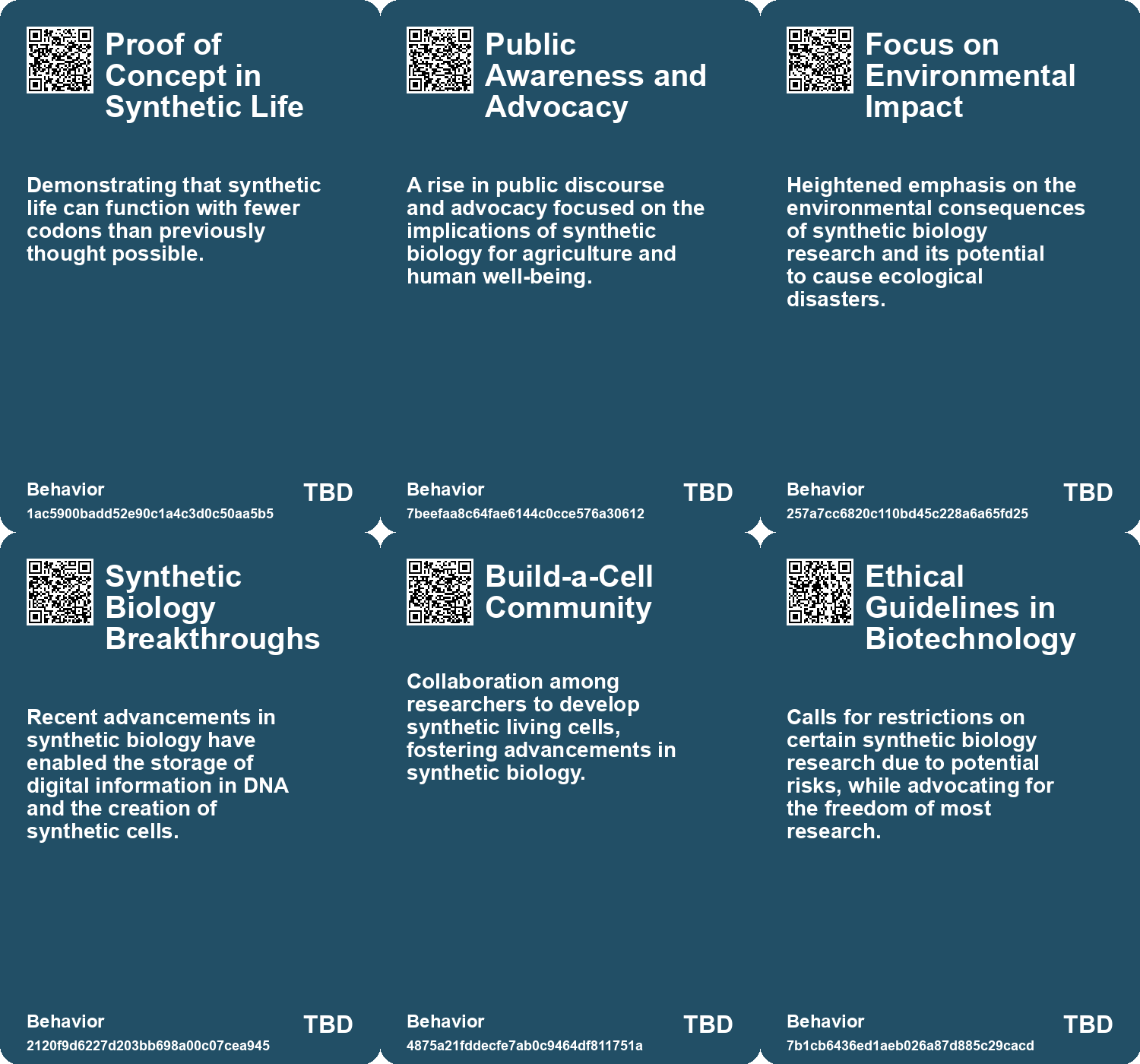
| 1 | Synthetic Biology Breakthroughs | Recent advancements enable complete synthesis of genomes with tailored characteristics. | Transitioning from replicating natural forms to creating entirely novel life forms chemically. | In 10 years, synthetic organisms might become integral to industries like healthcare and biotechnology. | The push for innovative solutions to complex biological challenges. |
| 2 | Alternative Genetic Codes Exploration | The possibility to explore and test various alternative genetic codes in synthetic life. | From a rigid genetic system to a flexible framework that allows experimentation. | In 10 years, biology could utilize diverse genetic systems for unique applications, revolutionizing life sciences. | The quest for better understanding of life’s building blocks and functions. |
| 3 | Exploration of Synthetic Biology | Creating new, viable DNA sequences that can function in organisms. | from relying solely on natural selection to engineered biological solutions. | Synthetic biology could revolutionize medicine, agriculture, and environmental management. | The potential to engineer beneficial biological systems for various applications. |
| 4 | Ethical Implications of Evo | Concerns about the creation of synthetic viruses or harmful biological entities. | Growing awareness and need for regulations in biotechnology applications. | Potential increased bioterrorism threats necessitating stronger biosecurity measures. | The rapid advancement of biotechnology raises ethical and security concerns. |
| 5 | Global Consequences of Synthetic Organisms | Warning of the global impact of synthetic organisms on agriculture and ecosystems. | Shift from localized research impacts to worldwide ecological threats. | Ecosystems and agriculture may suffer severe disruptions due to synthetic organisms. | The drive for innovation in biotechnology could overshadow environmental considerations. |
| 6 | Cyborg Botany | Integration of synthetic circuitry with plants for enhanced interaction capabilities. | Shifting from traditional electronic devices to biologically integrated systems for interaction. | In 10 years, plants may serve as multifunctional interactive devices in various environments. | The desire for sustainable, responsive technology that harmonizes with nature. |
| 7 | Build-a-Cell Community | A collaborative initiative aimed at developing synthetic living cells. | Emergence of community-focused synthetic biology research efforts. | Collaborative networks may accelerate advancements in synthetic biology and applications. | The collaborative approach enhances innovation and knowledge sharing in research. |
| 8 | Regulatory Framework for Synthetic Biology | Proposed regulations to guide synthetic biology research, especially mirror life. | Emerging frameworks for regulating high-risk synthetic biology research. | In a decade, specific guidelines may govern synthetic biology research to mitigate risks. | Increasing awareness of biosecurity and ethical implications drives regulatory developments. |
| 9 | Emerging Interdisciplinary Research | Collaboration between biology and engineering in robotics development. | Expansion of interdisciplinary approaches in robotics and automation. | More universities will integrate biology and engineering programs for innovative robotics solutions. | The need for multifaceted solutions to complex problems in robotics. |
Concerns
| name | description | |
|---|---|---|
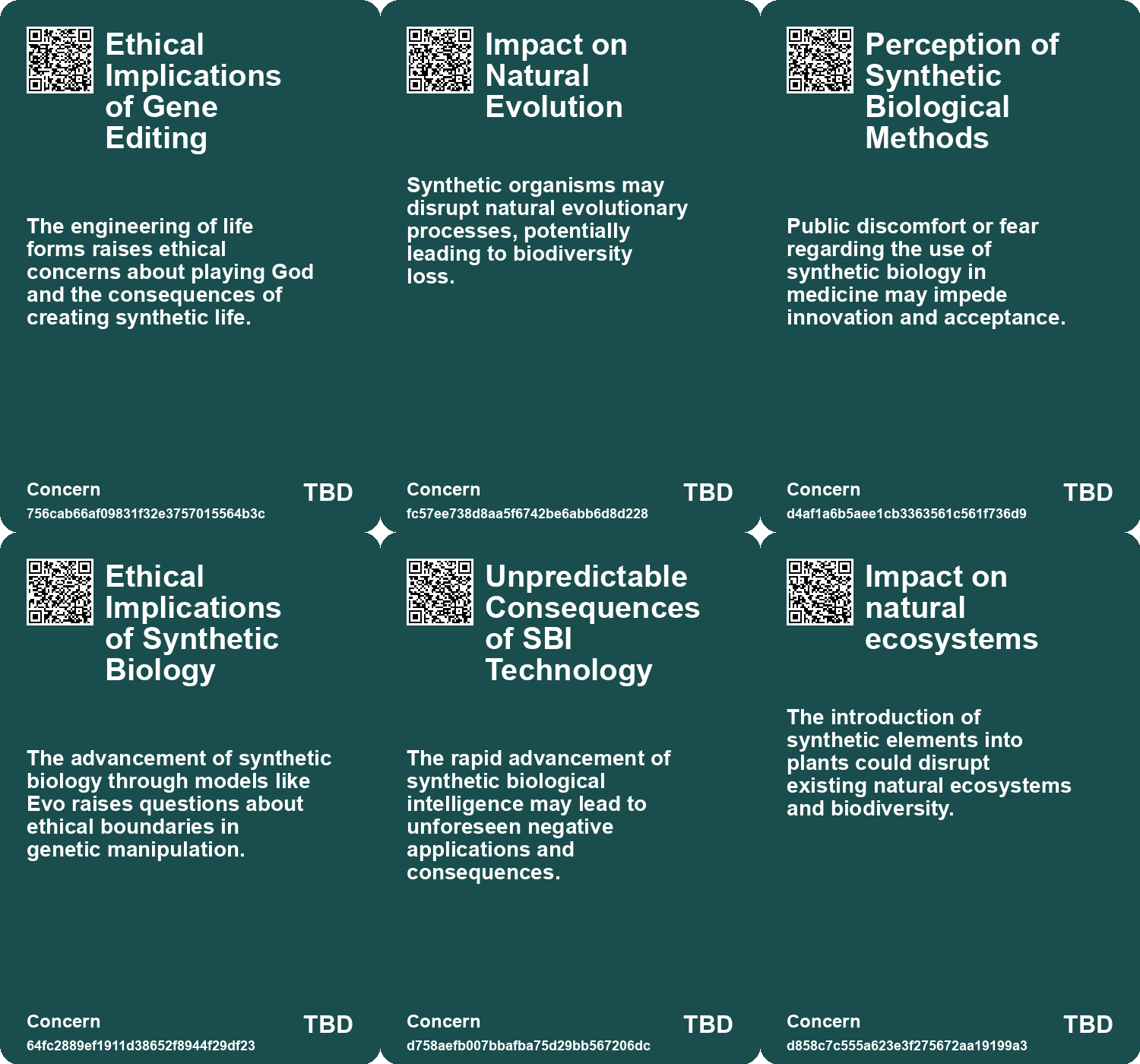
| 0 | Ethical Implications of Gene Editing | The engineering of life forms raises ethical concerns about playing God and the consequences of creating synthetic life. |
| 1 | Impact on Natural Evolution | Synthetic organisms may disrupt natural evolutionary processes, potentially leading to biodiversity loss. |
| 2 | Perception of Synthetic Biological Methods | Public discomfort or fear regarding the use of synthetic biology in medicine may impede innovation and acceptance. |
| 3 | Ethical Implications of Synthetic Biology | The advancement of synthetic biology through models like Evo raises questions about ethical boundaries in genetic manipulation. |
| 4 | Unpredictable Consequences of SBI Technology | The rapid advancement of synthetic biological intelligence may lead to unforeseen negative applications and consequences. |
| 5 | Impact on natural ecosystems | The introduction of synthetic elements into plants could disrupt existing natural ecosystems and biodiversity. |
| 6 | Ethical Considerations of Unrestricted Research | The pursuit of synthetic biology without sufficient regulation could lead to unintended consequences, violating ethical research standards. |
| 7 | Synthetic Biology Risks | Advancements in synthetic biology might lead to unintended consequences, including ecological disruption and loss of biodiversity. |
| 8 | Erosion of biodiversity principles | The push for artificial life and synthetic biology may detract from the urgency of preserving existing biodiversity and natural ecosystems. |
| 9 | Biosecurity Risks from AI in Biological Synthesis | The use of AI in DNA/RNA synthesis could facilitate the creation of dangerous biological agents if not properly regulated. |
Cards
Concerns
Behaviors
Issue
Technology
Links
- Understanding Holobionts: A New Perspective on Organisms and Their Microbial Partners
- Innovative Scientific Breakthroughs in Health and Sustainability: From Mini-Brains to Microplastics
- The Los Angeles Project: Genetic Engineering for Exotic Pets and Ethical Dilemmas
- Innovative Eco-Friendly Sensors for Health Monitoring and Environmental Applications
- Scientists Create Syn57: A Revolutionary Strain of E. coli with Fewer Codons
- Exploring the Intersection of Computation, Biology, and Consciousness with Claire L. Evans
- Tom Ray’s Journey from Evolutionary Biology to Artificial Life Creation
- Breakthrough Discovery of New Antibiotic Molecule from Soil Samples
- AI-Driven Gene Editing: Introducing OpenCRISPR-1 for Enhanced Precision in Human Genomes
- Urgent Call to Ban Research on Potentially Dangerous Mirror Cells by Biologists
- Simulating a Minimal Cell: Insights from TypeScript and Cell Biology
- Exploring the Evolution of Music Through Digital Experimentation
- Cyborg Botany: Merging Technology with Plant Sensing and Interaction
- AI Successfully Designs Working Genomes for Viruses to Combat Antibiotic-Resistant Bacteria
- Monash University Develops DishBrain: A Semi-Biological Chip with Learning Capabilities
- Exploring Plant Intelligence: Memory, Communication, and Consciousness in Plants
- The Risks and Ethical Considerations of Research on Mirror Bacteria in Synthetic Biology
- Evo: The Large Language Model Revolutionizing DNA Reading and Writing
- Engineers Create Biohybrid Robot Controlled by Living Mushroom for Enhanced Mobility and Sensing
- Cortical Labs Launches World’s First Biological Computer: The CL1
- The Challenges and Advances in Simulating the C. elegans Brain Over 25 Years
- Exploring the Bio Revolution: Opportunities, Risks, and Future Implications
- DeepMind’s AI Uncovers 2.2 Million New Crystal Structures for Material Science
- Reevaluating Mitochondria: Embracing Their Status as Living Organisms for Biological Advances
- Recent Developments in AI Regulation and Technology: A Review of Key Initiatives and Critiques