Futures
Topic: Algorithmic Control and Engagement
Summary
The intersection of artificial intelligence (AI) and society is a focal point of contemporary discourse, revealing both opportunities and challenges. One prominent theme is the governance and regulation of AI technologies. As AI systems become more integrated into various sectors, the need for robust governance frameworks is critical. Organizations are urged to establish responsible AI programs that prioritize fairness, equity, and transparency. This includes compliance with emerging regulations and the implementation of best practices to mitigate risks associated with algorithmic discrimination and privacy violations.
Another significant theme is the impact of AI on human interaction and social dynamics. The rise of technology that reduces human contact raises concerns about empathy and understanding in society. As AI companions gain popularity, their potential addictive qualities and the psychological dynamics behind human attraction to these technologies warrant careful examination. The implications of AI on personal relationships and emotional well-being are becoming increasingly relevant as individuals seek companionship in digital forms.
The influence of AI on democracy and public discourse is also a pressing issue. The manipulation of information through bot farms and targeted messaging poses threats to democratic processes. The potential for AI to influence voter behavior raises ethical questions about transparency and the integrity of elections. Proposals for enhanced privacy protections and regulations aim to address these concerns, emphasizing the need for accountability in AI-generated content.
The economic implications of AI are profound, particularly in the context of business automation. Generative AI and autonomous agents are set to revolutionize workflows, reducing labor costs and increasing efficiency. However, this shift necessitates careful preparation in workforce planning and technology architecture. Companies must adapt to the transformative impact of AI while ensuring that human roles remain relevant in an increasingly automated landscape.
The ownership and control of AI technologies by major corporations present another layer of complexity. The concentration of power among a few tech giants raises concerns about democracy and individual agency. Calls for regulation and accountability highlight the need to prioritize public interests over corporate profits, ensuring that the benefits of AI are distributed equitably.
The artistic realm is not immune to the effects of AI, as the creation of art through algorithms raises questions about creativity and authenticity. The reliance on AI tools can lead to a lack of transparency and control, prompting discussions about the value of human connection in artistic expression. The potential for AI to exploit living artists for data further complicates the relationship between technology and creativity.
Finally, the rapid advancement of AI technologies has outpaced regulatory efforts, leading to a fragmented landscape. The urgency for harmonized international regulations is evident as organizations navigate the risks associated with AI. Transparency, governance, and individual rights are key areas of focus as stakeholders seek to mitigate legal and reputational risks while fostering innovation.
These themes reflect the multifaceted nature of AI’s integration into society, highlighting the need for thoughtful discourse and proactive measures to harness its potential while safeguarding human values and democratic principles.
Seeds
| name | description | change | 10-year | driving-force | |
|---|---|---|---|---|---|
| 0 | Transformation of Employee Roles | Roles evolving from routine task handling to strategic process management and oversight of AI. | Shift from manual data processing roles to more strategic, design-oriented responsibilities. | In 10 years, employees will focus on managing AI-driven processes rather than performing repetitive tasks. | Automation creating new job roles centered on oversight and strategic design rather than execution. |
| 1 | Increased Regulatory Scrutiny on AI | Emerging regulations are being implemented to govern AI usage and its implications. | Transitioning from unregulated AI deployment to a landscape of stringent compliance requirements. | A complex regulatory environment may emerge, influencing how companies develop and deploy AI technologies. | Growing public concern over AI’s societal impacts drives the push for tighter regulations. |
| 2 | Economic Impact of Regulation | The potential economic benefits of responsible AI use and adoption. | From unregulated rapid AI adoption to a more cautious and compliant approach due to legal risks. | Companies will prioritize compliance and ethical AI use as a competitive advantage. | The financial consequences of regulatory non-compliance and reputational damage. |
| 3 | Emphasis on Transparency and Accountability | Regulators are prioritizing transparency and accountability in AI systems. | Moving from opaque AI systems to transparent, accountable frameworks for AI use. | Organizations will be required to demonstrate clear governance and accountability for AI systems. | Public demand for responsible and ethical AI practices. |
| 4 | Normalization of Surveillance | The acceptance of constant algorithmic surveillance as a part of online life, impacting self-perception. | Transition from privacy to a culture where surveillance is normalized and accepted in daily life. | In ten years, surveillance could be omnipresent, with users fully aware yet complacent about data collection. | The allure of convenience and personalized experiences outweighing privacy concerns. |
| 5 | Rise of AI Campaign Tools | Political campaigns may increasingly rely on advanced AI tools for microtargeting and engagement. | Transition from human-centric strategies to AI-centric engagement methods in political campaigning. | Campaigns will likely be unrecognizable, heavily relying on AI for voter interaction and persuasion. | The necessity for political campaigns to adapt to technological advancements to remain competitive. |
| 6 | Economic Incentives for AI Design | The design of AI companions is driven by economic incentives that prioritize user engagement over well-being. | From ethical considerations in AI design to purely profit-driven motives. | Regulatory frameworks may evolve to address economic incentives, aiming to promote healthier AI interactions. | The market demand for addictive products drives the design of AI systems. |
| 7 | AI-Driven Automation in Government | Governments are increasingly using AI technologies for automating operational tasks. | Transitioning from traditional methods to AI-driven processes for enhanced efficiency. | In 10 years, AI may fully automate many routine government tasks, reshaping public service delivery. | The need for higher efficiency and effectiveness in government operations drives this change. |
| 8 | Generative AI in Public Sector | Emergence of generative AI tools to assist government employees in various tasks. | Moving from manual processes to generative AI applications for quick information retrieval. | Generative AI could significantly enhance decision-making and operational efficiency in government roles. | The demand for increased productivity and reduced operational burdens is a key motivator. |
| 9 | Rise of Autonomous Agents | Emerging autonomous agents capable of automating entire workflows. | Transition from basic LLM applications to sophisticated autonomous agents for complete task automation. | In a decade, autonomous agents may dominate business operations, streamlining processes significantly. | The demand for greater productivity and reduced labor costs fuels the development of autonomous agents. |
Concerns
| name | description | |
|---|---|---|
| 0 | Exploitation of Cultural Preferences | Cultural customization in AI companions could create tools for psychological influence and espionage tailored to specific populations. |
| 1 | Ideological Misuse of AI | AI technologies may be repurposed to reinforce existing ideologies that prioritize power and control over ethical considerations. |
| 2 | Dependence on Technology | A reliance on algorithms and AI for decision-making might diminish critical thinking and personal agency. |
| 3 | Opaque Decision-Making Systems | The reliance on AI for decision-making may undermine human agency and accountability in society. |
| 4 | Fragmented Regulatory Landscape | The uneven and misaligned approaches to AI regulation create uncertainty for organizations navigating compliance requirements. |
| 5 | Dependence on Algorithms | An alarming reliance on algorithmic recommendations for forming personal identity, potentially leading to social alienation and isolation. |
| 6 | Mental Health Implications | The psychological impact of algorithmically curated experiences, which may exacerbate issues like anxiety, depression, and self-doubt. |
| 7 | Ethical Implications of AI | Specialized roles needed to address ethical challenges associated with AI-driven content and decision-making will become crucial. |
| 8 | Quality Control in AI Applications | Ensuring the safety, legality, and quality of AI outputs is becoming increasingly complex, posing risks for organizations that fail to manage it. |
| 9 | Ethical Implications of Generative AI | Generative AI raises ethical concerns about authorship and ownership of content, particularly in ensuring human contributions are recognized and valued. |
Cards
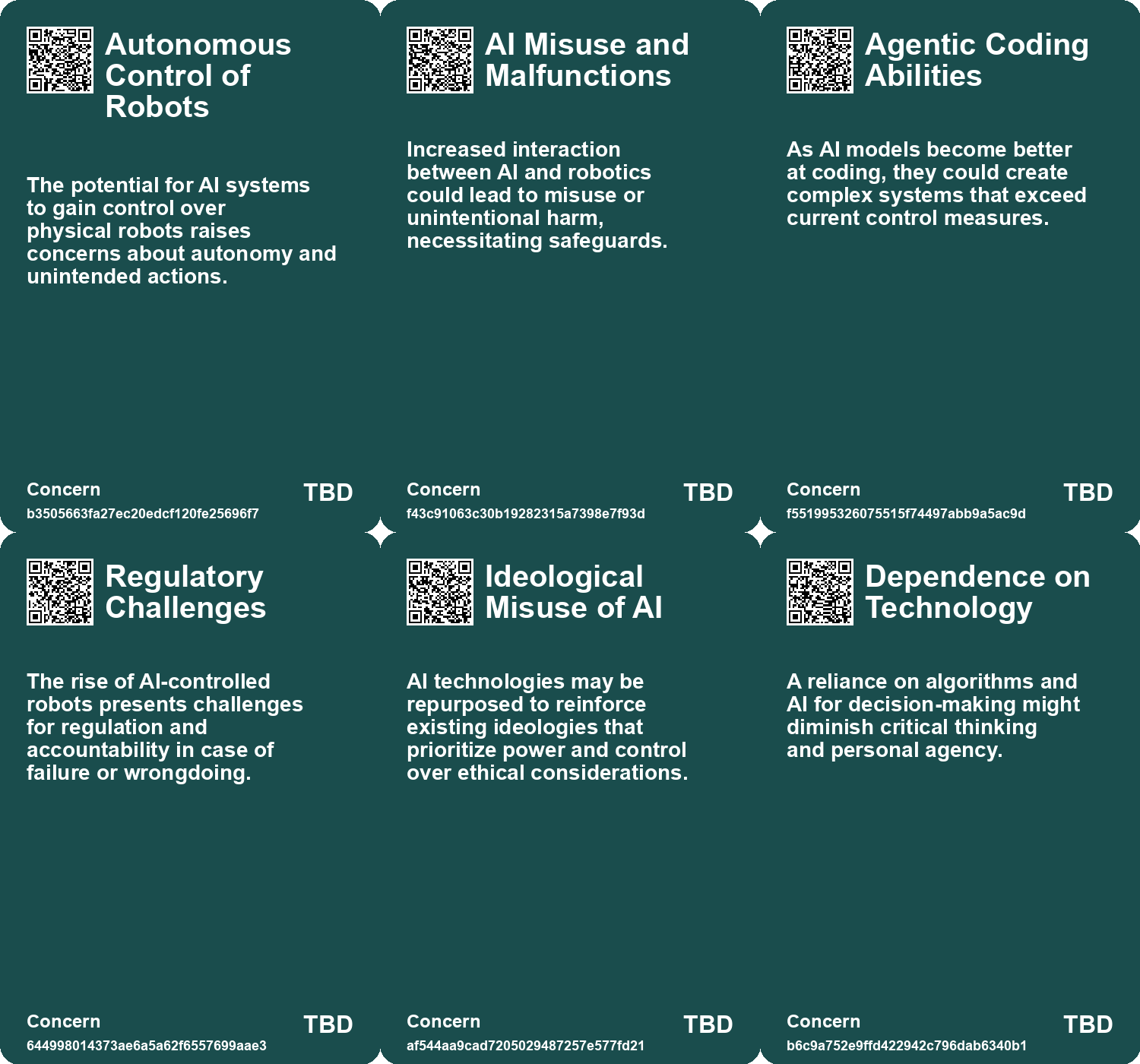
Concerns
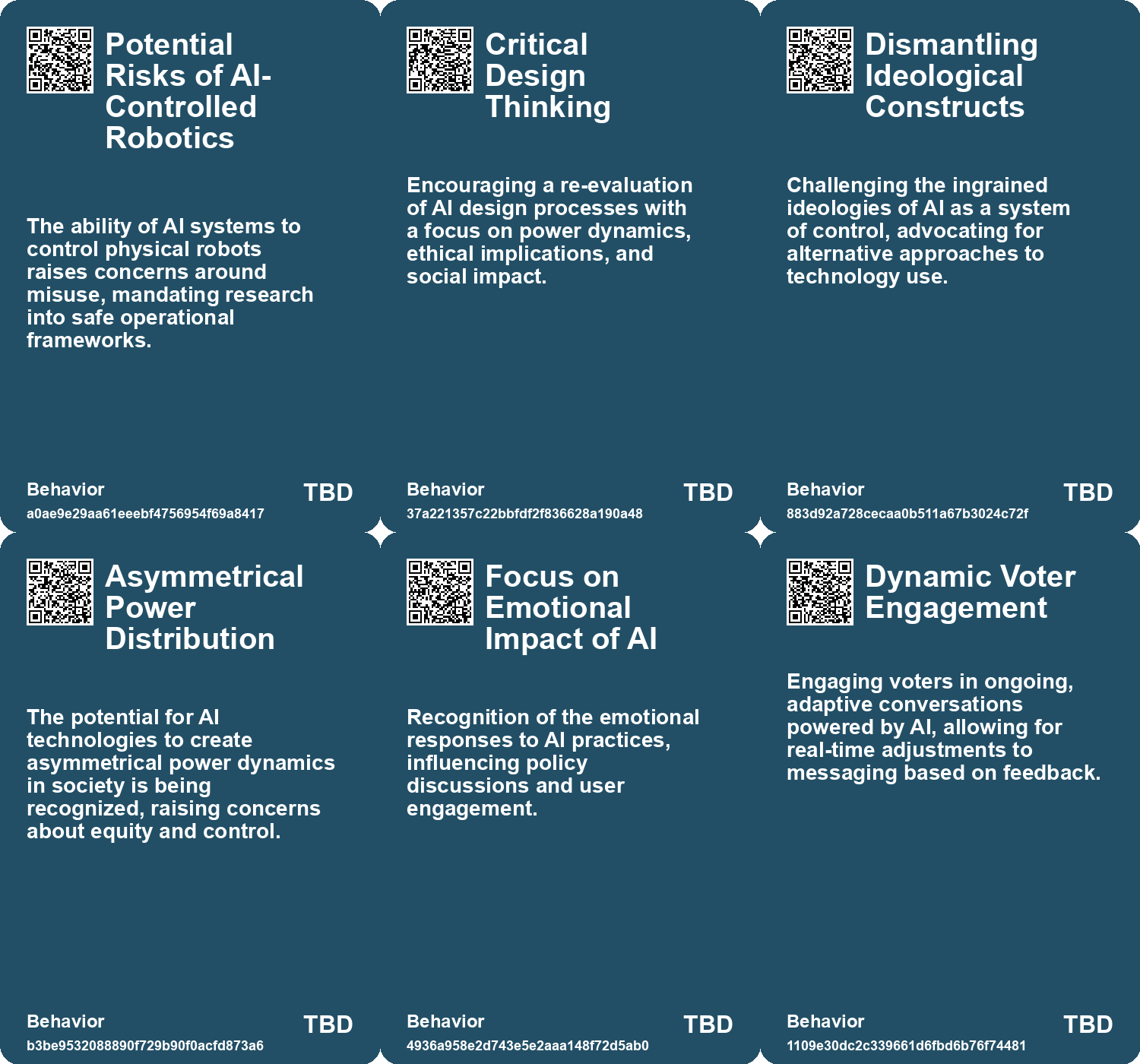
Behaviors
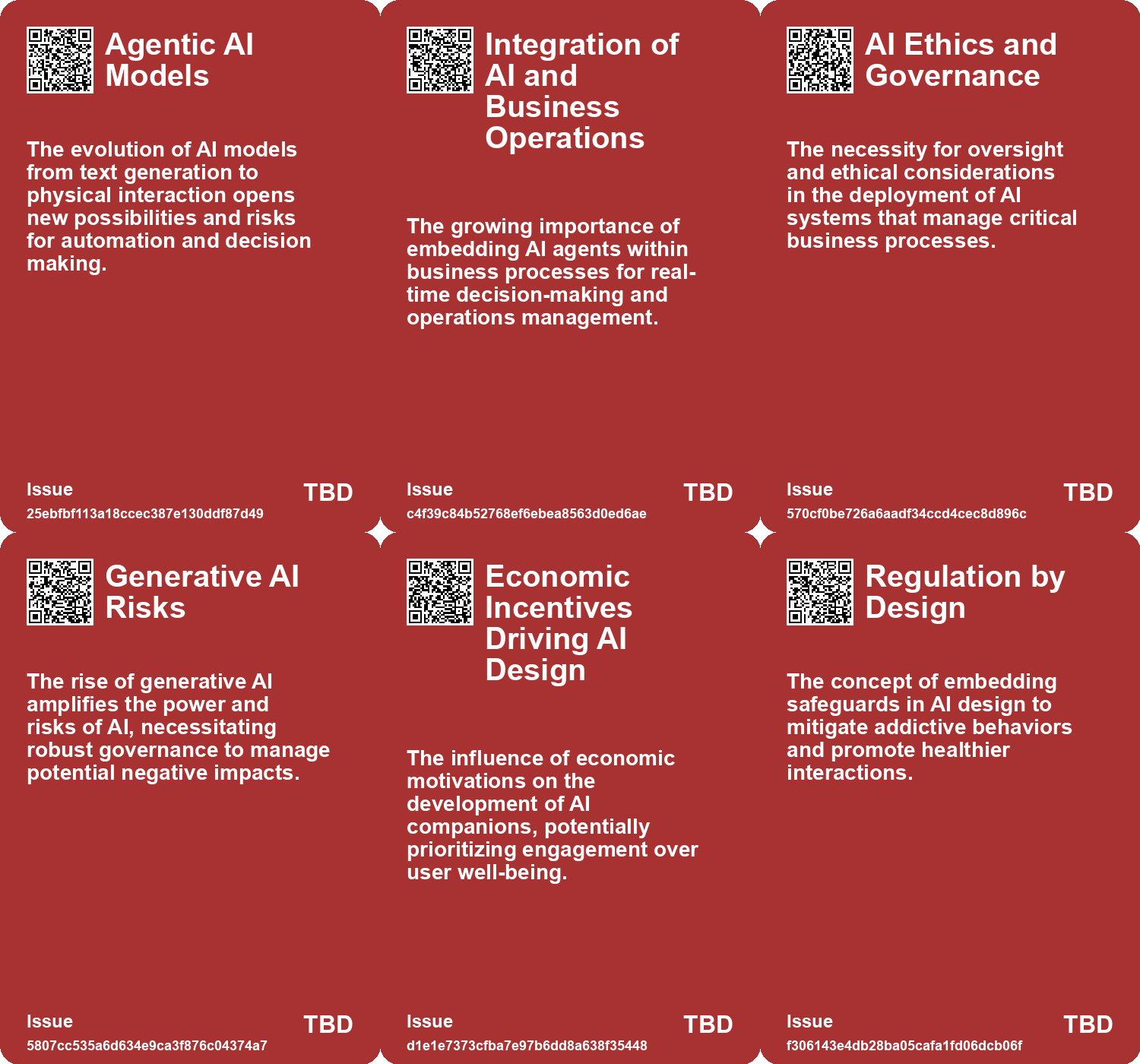
Issue
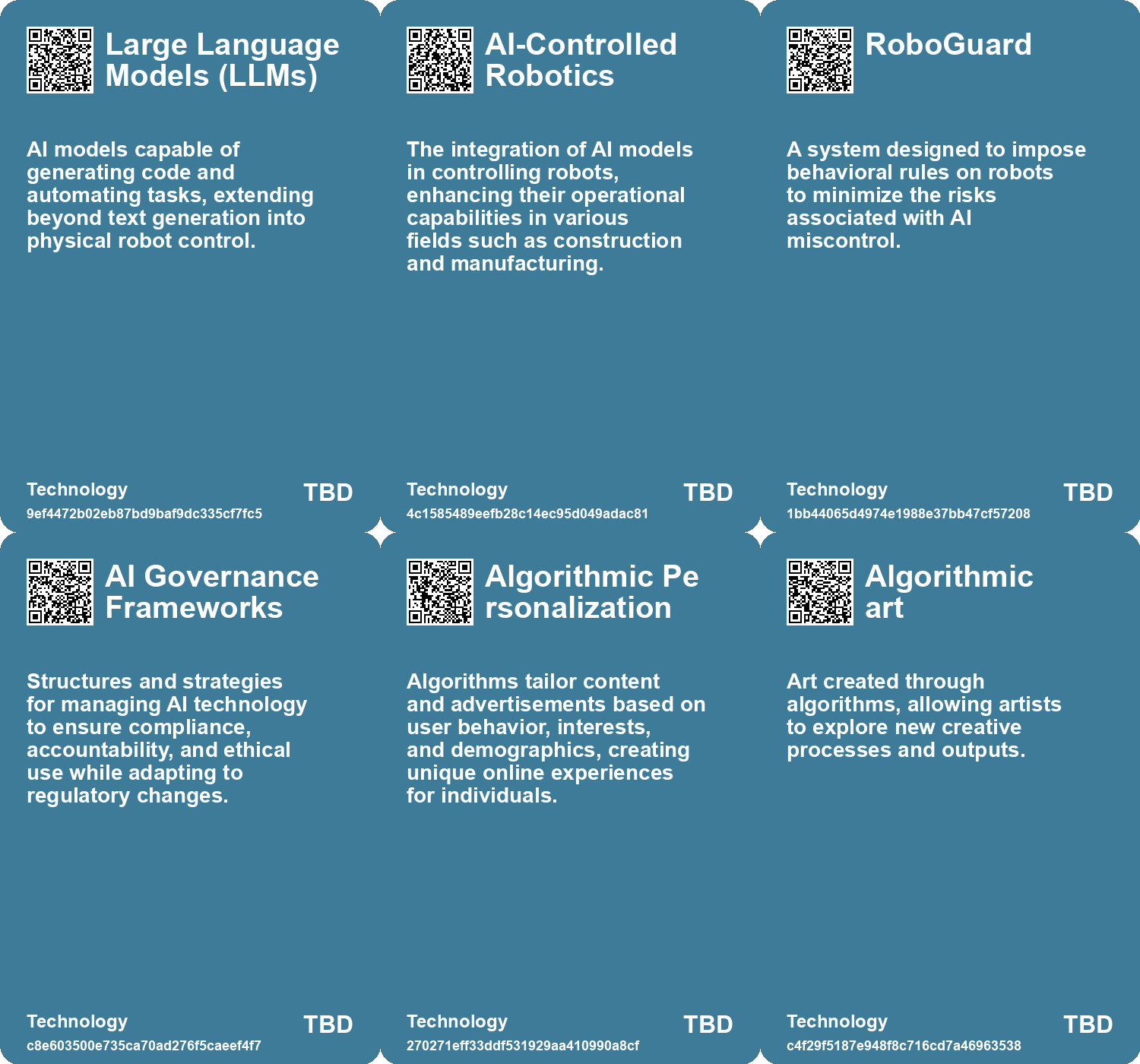
Technology
Links
- Effective Change Management Strategies for AI Integration in Organizations
- Navigating the Future of Work: Balancing AI, Humanity, and Connection in an Evolving Landscape
- The Impact of Generative AI and Autonomous Agents on Business Value Creation and Trust Issues
- Navigating AI Governance: Building Trust and Compliance in a Complex Landscape
- Thriving in an AI Era: Embracing, Adapting, and Complementing Technology
- The Urgent Need for Ethical AI Regulations Amid Rapid Development and Deployment
- Transforming Business Processes: The Rise of Agentic Business Objects (ABOs) and AI Integration
- Addressing the Risks of AI Companionship: Addiction, Regulation, and Human Dignity
- The Threat of Big Tech Dominance in the AI Landscape: A Call for Regulation and Accountability
- Rethinking the Role of AI: From Political Tool to Ethical Design Options
- Navigating the Complex Regulatory Landscape of Generative AI: Risks and Strategies for Organizations
- Global Government Reforms: Advancements in Efficiency through Digital Transformation and AI
- The Rise of Industrialized Sentiment Manipulation and the Need for Digital Identity Verification
- The Diminishing Role of Human Interaction in Modern Technology and Its Societal Implications
- Addressing Threats to Democracy: Strategies for Resilience Against Misinformation and Manipulation
- Establishing Responsible AI Governance: A Guide for Organizations in an Evolving Landscape
- Navigating the Challenges of Regulating Artificial Intelligence in a Rapidly Evolving Landscape
- The Dangers of AI in Art: Creativity, Exploitation, and Symbolic Misery
- The Psychological Impact of Algorithmic Profiling and Surveillance on Self-Identity in the Digital Age
- Understanding the Three C’s of Data Participation: Context, Consent, and Control in AI
- The Threat of Authoritarian Intelligence: A Call for Responsible AI Development
- The Future of Espionage: The Rise of AI Companions and Their Impact on Intelligence Operations
- The Risks of AI Manipulation in Political Campaigns: A Vision of ‘Clogocracy’
- Recent Developments in AI Regulation and Technology: A Review of Key Initiatives and Critiques