Futures
Topic: Instagram-style Maturity
Summary
The landscape of social media is undergoing significant transformation, marked by a growing desire for authenticity and privacy. Users are increasingly frustrated with platforms like Instagram, which have shifted from personal sharing to a curated space dominated by influencers and professional content. This has led many to seek refuge in private groups and alternative apps that prioritize genuine connections over public validation. The rise of “granfluencers,” older individuals who share their experiences with humor and positivity, exemplifies a push against stereotypes of aging and a call for more authentic narratives online.
Amid these changes, concerns about the impact of social media on mental health, particularly among children, are intensifying. New legislation in places like Utah and Australia aims to restrict minors’ access to social media, reflecting a growing recognition of the potential dangers posed by platforms that encourage addictive behaviors. The concept of “dopamine culture” highlights how fast-paced interfaces can lead to compulsive usage, raising alarms about the long-term effects on youth.
The pressure on individuals, especially artists and creators, to build personal brands has also escalated. As the creative industry becomes increasingly commercialized, the need for self-promotion often overshadows artistic integrity. This trend is compounded by the rise of algorithm-driven content management, which prioritizes engagement over genuine interaction, further complicating the relationship between creators and their audiences.
Anonymity is emerging as a significant trend among younger users, who are turning to platforms that allow for pseudonymous interactions. This shift reflects a desire to escape the pressures of personal branding and the scrutiny that comes with it. As users navigate these dynamics, the rise of “algospeak” demonstrates how individuals are adapting their language to evade content moderation, highlighting the ongoing battle between user expression and platform regulation.
The influence of technology on communication and culture is also evident in the growing prevalence of spam and disinformation. The hidden economy of spam reveals a complex network that thrives on social media, while the rise of inauthentic accounts underscores the challenges of maintaining trust in digital spaces. This situation is exacerbated by the financial incentives that drive platforms to prioritize engagement over authenticity.
Finally, the decline of maturity in political discourse reflects broader societal issues. The behavior of public figures often mirrors the juvenile tactics seen in online interactions, undermining the seriousness of democratic engagement. This trend calls for a renewed commitment to civility and accountability in public life, emphasizing the need for responsible citizenship in an increasingly polarized environment.
Seeds
| name | description | change | 10-year | driving-force | |
|---|---|---|---|---|---|
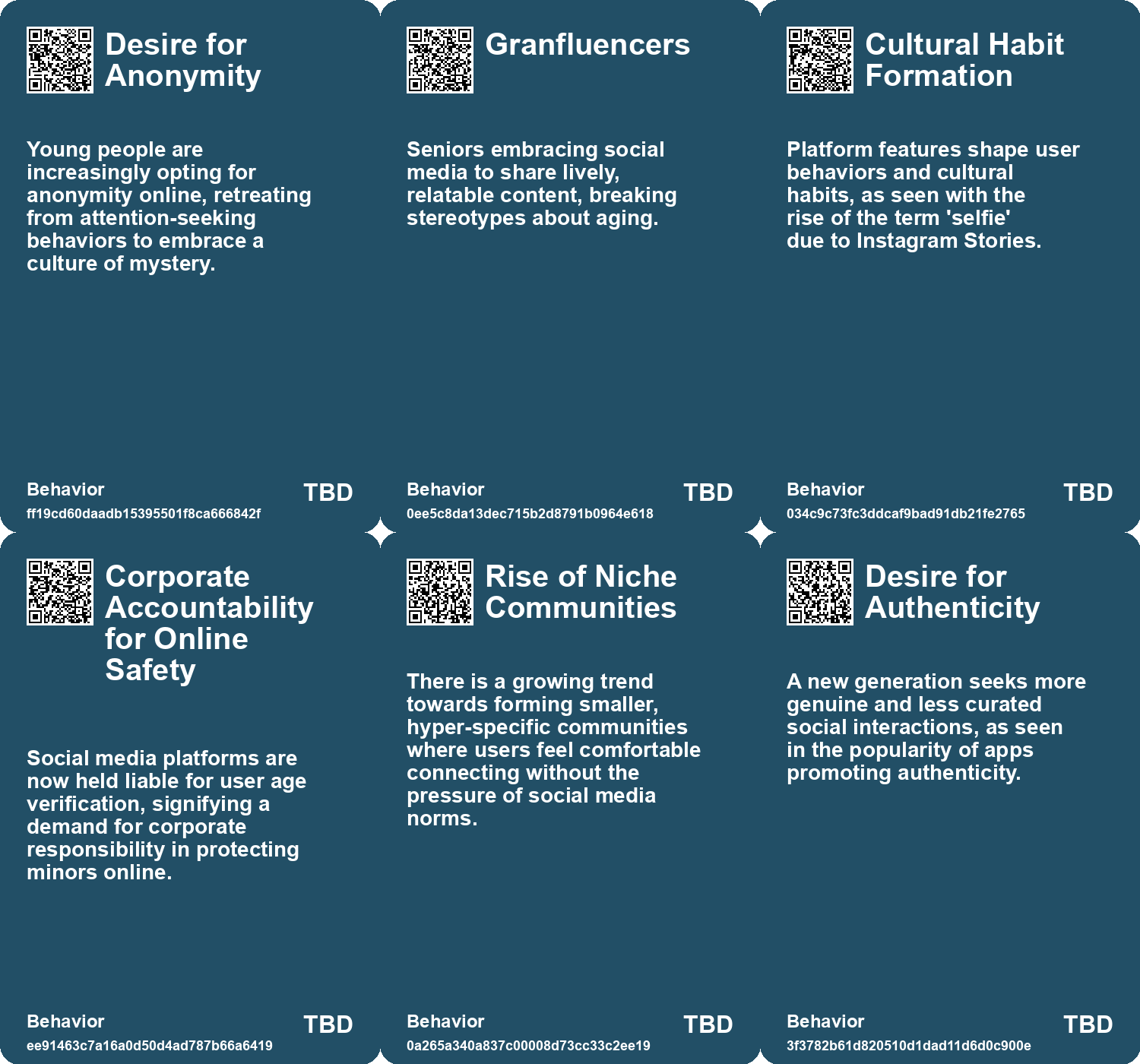
| 0 | Millennial Rebrand Fatigue | A growing skepticism towards clichéd Millennial packaging designs. | Shift from innovative branding to fatigued responses to designs that pander to Millennial aesthetics. | Consumers might demand authenticity in branding, seeking unique, less commercial aesthetics. | Desire for originality and meaningful connections with products, leading to a backlash against superficial branding. |
| 1 | Rise of Anonymity Culture | Younger generations are increasingly valuing anonymity over personal branding online. | Shift from valuing personal branding and visibility to preferring anonymity and privacy. | A future where online identities are predominantly anonymous, fostering different social interactions and communities. | Young people’s frustration with surveillance and the pressures of attention-seeking behavior. |
| 2 | Nostalgia for Pre-Influencer Internet | Younger users are gravitating towards platforms reminiscent of earlier internet cultures. | From modern, influence-driven platforms to older, more anonymous formats like IRC and forums. | A resurgence of older internet cultures that prioritize community and anonymity over visibility. | A longing for a simpler, less commercialized online experience. |
| 3 | Rise of Granfluencers | Older adults are gaining popularity on social media, redefining aging stereotypes. | Shift from negative portrayals of aging to positive, vibrant representations of seniors. | Granfluencers will become mainstream, influencing societal views on aging and lifestyle choices. | Desire for authentic representation and connection across generations in digital spaces. |
| 4 | Changing Perspectives on Aging | Granfluencers challenge traditional views of aging by showcasing active and joyful lives. | Transition from viewing aging as decline to seeing it as an opportunity for growth and enjoyment. | Society will embrace a more positive and diverse narrative around aging, impacting policy and marketing. | Cultural shifts towards acceptance of aging and the celebration of life experiences. |
| 5 | Evolving Beauty Standards | Older individuals are challenging conventional beauty standards through social media. | Changing beauty ideals from youth-centric to inclusive of all ages, celebrating aging. | Beauty industry will adapt to include products and representations catering to older demographics. | Growing awareness of diverse beauty and the influence of aging populations on market trends. |
| 6 | Challenging Age Stereotypes | Age-related stereotypes are diminishing, prompting brands to rethink their marketing strategies. | Transitioning from age-defining stereotypes to a more nuanced understanding of consumer behavior. | In 10 years, marketing will reflect a diverse understanding of consumer behavior across ages, ignoring stereotypes. | Cultural shifts towards inclusivity and acceptance of varied interests across age groups are behind this change. |
| 7 | Make Instagram Instagram Again | A campaign advocating for more authentic and less curated content on Instagram. | Shift from curated content to more authentic, everyday sharing on social media. | In 10 years, social media could prioritize authentic interactions over curated aesthetics. | A growing fatigue among users with the pressure to curate perfect content. |
| 8 | Influencer Fatigue | Users feel overwhelmed by professionalized content and influencers on social media. | Transition from influencer-driven content to more grassroots, user-generated content. | Influencer culture may shift towards more genuine and relatable content creators. | User disillusionment with the curated perfection of influencer lifestyles. |
| 9 | Growth of Alternative Platforms | New social media apps are emerging to cater to users’ desire for authenticity and privacy. | Emergence of platforms like BeReal that focus on more genuine sharing. | Diverse social media platforms may thrive based on authenticity and community. | The search for alternatives to mainstream social media giants like Instagram. |
Concerns
| name | description | |
|---|---|---|
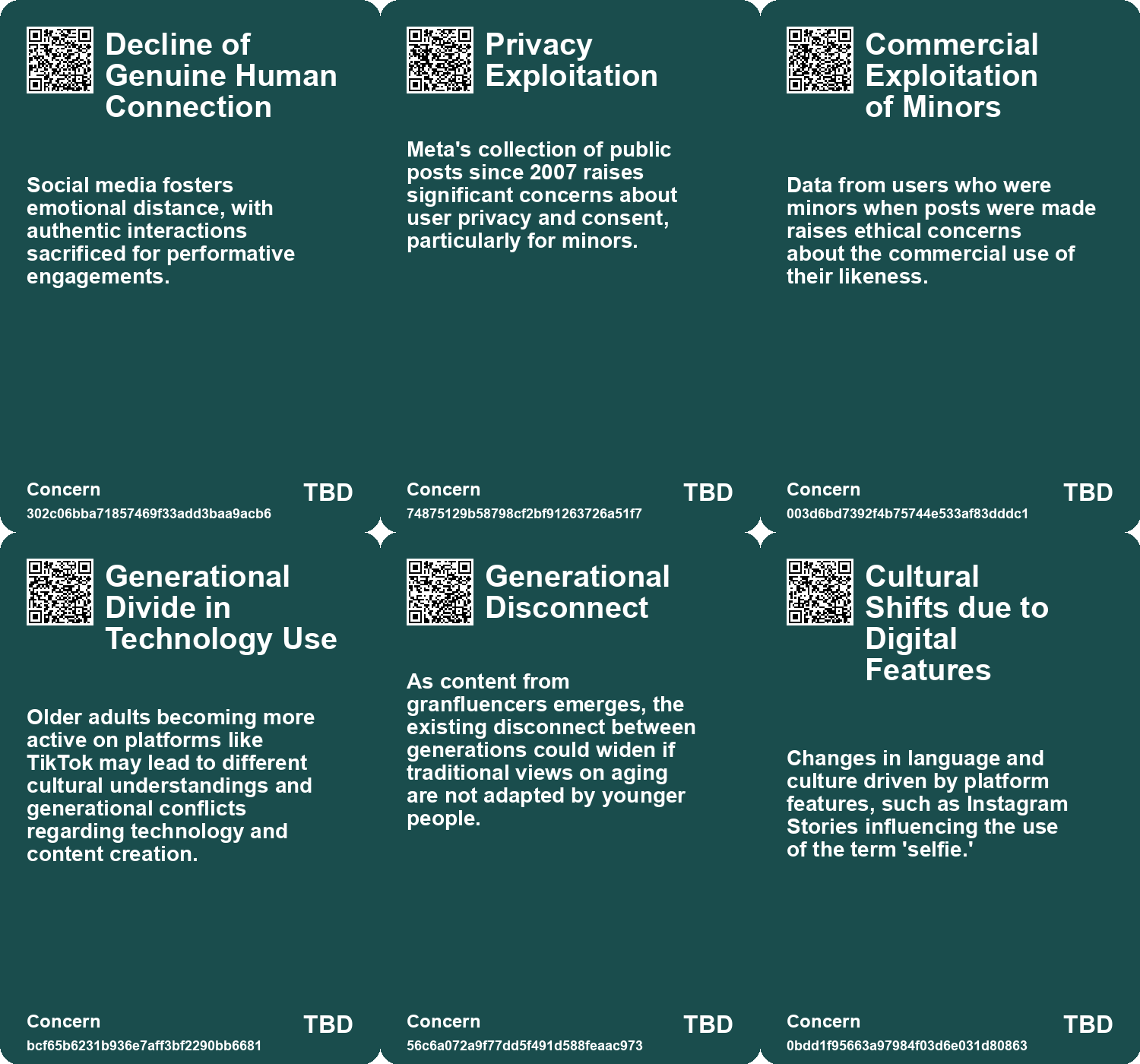
| 0 | Decline of Genuine Human Connection | Social media fosters emotional distance, with authentic interactions sacrificed for performative engagements. |
| 1 | Privacy Exploitation | Meta’s collection of public posts since 2007 raises significant concerns about user privacy and consent, particularly for minors. |
| 2 | Commercial Exploitation of Minors | Data from users who were minors when posts were made raises ethical concerns about the commercial use of their likeness. |
| 3 | Generational Divide in Technology Use | Older adults becoming more active on platforms like TikTok may lead to different cultural understandings and generational conflicts regarding technology and content creation. |
| 4 | Generational Disconnect | As content from granfluencers emerges, the existing disconnect between generations could widen if traditional views on aging are not adapted by younger people. |
| 5 | Cultural Shifts due to Digital Features | Changes in language and culture driven by platform features, such as Instagram Stories influencing the use of the term ‘selfie.’ |
| 6 | Privacy Risks | The requirement for increased age verification may compromise user privacy and data protection for all social media users. |
| 7 | Misplaced Responsibility | The legislation may undermine parental authority by placing responsibility for age verification on social media platforms instead. |
| 8 | Loss of Authenticity in Social Media | The shift towards curated content and professionalization dilutes genuine interactions among users, leading to disconnection from the platform’s original purpose. |
| 9 | Nostalgia for Simplicity | There is a growing sentiment that the past simplicity of social interactions and media consumption was more fulfilling and less stressful. |
Cards
Concerns
Behaviors
Issue
Technology
Links
- The Urgent Need for Decentralized Social Media Amidst Political Turmoil
- The Rise of Anonymity: Gen Z’s Shift from Personal Branding to Privacy Online
- The Burden of Self-Promotion: Navigating Art in the Age of Personal Branding
- Exploring the Complex Underground Economy of Spam on Social Media Platforms
- Exploring the Modern Entertainment Landscape and Its Societal Implications
- Nostalgia for Pre-Smartphone Era: A Reflection on Simpler Times
- Understanding Digital Liveness: Key Indicators and User Engagement on Social Media
- Reflections on Unconventional Paths and Creative Fulfillment in Life
- Utah Enacts Strict Social Media Regulations for Teenagers to Enhance Online Safety
- The Grief of Losing TikTok: Reflections on Digital Community and Corporate Control
- Declining Intelligence: A Widespread Trend Across Generations in the Age of Social Media
- Granfluencers: Redefining Aging with Humor and Positivity on Social Media
- The Rise of Industrialized Sentiment Manipulation and the Need for Digital Identity Verification
- Exploring the Chaos and Creativity of TikTok: A Deep Dive into Its Culture and Impact
- The Dangers of Living Life as Entertainment in the Social Media Age
- The Shift from Public Instagram to Private Community Sharing: A New Era in Social Media
- The Psychological Impact of Algorithmic Profiling and Surveillance on Self-Identity in the Digital Age
- Nostalgia for Simplicity: The Burden of Infinite Choice in Modern Life
- The Decline of Political Maturity in America: A Call for Responsible Citizenship
- The Alarming Rise of TikTok Use Among Young Children and Its Impact on Mental Health
- Emerging Trend: Foreign-Origin Accounts Spreading Disinformation on Social Media.
- Australia Enacts Historic Law to Ban Social Media for Under-16s Amid Controversy
- Meta’s Shift to AI: A New Era of Engagement or Manipulation?
- Exploring the Future: How Technology Will Transform Society by 2034
- Critique of Millennial Branding in Consumer Packaging and Its Impact
- Meta Confirms Use of Public Facebook and Instagram Data for AI Training Since 2007
- Brands Embrace Age Diversity: Engaging Consumers Across Generations
- The Rise of Algospeak: A Response to Social Media Moderation Challenges in America