Futures
Topic: Active Participation in Social Media
Summary
The current state of democracy is under threat from sophisticated groups that manipulate social media to spread misinformation. These groups exploit cognitive biases, using tactics like structural manipulations and attack bots to undermine democratic processes. To combat this, experts suggest developing immunity activators, such as public media platforms and media literacy strategies, to promote transparency and social cohesion.
Amidst these challenges, the futility of online engagement is becoming increasingly apparent. Social media interactions often distract from meaningful political action, fostering apathy and division. The emphasis on reactive posting detracts from building real-life networks that can effectively address local issues. Grassroots movements in cities like New York and Los Angeles exemplify the power of collective action over digital outrage.
The rise of inauthentic accounts on platforms like X (formerly Twitter) highlights the global nature of disinformation. Many accounts that appear U.S.-based are actually operated from countries like Bangladesh and Russia, fueled by AI tools and social media monetization. This decentralized problem complicates efforts to combat misinformation, as financial incentives from platforms exacerbate the issue.
The growing public health crisis of loneliness underscores the need for authentic social connections. With 58% of Americans reporting feelings of isolation, particularly among younger generations, fostering meaningful relationships is essential for mental well-being. Companies and technology firms are urged to create community-centric strategies that prioritize social health, while traditional hobbies and clubs may see a resurgence as people seek genuine interactions.
The call for decentralized social media platforms is gaining momentum as users seek alternatives to corporate control and government censorship. Recent turmoil surrounding TikTok and the actions of political figures have intensified discussions about the risks associated with major social media platforms. The need for independent, censorship-resistant spaces is becoming increasingly urgent.
In the realm of creativity, artists face mounting pressure to develop personal brands and engage in self-promotion to succeed. This shift, driven by corporate consolidation in industries like publishing and music, often prioritizes commercial viability over artistic integrity. The rise of social media has further complicated this landscape, forcing artists to master marketing techniques to gain visibility.
Finally, the impact of misinformation on social media is profound, with studies revealing that a small group of “supersharers” is responsible for spreading a significant portion of fake news. This phenomenon highlights the vulnerability of social media to manipulation and the urgent need for strategies to combat misinformation. As the digital landscape evolves, fostering critical thinking and digital literacy becomes essential in navigating the complexities of online information.
Seeds
| name | description | change | 10-year | driving-force | |
|---|---|---|---|---|---|
| 0 | Decentralized Content Manipulation | Content manipulation now involves multiple international actors exploiting social media. | Evolution from few known sources of misinformation to myriad distributed operators affecting narratives. | In 10 years, social media platforms may be unable to control or verify sources of trending content. | The rise of monetization programs encouraging content that attracts engagement over authenticity. |
| 1 | Community-Centric Internet Navigation | Increasing emphasis on local and community-based online interactions. | From global, impersonal internet usage to a more localized, community-focused approach. | In 10 years, social interactions may center around local digital spaces and communities, enhancing real-world connections. | A reaction against social media’s generality, fostering local community engagement. |
| 2 | Social Network Literacy | Developing skills to understand information flows and dynamics on social media. | Evolving from naive participation in social networks to informed and strategic engagement. | In 10 years, users will navigate social networks with a clear understanding of how information propagates. | The need for responsible social media use amid growing misinformation and polarization. |
| 3 | Social Media Before Personal Interactions | People increasingly engage with social media before personal interactions in their daily routines. | Changing priorities from personal relationships to virtual interactions. | Daily routines may further prioritize online engagement over face-to-face connections. | The ingrained habit of checking social media as a first action in the morning drives this change. |
| 4 | Rise of Decentralized Social Media | Urgency for alternative social media resistant to censorship and corporate control. | Transitioning from centralized platforms to decentralized alternatives for user autonomy. | In ten years, decentralized platforms may dominate, prioritizing user privacy and control over data. | Growing dissatisfaction with current social media’s censorship and corporate ownership. |
| 5 | Focus on inclusivity | There is a growing emphasis on building inclusive online communities. | From exclusive, top-down community structures to more inclusive, participatory designs. | In 10 years, inclusivity may be a fundamental aspect of all community practices. | The demand for diverse representation and equitable participation in community frameworks. |
| 6 | Promotion of prosocial online behaviors | New norms to encourage positive interactions on social media. | Shift from toxic online environments to supportive and constructive interactions. | Healthier online communities may foster better civic engagement and trust. | Desire for safer and more inclusive digital spaces. |
| 7 | Emergence of Thoughtful Social Media | A design concept for social media focused on deep writing and community engagement. | Shift from superficial social media interactions to meaningful, long-form communication. | Social media platforms may evolve to prioritize quality interactions over mere quantity of content. | Growing dissatisfaction with current social media’s lack of depth and meaningful connections. |
| 8 | Automated Community Management | Automation in managing online groups to maintain active participation. | From manual member management to automated systems that maintain engagement and quality. | Online communities may utilize advanced automation to ensure vibrant and active member participation. | Need for efficient management tools in increasingly large and complex online communities. |
| 9 | Focus on Quality Over Quantity | A shift towards prioritizing quality content and interactions in social groups. | Moving away from vanity metrics to measures of meaningful engagement and contribution. | Online platforms may emphasize quality interactions, reshaping content creation and consumption. | Frustration with current metrics that do not reflect genuine engagement or community health. |
Concerns
| name | description | |
|---|---|---|
| 0 | Erosion of Community Bonds | Increased social media usage atomizes individuals, weakening real-life community connections crucial for grassroots organizing. |
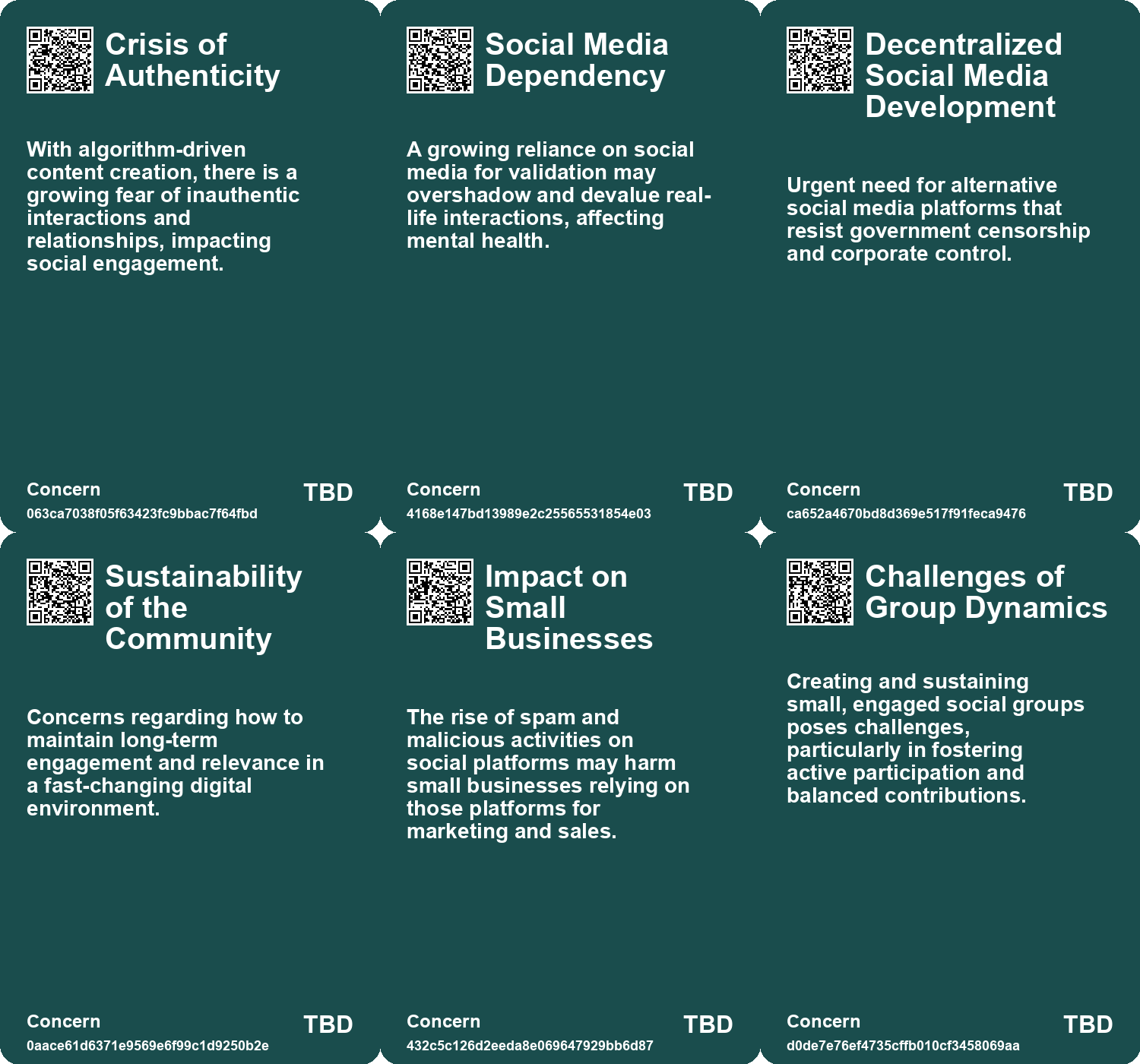
| 1 | Crisis of Authenticity | With algorithm-driven content creation, there is a growing fear of inauthentic interactions and relationships, impacting social engagement. |
| 2 | Social Media Dependency | A growing reliance on social media for validation may overshadow and devalue real-life interactions, affecting mental health. |
| 3 | Decentralized Social Media Development | Urgent need for alternative social media platforms that resist government censorship and corporate control. |
| 4 | Sustainability of the Community | Concerns regarding how to maintain long-term engagement and relevance in a fast-changing digital environment. |
| 5 | Impact on Small Businesses | The rise of spam and malicious activities on social platforms may harm small businesses relying on those platforms for marketing and sales. |
| 6 | Challenges of Group Dynamics | Creating and sustaining small, engaged social groups poses challenges, particularly in fostering active participation and balanced contributions. |
| 7 | Digital Fatigue and Burnout | An overwhelming amount of content consumption leads to fatigue, causing users to detach from social media engagement altogether. |
| 8 | Nostalgia for Simplicity | There is a growing sentiment that the past simplicity of social interactions and media consumption was more fulfilling and less stressful. |
| 9 | Need for Innovative Community Engagement | Companies must explore innovative ways to foster community interactions and mitigate social isolation. |
Cards
Concerns
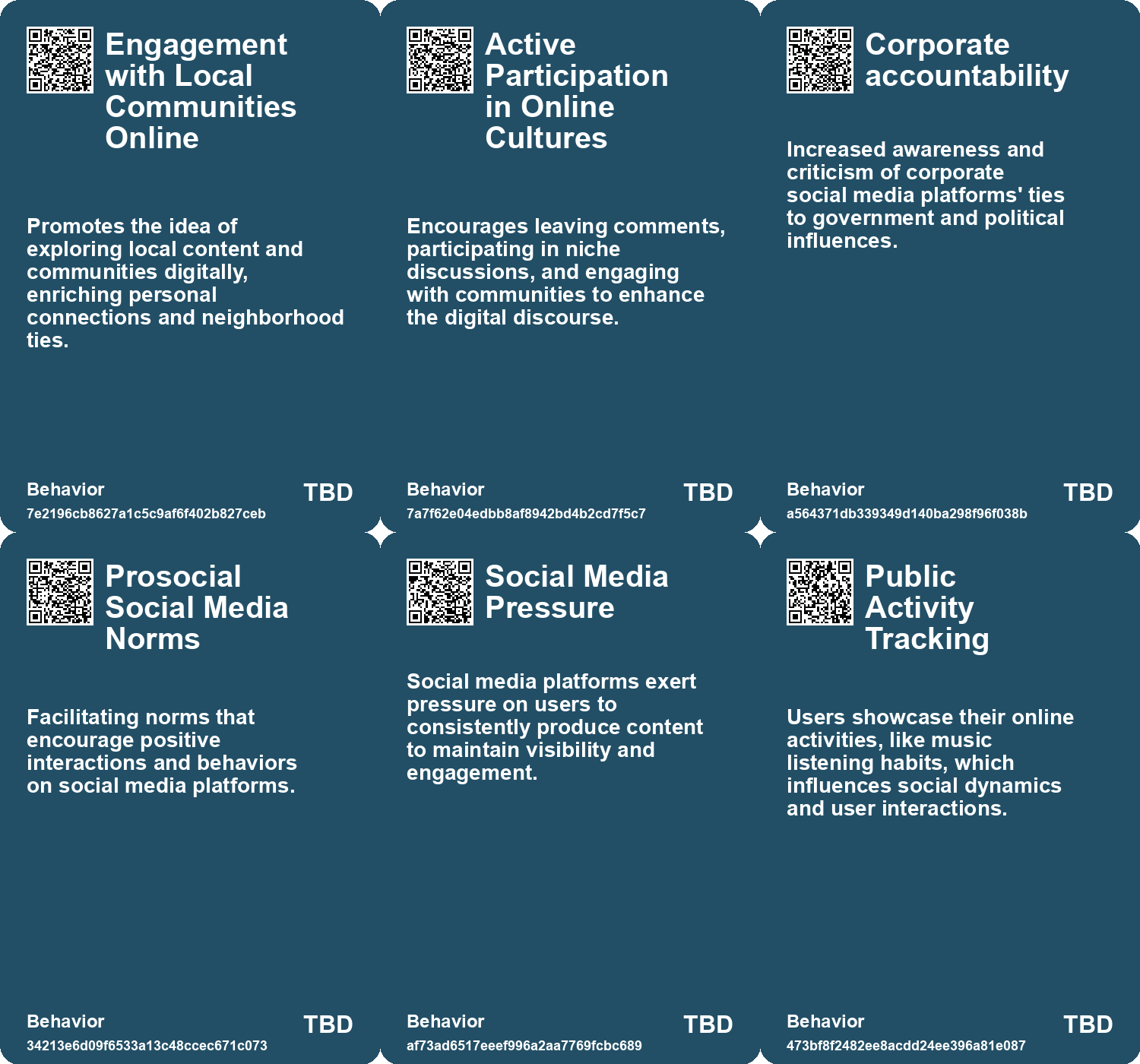
Behaviors
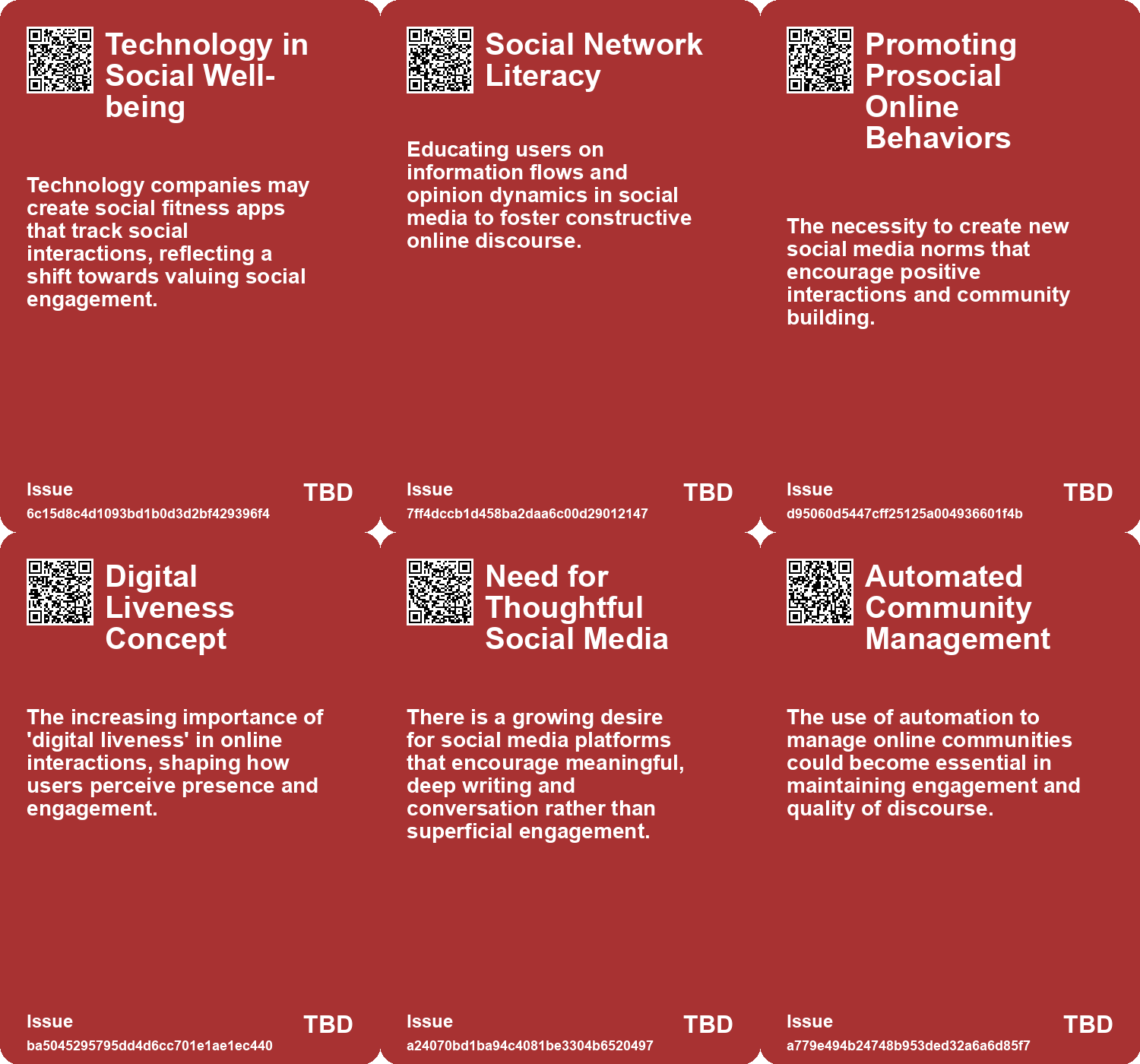
Issue
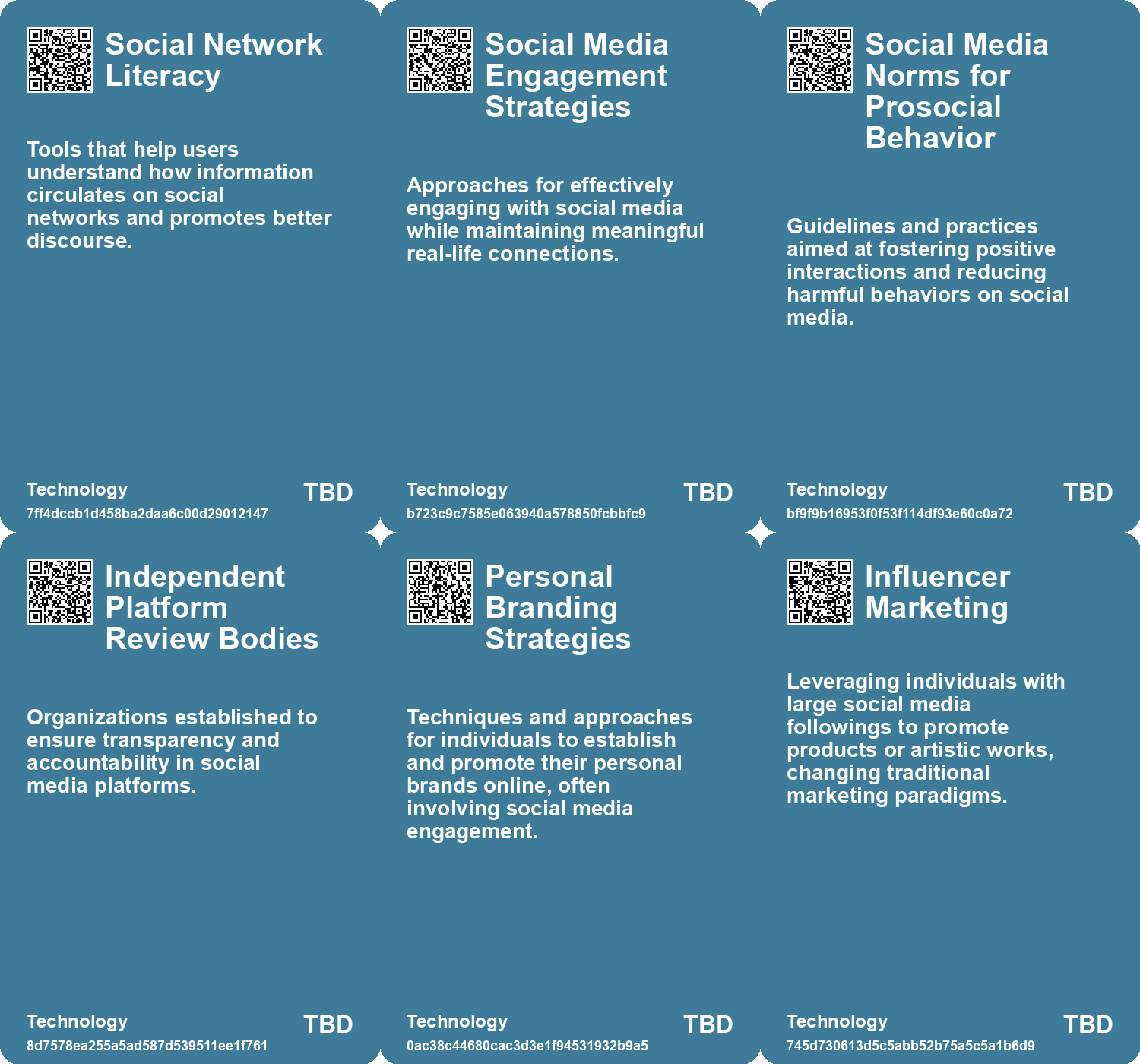
Technology
Links
- The Urgent Need for Decentralized Social Media Amidst Political Turmoil
- Meta Halts Political Ads in EU to Avoid New Transparency Regulations
- Creating a Minimum Viable Community of Practice Through Co-Design Workshops
- The Burden of Self-Promotion: Navigating Art in the Age of Personal Branding
- Exploring the Complex Underground Economy of Spam on Social Media Platforms
- Exploring the Modern Entertainment Landscape and Its Societal Implications
- Oma’s Soep Launches Campaign to Combat Loneliness Through Grocery Store Interactions
- Understanding Digital Liveness: Key Indicators and User Engagement on Social Media
- Addressing the Social Fitness Crisis: The Need for Connection in Modern Society
- Enhancing Digital Competences: Strategies for Navigating Online Challenges
- Finland’s Innovative Approach to Combating Fake News Through Education
- The Fourth Era of Brand Communities: Integrating Events with Marketing Strategies
- Exploring the Risks of Heavy Chatbot Use on Mental Health and Social Interactions
- Designing Thoughtful Social Media: The Concept of Letter Circles for Meaningful Engagement
- The Rise of Industrialized Sentiment Manipulation and the Need for Digital Identity Verification
- Addressing Threats to Democracy: Strategies for Resilience Against Misinformation and Manipulation
- EU Study Reveals X (Twitter) Leads in Disinformation Among Social Media Platforms
- The Value of Publicly Sharing Creative Processes Over Finished Products
- The Shift from Public Instagram to Private Community Sharing: A New Era in Social Media
- Nostalgia for Simplicity: The Burden of Infinite Choice in Modern Life
- Emerging Trend: Foreign-Origin Accounts Spreading Disinformation on Social Media.
- The Illusion of Online Activism in the Age of Trump: Embracing Real-World Action Instead
- Embracing RSS: A Solution for a Better Internet Experience
- The Impact of Supersharers on Vaccine Hesitancy and Fake News Spread on Social Media
- Rediscovering the Internet: Exploring Alternative Paths and Local Connections in Digital Spaces
- The Impact of Continuous Partial Attention on Networking and Relationships in a Digital World