Futures
Topic: Automated Climate Control Systems
Summary
The impact of climate change is increasingly evident across various sectors, particularly in energy and infrastructure. Rising global temperatures are straining power systems, leading to increased demand for air conditioning and electricity. Inefficient cooling systems exacerbate the energy crisis, especially in developing economies. Schools in California face challenges due to outdated air conditioning, affecting student health and learning. To address these issues, stronger standards for air conditioning and innovative solutions like solar canopies in parking lots are being implemented to enhance energy efficiency.
Automation and artificial intelligence are reshaping industries, but they also raise concerns about job displacement and the need for skilled human operators. Historical examples show that automation can create new opportunities rather than just eliminate jobs. Companies like Deere & Co. are investing in autonomous technology for agriculture, while the U.S. Air Force is developing AI-controlled fighter jets. However, the integration of AI into the workforce must be approached cautiously, with a focus on ethical guidelines and practical applications.
The automotive industry is undergoing significant changes, with advancements in technology such as Bosch’s brake-by-wire system, which enhances safety and design flexibility for electric vehicles. However, the reliability of automotive chips is being challenged by extreme heat, raising safety concerns. As the industry transitions to electric vehicles, the availability of spare parts for older models is diminishing, complicating maintenance for vintage car owners.
The rise of vertical farming presents both opportunities and challenges. While it offers greater control over food production and reduced water usage, high energy demands and financial difficulties are causing some companies to struggle. The cultural implications of car-centric urban planning are also being examined, highlighting the need for better transportation choices that consider the impact of technology on city life.
Cybersecurity remains a critical concern as vulnerabilities in solar energy monitoring systems expose them to potential hacking. The need for robust security measures is underscored by the increasing reliance on technology in various sectors. Meanwhile, the development of lethal autonomous weapons is prompting discussions about regulation and accountability in warfare, as nations invest heavily in AI for military applications.
Finally, the Consumer Electronics Show (CES) reveals a disconnect between the promises of AI technology and its current capabilities. While companies showcase innovative solutions, many still struggle to deliver on their high expectations. This skepticism reflects broader concerns about the tech industry’s focus on automation and efficiency at the expense of human agency. As industries adapt to these changes, the importance of balancing technological advancement with ethical considerations and practical applications becomes increasingly clear.
Seeds
| name | description | change | 10-year | driving-force | |
|---|---|---|---|---|---|
| 0 | Brake-by-Wire Adoption | Bosch’s hydraulic brake-by-wire technology is being tested and adopted by automakers. | Transitioning from mechanical to electronic braking systems in vehicles. | By 2030, 5.5 million vehicles worldwide will utilize brake-by-wire technology, enhancing vehicle design. | The demand for lightweight designs in electric vehicles to improve efficiency and range. |
| 1 | Data Utilization in Decision-Making | Airports increasingly use data and technology for climate resilience decisions. | From minimal data use to advanced analytics guiding infrastructure enhancements. | Data-driven approaches will revolutionize airport management, enhancing climate adaptation strategies. | The digital transformation in aviation fuels better decision-making through comprehensive data insights. |
| 2 | Increased Air Conditioning Demand in Emerging Economies | Emerging economies are experiencing a surge in demand for air conditioning units. | From low air conditioner ownership to significant increases in demand in developing regions. | In a decade, air conditioning may become standard in emerging economies, altering energy consumption patterns. | Economic growth and rising temperatures are driving air conditioning adoption in these regions. |
| 3 | Mandatory Energy Performance Standards | Countries are implementing mandatory standards for air conditioning efficiency. | From unregulated standards to enforced minimum efficiency requirements for appliances. | In a decade, these standards could significantly reduce overall energy consumption and emissions. | Governments are motivated by climate goals and energy security to enforce efficiency standards. |
| 4 | Consumer Behavior Shift Towards Energy Efficiency | Consumers are increasingly seeking more efficient air conditioning options. | From indifference towards air conditioning efficiency to active pursuit of energy-saving options. | In a decade, consumer preferences could heavily favor energy-efficient appliances, reshaping markets. | Rising energy costs and climate awareness are driving consumers to prioritize efficiency. |
| 5 | Solar-Powered Desalination | A new solar-powered desalination system that adjusts to sunlight variations. | Transition from traditional steady power desalination to a dynamic solar-powered system. | Widespread adoption of solar-powered desalination technologies in remote areas with scarce freshwater. | The increasing scarcity of freshwater resources due to climate change and population growth. |
| 6 | Automated Control Strategies | Development of automated control strategies for optimizing desalination processes. | Shift from manual to automated, real-time adjustments in desalination systems. | More efficient desalination systems operating autonomously to meet water demands. | Advancements in technology allowing for real-time data processing and automation. |
| 7 | Gray Failure Issues | Automated systems may obscure failures until they are critical due to adaptive controls. | Shift from clear system failure notifications to more subtle, hard-to-detect failures. | Operators may face increased challenges in recognizing system failures in complex automated environments. | Complexity in systems may lead to hidden failures, necessitating advanced monitoring solutions. |
| 8 | Inadequate Air Conditioning in Schools | Many California schools lack functioning air conditioning systems amid rising temperatures. | Shift from inadequate cooling systems to urgent needs for functioning air conditioning due to climate change. | In 10 years, schools may have modernized cooling systems or alternative heat management strategies. | Increasing frequency of heat waves due to climate change demands better thermal comfort in schools. |
| 9 | Funding Gaps for Repairs | Underfunded schools struggle to maintain or upgrade air conditioning systems. | Transition from insufficient funding to a potential crisis in school infrastructure investment. | In 10 years, funding mechanisms may evolve to better support school infrastructure needs, especially in low-income areas. | Equity and resource distribution in education funding are driving forces behind infrastructure improvements. |
Concerns
| name | description | |
|---|---|---|
| 0 | Cybersecurity Risks | Brake-by-wire systems, being electronic, may face vulnerabilities to hacking or cyber attacks, potentially compromising vehicle safety. |
| 1 | Thermal Management Difficulties | Managing thermal effects in advanced-node automotive chips presents heightened challenges, especially in hot climates. |
| 2 | Inequality in Cooling Access | Low access to air conditioning in emerging economies exposes vulnerable populations to extreme heat with no means to effectively cool down. |
| 3 | Energy Inefficiency of Air Conditioning Units | The majority of air conditioners sold are inefficient, leading to higher energy costs and emissions unnecessarily. |
| 4 | Skill Atrophy in Operators | Highly automated systems may lead to deterioration of skill in human operators, making them ineffective in emergencies when their expertise is needed. |
| 5 | Gray Failures | Automated systems may mask failures until they reach critical points, making them harder to manage or respond to effectively. |
| 6 | Over-Reliance on Alarms | Automated alarm systems may fail, leaving operators unaware of critical issues requiring their intervention. |
| 7 | Lack of Air Conditioning in Schools | Many California schools lack functional air conditioning, leaving students vulnerable to extreme heat conditions. |
| 8 | Climate Change as a Stressor | Increasing temperatures due to climate change worsen existing challenges faced by schools, making air conditioning a necessity. |
| 9 | Environmental Impact of Global Supply Chains | Continued reliance on global supply chains contributes to carbon emissions, highlighting a need for domestic automation solutions. |
Cards
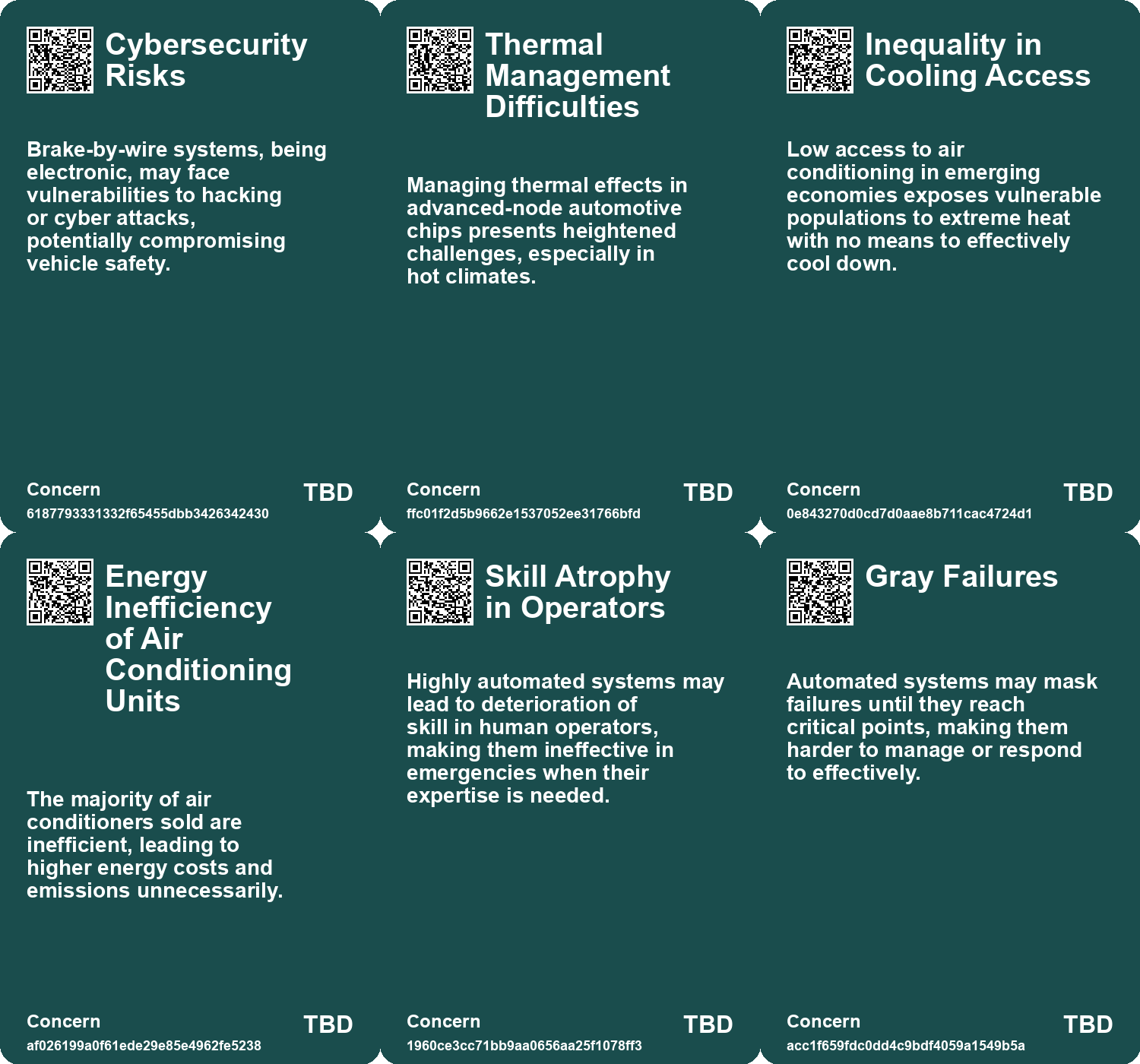
Concerns
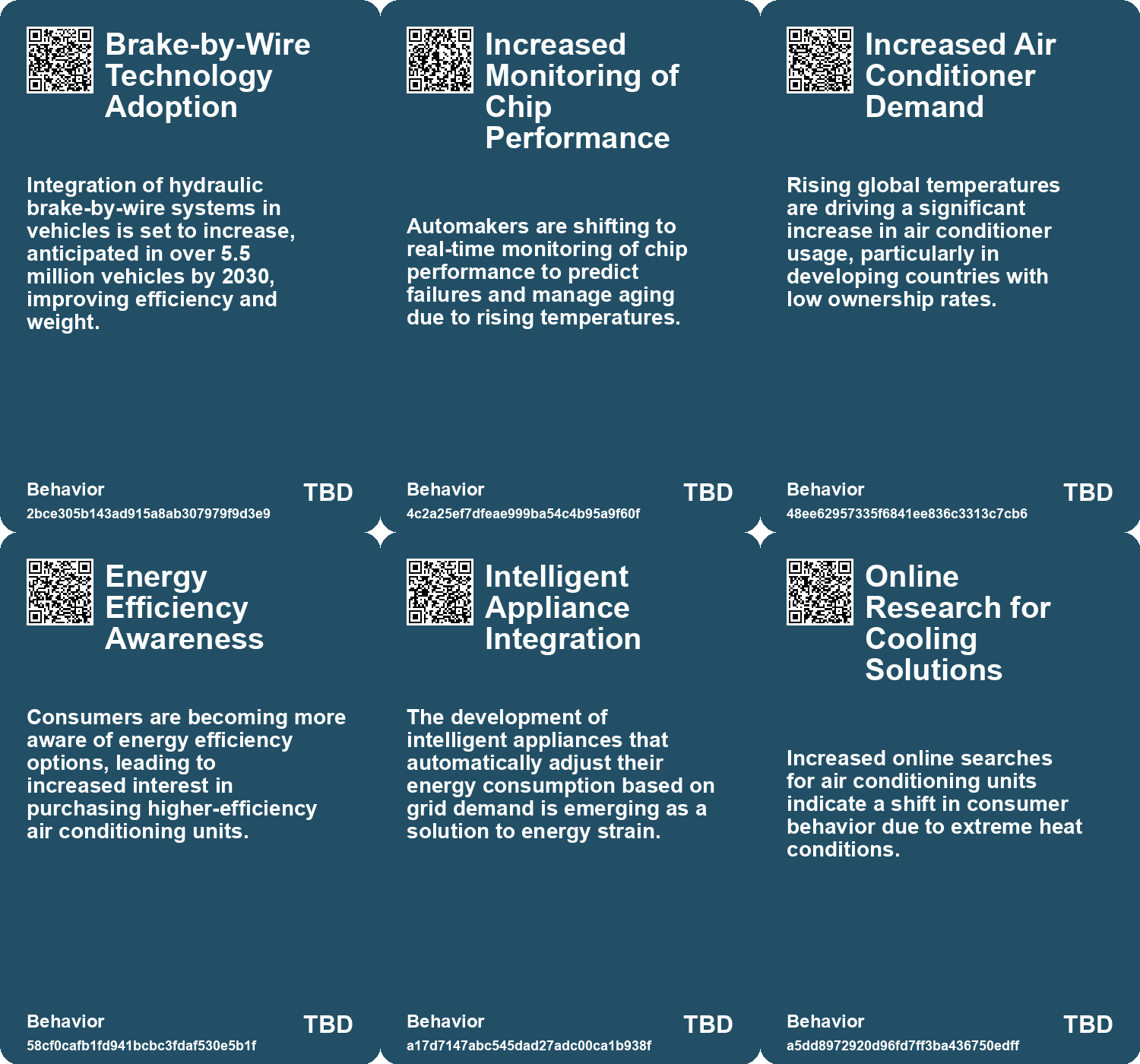
Behaviors
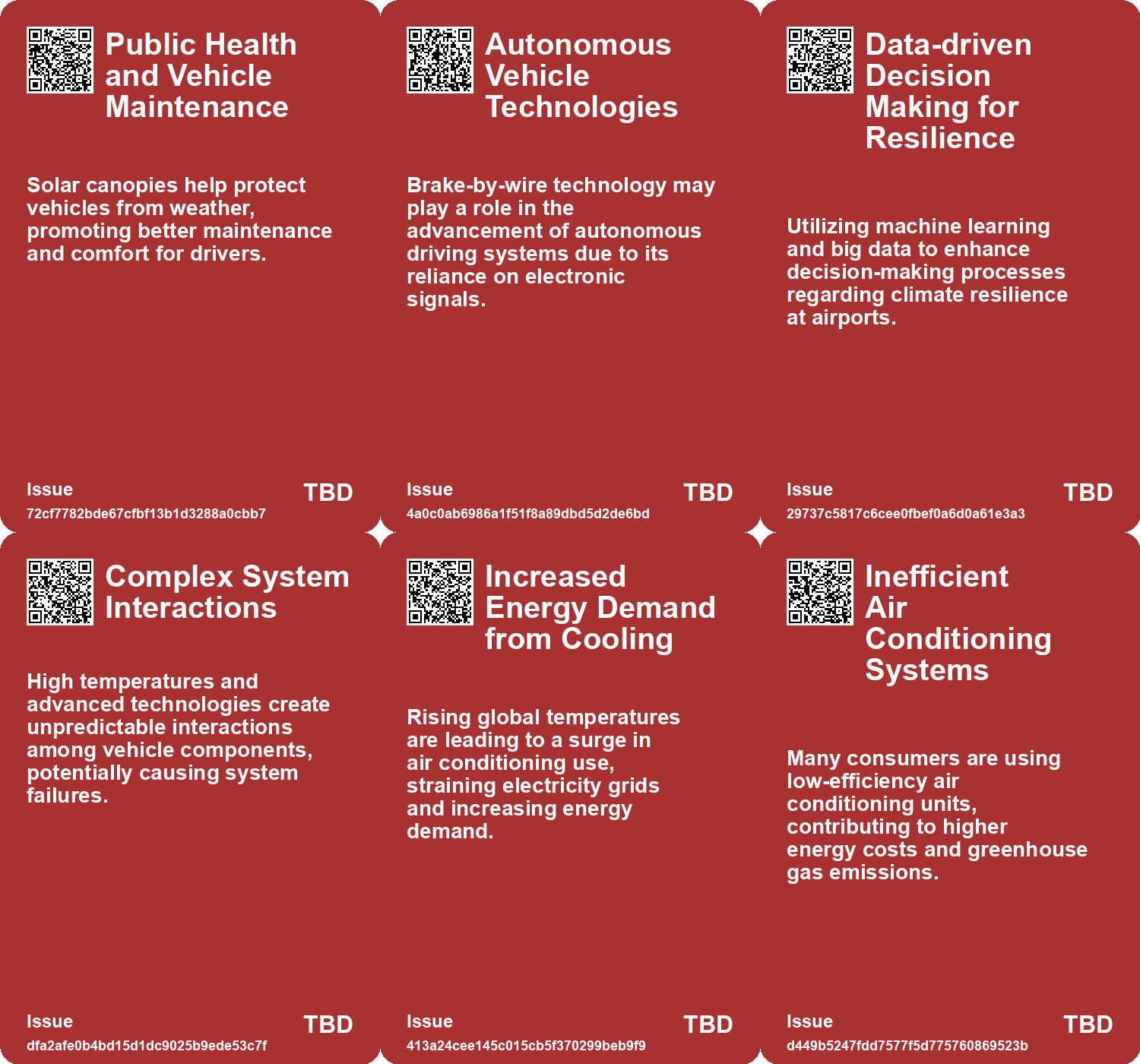
Issue
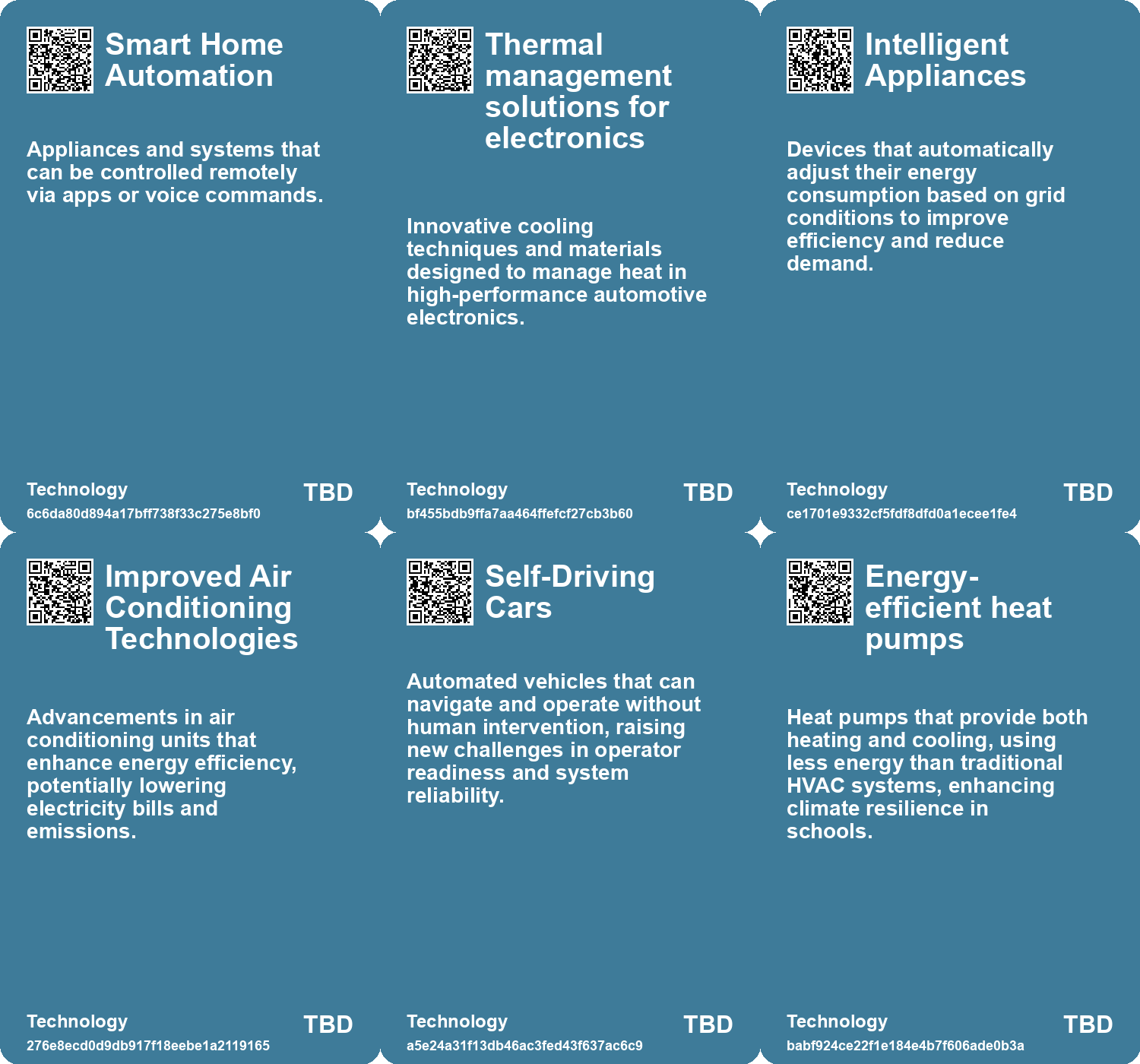
Technology
Links
- California Schools Struggle with Insufficient Air Conditioning Amid Rising Heat Waves
- The Impact of Rising Temperatures on Automotive Chip Lifespan and Reliability
- Exploring Vulnerabilities in Radio-Controlled Power Controllers and Grid Security
- MIT Study Challenges AI Job Displacement Fears with Economic Viability Insights
- The Rise of Lethal Autonomous Weapons: Ethical and Regulatory Challenges in Modern Warfare
- Anthropic Unveils Claude 3.5 Sonnet: A New AI Model for Desktop Automation
- Extreme Heat and Rising Air Conditioning Demand: The Urgent Need for Energy Efficiency Solutions
- Pirelli Launches Cyber Tire Pilot Program in Apulia, Italy
- The Rise of ‘Dumb Homes’: High-End Buyers Reject Smart Technology
- Critique of Climate Litigation: Overreach and Misguided Legal Strategies in the Fight for Climate Justice
- Air Force Chief Claims Autonomous F-16s Are Almost Equal to Human Pilots
- The Paradox of Automation: Dependency on Skilled Operators Despite Increased Automation
- Publicly Accessible PV Monitoring Systems Pose Cybersecurity Risks
- Navigating the Diminishing Availability of Spare Parts for Vintage Vehicles in an Evolving Automotive Landscape
- South Korea Mandatory Solar Canopies for Large Parking Lots: A Step Towards Renewable Energy and Job Creation
- Exploring the Disconnection Between AI Promises and Reality at CES 2023
- Enhancing Airport Resilience to Climate Change: Strategies and Solutions for the Future
- Exploring the Challenges of Vertical Farming and Car-Centric Urban Planning
- The Promise and Risks of Automation: Creating Jobs While Navigating Challenges
- Heimdall Power and Meteomatics Boost Power Grid Capacity by 30% Through Innovative Technology
- MIT Engineers Develop Innovative Solar-Powered Desalination System for Clean Water
- Bosch Tests Innovative Brake-by-Wire Technology for Future Vehicles
- John Deere’s Ambitious Journey Towards AI and Robotics Leadership in Agriculture