Futures
Topic: Infrastructure Vulnerability
Summary
Cybersecurity remains a pressing concern across various sectors, with recent warnings from U.S. cyber agencies about potential attacks from Iranian-affiliated hackers targeting critical infrastructure. Organizations in energy, water, and healthcare are urged to enhance their defenses, particularly those linked to Israeli operations. The water sector, in particular, has faced significant breaches, highlighting vulnerabilities in operational technology. Legislative efforts are underway to bolster security measures, emphasizing the need for collaboration and resource allocation.
The threat landscape is further complicated by the increasing frequency of cyberattacks on critical infrastructure in countries like Germany, where incidents involving drones and sabotage have raised alarms. Security experts warn that these attacks aim to undermine public trust and signal a serious threat level. The UK also faces a high risk of ransomware attacks, with a parliamentary report criticizing the government for inadequate planning and investment in cybersecurity for critical national infrastructure.
Climate change poses additional risks, particularly for airports and water utilities. Airports are increasingly vulnerable to extreme weather, necessitating resilience strategies that include retrofitting existing structures and utilizing data technology. Water utilities in the UK must adapt to rising demand and climate impacts, integrating IT and operational technologies while addressing cybersecurity vulnerabilities.
The automotive industry is not immune to cybersecurity threats, as a significant data breach exposed sensitive information of electric vehicle owners due to a poorly secured cloud storage system. This incident underscores the urgent need for improved cybersecurity measures in modern vehicles.
Emerging technologies, particularly artificial intelligence, are raising new concerns in the cybersecurity realm. The Biden administration’s national cybersecurity strategy aims to strengthen the country’s defenses, emphasizing accountability for software security and the role of cloud providers. Meanwhile, the cybersecurity job market faces challenges amid economic uncertainty, with layoffs and tightened budgets affecting the industry.
The Future Risks Report highlights the interconnectedness of global risks, with climate change, geopolitical instability, and cybersecurity emerging as top concerns. Social fragmentation and changing demographics are also identified as significant vulnerabilities, stressing the need for a holistic approach to risk management.
As cyber threats evolve, the maritime industry is increasingly targeted for financial gain, with hackers employing tactics like ransomware and invoice fraud. The potential for conflicts of interest arises when market investors may benefit from breaches, further complicating the cybersecurity landscape.
In summary, the articles reflect a complex interplay of cybersecurity threats across various sectors, the impact of climate change, and the need for proactive measures to safeguard critical infrastructure and public trust.
Seeds
| name | description | change | 10-year | driving-force | |
|---|---|---|---|---|---|
| 0 | Increased Cybersecurity Threats | Heightened risks from Iranian-affiliated hackers targeting U.S. critical infrastructure. | Shift from low-level to high-stakes cyber threats against essential services. | More sophisticated cyber defenses and international cybersecurity coalitions emerge. | Geopolitical tensions and enhanced hacking capabilities motivate cyber aggression. |
| 1 | Aging Infrastructure Vulnerabilities | Energy sector’s reliance on outdated systems increases susceptibility to cyberattacks. | Transition from old, vulnerable systems to modern, secure infrastructures. | A more resilient energy sector with updated technical defenses against evolving cyber threats. | Necessity for modernization to meet contemporary cybersecurity standards. |
| 2 | Supply Chain Cybersecurity Risks | Attackers targeting suppliers lead to increased vulnerability across energy sector. | From isolated security protocols to interdependence in supply chain security measures. | More stringent supply chain cybersecurity frameworks established across industries due to dependency risks. | Evolving tactics of ransomware groups necessitate a holistic supply chain security approach. |
| 3 | Default Password Risks | Insecure software and default passwords contribute to cybersecurity vulnerabilities. | Shift from acceptance of default passwords to a culture of secure software practices. | In 10 years, secure coding practices will be standard, reducing vulnerabilities from default settings. | Growing awareness of cybersecurity risks will drive the push for secure software development. |
| 4 | Cybersecurity Vulnerabilities in Public WiFi | Recent cyber attacks expose risks in public WiFi networks used by critical infrastructure. | Shift from underestimating public WiFi security to recognizing it as a critical risk factor. | Public WiFi networks will likely see enhanced security measures and regulations, improving overall cybersecurity. | Growing awareness of cyber threats and their impact on public safety will drive demand for better security protocols. |
| 5 | Insider Threats to Cybersecurity | Insider breaches highlight vulnerabilities in cybersecurity management within organizations. | Shift from focusing solely on external threats to acknowledging significant risks from within organizations. | Organizations will implement more rigorous internal security measures to mitigate insider threats effectively. | Increased incidents of insider threats will compel companies to strengthen internal monitoring and access protocols. |
| 6 | Increased Cyber Threats to Water Sector | Growing incidents of cyberattacks on water utilities indicate heightened vulnerability. | The water sector is shifting from underestimating cyber risks to prioritizing cybersecurity measures. | In 10 years, water utilities will adopt advanced cybersecurity frameworks and technologies to safeguard against threats. | The increasing sophistication and frequency of cyberattacks drive the need for enhanced security measures in critical infrastructure. |
| 7 | Increased Awareness of Infrastructure Vulnerability | Rising incidents raise awareness about the vulnerabilities of water infrastructure to cyber threats. | Awareness is shifting from ignorance about vulnerabilities to a proactive stance on cybersecurity in water infrastructure. | In a decade, water infrastructure will be designed with built-in cybersecurity measures as a standard practice. | Incidents of cyberattacks and their potential impacts prompt a reevaluation of existing infrastructure vulnerabilities. |
| 8 | Increased Vulnerability of Critical Infrastructure | UK’s critical national infrastructure is increasingly vulnerable to cyber-attacks due to inadequate investment. | From underinvestment in cybersecurity to a recognition of the urgent need for significant upgrades. | In 10 years, critical infrastructure may have robust cybersecurity measures, reducing attack risks significantly. | Growing awareness of cyber threats and the necessity for secure national infrastructure investments. |
| 9 | Potential for Cyber-Physical Attacks | Emerging risks of cyber-physical attacks on critical infrastructure could threaten safety. | From traditional cyber threats to potential physical harm through cyber-attack vectors. | In 10 years, there may be stricter regulations and protections for cyber-physical systems. | The need for safety and security in critical infrastructure drives advancements in cybersecurity. |
Concerns
| name | description | |
|---|---|---|
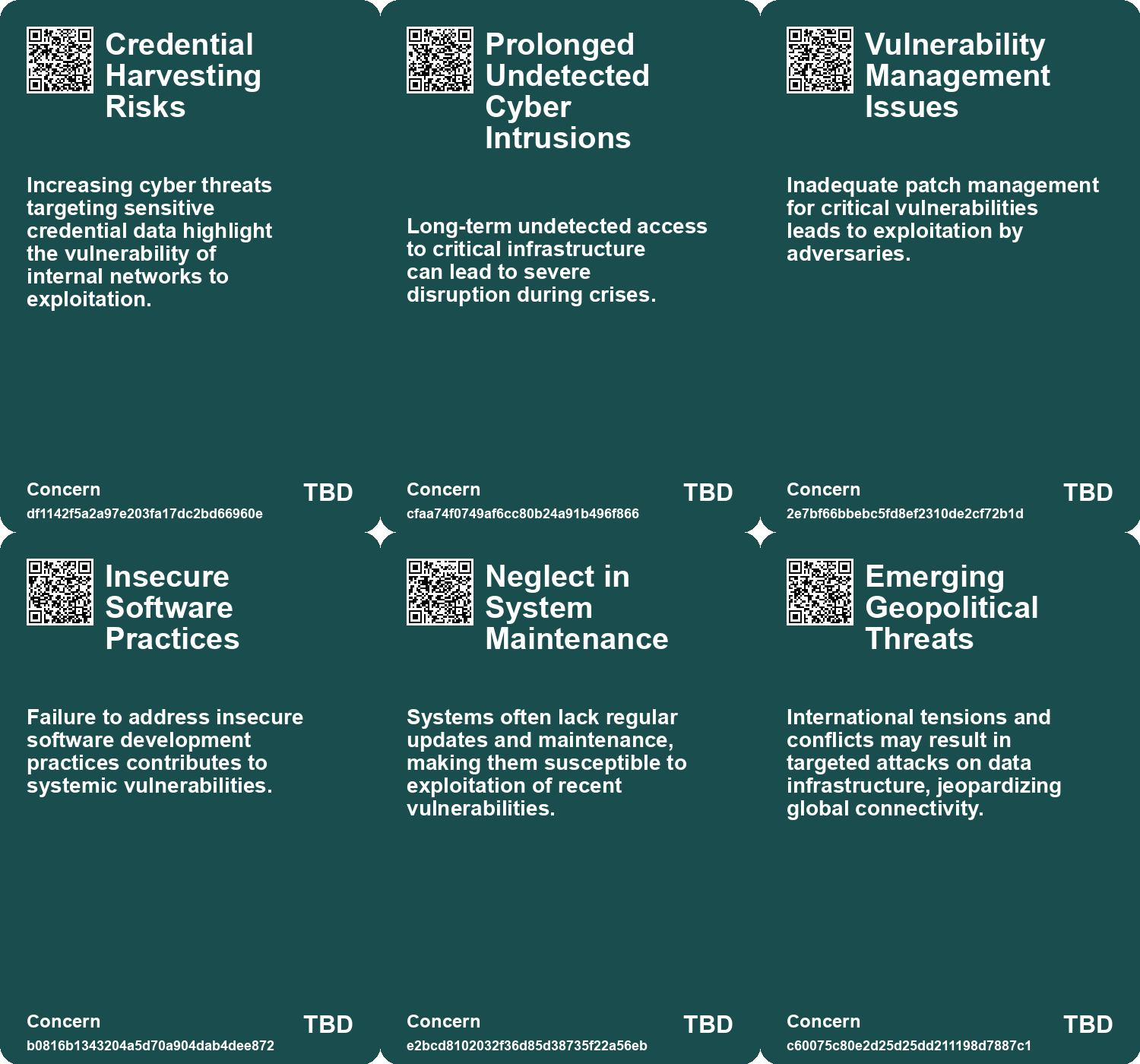
| 0 | Credential Harvesting Risks | Increasing cyber threats targeting sensitive credential data highlight the vulnerability of internal networks to exploitation. |
| 1 | Prolonged Undetected Cyber Intrusions | Long-term undetected access to critical infrastructure can lead to severe disruption during crises. |
| 2 | Vulnerability Management Issues | Inadequate patch management for critical vulnerabilities leads to exploitation by adversaries. |
| 3 | Insecure Software Practices | Failure to address insecure software development practices contributes to systemic vulnerabilities. |
| 4 | Neglect in System Maintenance | Systems often lack regular updates and maintenance, making them susceptible to exploitation of recent vulnerabilities. |
| 5 | Emerging Geopolitical Threats | International tensions and conflicts may result in targeted attacks on data infrastructure, jeopardizing global connectivity. |
| 6 | Cybersecurity Vulnerabilities in Public WiFi | Increased reliance on public WiFi exposes vulnerabilities that can lead to unauthorized access to sensitive systems, particularly in critical infrastructure. |
| 7 | Insecure IoT Devices | Continued reliance on poorly secured IoT devices could lead to widespread vulnerabilities and attacks on personal and national infrastructure. |
| 8 | Cyber Vulnerability of Water Infrastructure | Water utilities are increasingly vulnerable to cyberattacks that compromise operational technology systems. |
| 9 | Longevity of Vulnerabilities in Open Source Ecosystem | Prevalent use of outdated vulnerable software versions, like Log4J, continues to expose critical infrastructure to risks. |
Cards
Concerns
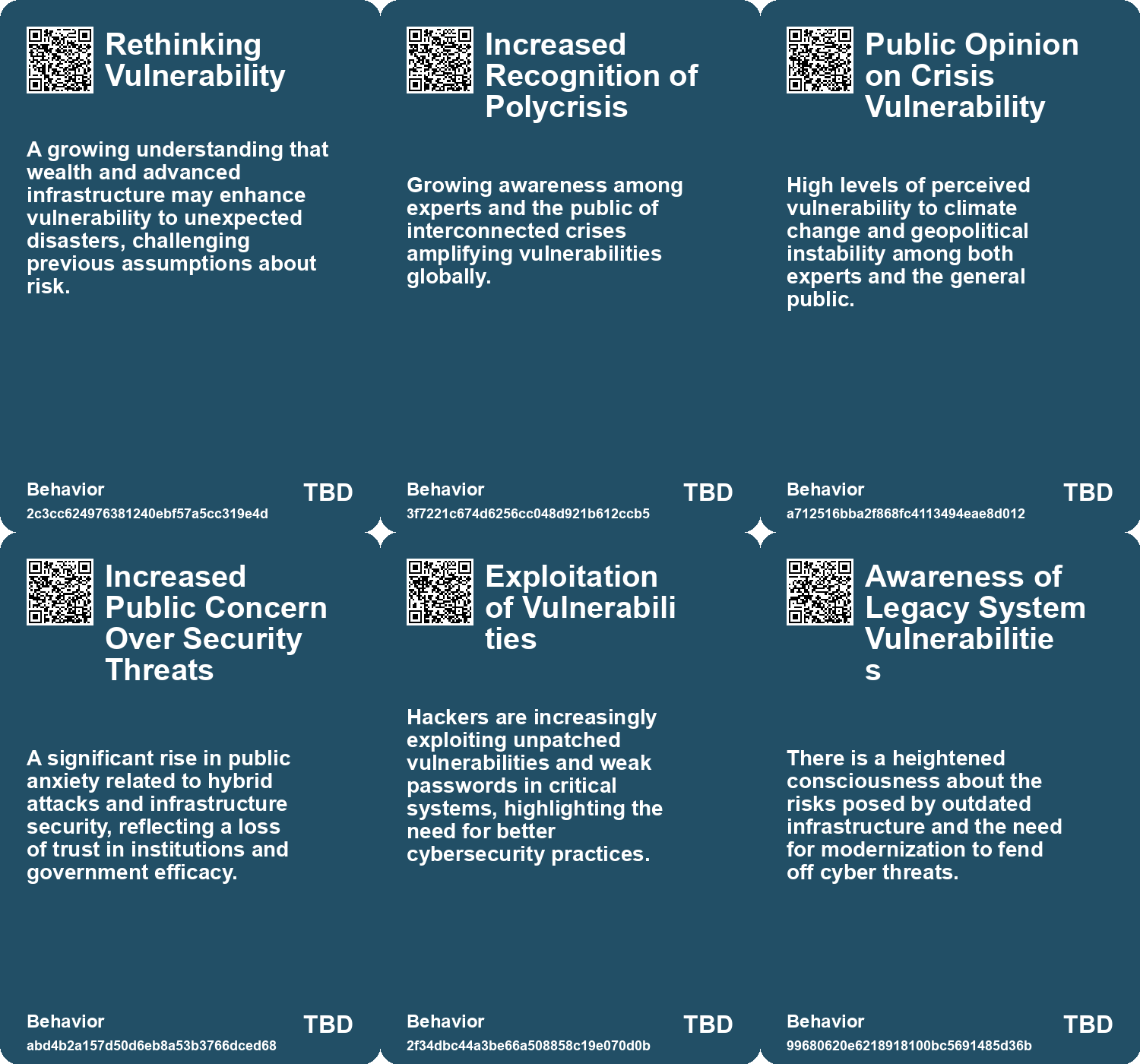
Behaviors
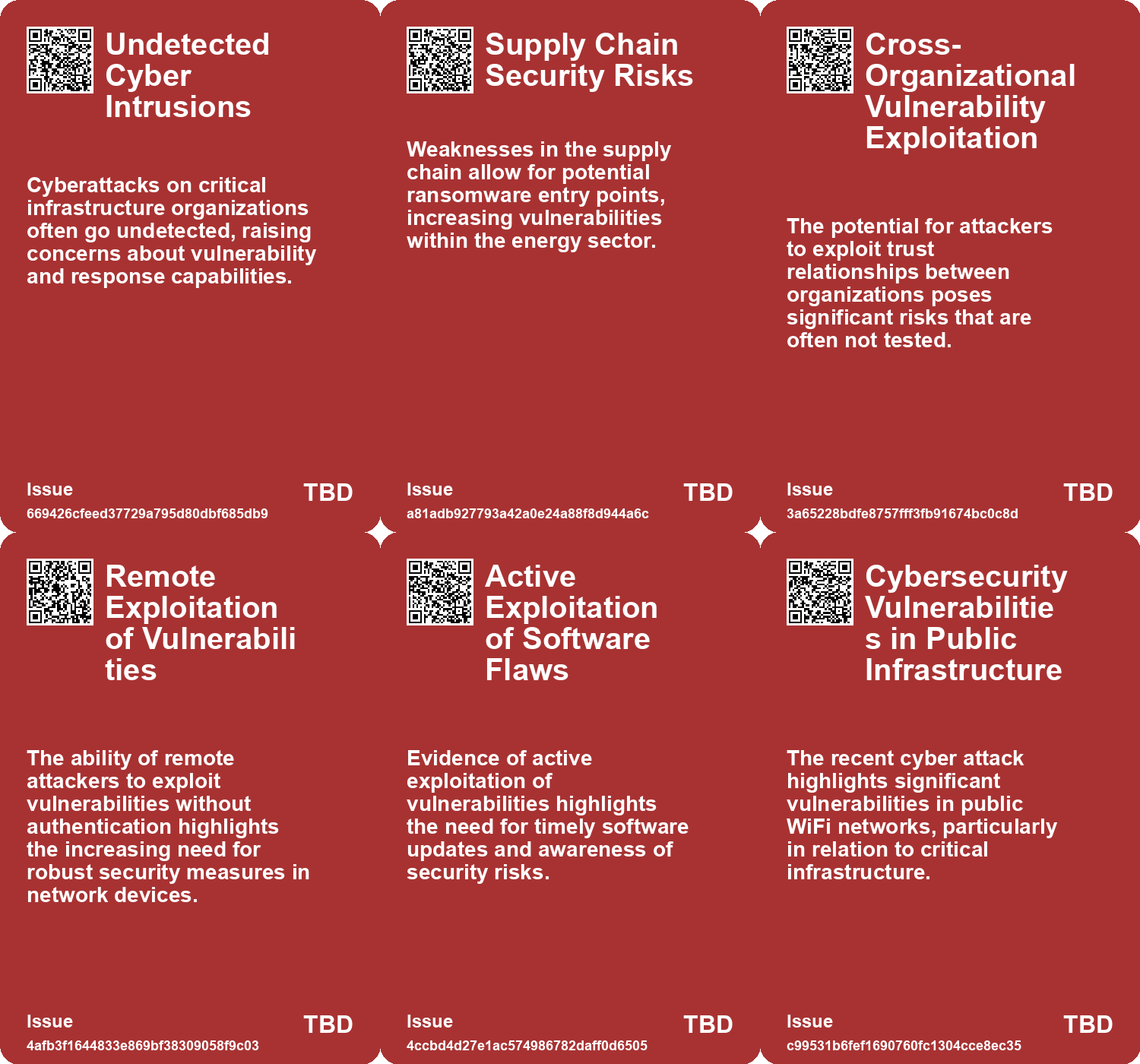
Issue
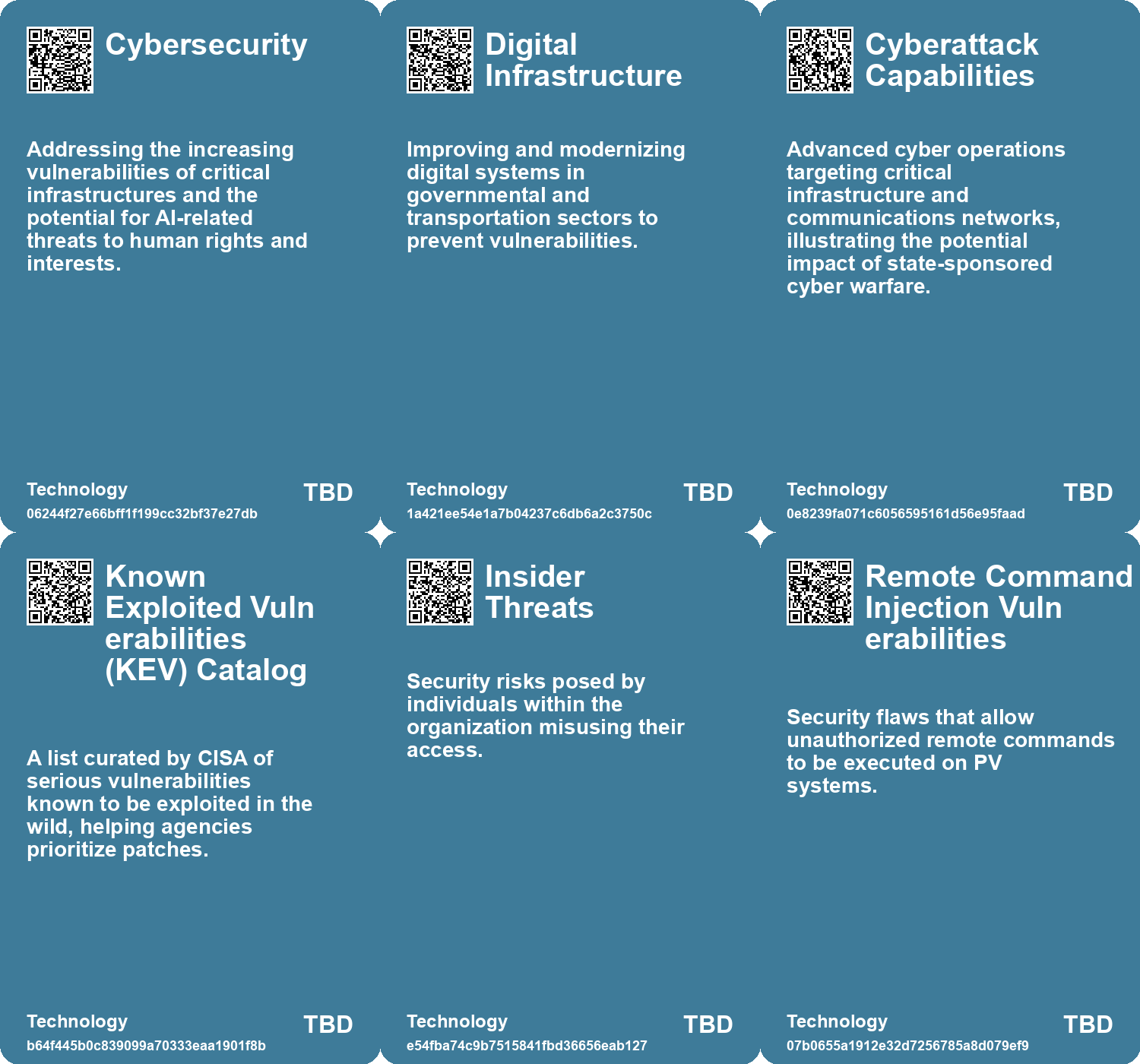
Technology
Links
- Biden Administration Unveils New Cybersecurity Strategy to Combat Growing Threats
- VW Group Data Breach Exposes 800,000 EV Owners’ Sensitive Information, Raising Cybersecurity Concerns
- Challenges and Opportunities in the 2023 Cybersecurity Job Market: Insights and Strategies
- Emerging Global Risks: Climate Change, Geopolitical Tensions, and Technological Threats in 2025
- Understanding the Financial Motivations Behind Maritime Cyber Security Threats
- The Urgent Need for Enhanced Protection of Undersea Cables for National Security
- Urgent Warning: Threats from Iranian Cyber Hackers to U.S. Critical Infrastructure
- White House Launches Initiative to Secure Open Source Software in Critical Infrastructure
- Safeguarding the UK’s Energy Sector: The Cybersecurity Challenge in an AI Era
- Future Risks Report 2025: Increasing Global Crises and Emerging Risks Analysis
- Future Risks Report 2024: Key Findings on Emerging Global Challenges
- Publicly Accessible PV Monitoring Systems Pose Cybersecurity Risks
- Addressing Threats to Democracy: Strategies for Resilience Against Misinformation and Manipulation
- Overview of Cyber Threats in the UK: Insights from the 2023 Cyber Security Breaches Survey
- China’s Secret Admission of Cyberattacks on U.S. Infrastructure Linked to Taiwan Conflict
- UK Faces High Risk of Catastrophic Ransomware Attack Due to Poor Cybersecurity Investment
- Growing Cybersecurity Threats to Water Infrastructure Demand Immediate Action and Collaboration
- Reimagining Infrastructure: Towards a Redistributive and Ecologically Sound Future
- Critical Vulnerability in Cisco Emergency Responder Allows Unauthorized Remote Access
- CISA’s Red Team Exercise Uncovers Major Security Flaws in Federal Agency After Five Months Undetected
- Increasing Threats to German Infrastructure: Drones, Cyberattacks, and Sabotage
- Transforming Water Utilities: Addressing Security and Sustainability Challenges through Innovation
- Enhancing Airport Resilience to Climate Change: Strategies and Solutions for the Future
- Chinese State Hackers Exploit ArcGIS to Establish Long-Term Network Access
- Evolving Perspectives on Risk Management in the Context of Modern Disasters
- CISA Adds High-Severity Adobe Acrobat Reader Vulnerability to KEV Catalog
- Cyber Attack on UK Train Stations Highlights Public WiFi Security Vulnerabilities