Futures
Topic: Political Polarization
Summary
Populism is a significant theme in contemporary politics, characterized by a growing divide between the common populace and established elites. This phenomenon has historical roots, with modern manifestations drawing parallels to the political climate of the 1930s. Factors such as wealth gaps, nationalism, and confrontations with oppositional forces are central to understanding how populism may influence future economic policies and international relations. As populism rises, managing conflicts between factions becomes crucial for maintaining social order.
Technology’s impact on society is another pressing issue. The rise of digital platforms and social media has led to polarization and misinformation, complicating political discourse. The Talmud is suggested as a framework for fostering multiple perspectives to counteract the negative effects of technology. Additionally, the potential for facial recognition technology to assess political orientation raises concerns about privacy and the implications of biometric surveillance in shaping political messaging.
The state of democracy is under threat from groups adept at spreading misinformation and exploiting cognitive biases. These tactics undermine democratic processes, necessitating the development of immunity activators such as media literacy strategies and independent review bodies. Ensuring transparency and promoting pro-social online behaviors are essential for democracy’s survival.
Climate change remains a critical concern, with discussions highlighting the need for community resilience and social trust in addressing its impacts. The Polak Game serves as a tool to visualize diverse attitudes toward climate action, emphasizing the moral implications of responses to the crisis. The shrinking habitability of certain regions underscores the urgency for collaborative solutions and effective energy policies.
The political landscape is shifting, particularly among younger voters who feel disenfranchised by traditional parties. The rise of figures like Zohran Mamdani reflects a growing demand for authentic engagement and representation. This demographic, often referred to as the “credentialed precariat,” seeks meaningful change in response to economic challenges and high living costs.
Economic discussions reveal a “casino economy” where financialization dominates, leading to a K-shaped recovery that exacerbates wealth inequality. The focus on short-term gains over traditional growth raises questions about the sustainability of this economic model. The intertwining of materialism and spirituality reflects a cultural shift as individuals seek security in uncertain times.
Finally, the influence of foreign powers in American politics remains a complex issue. Russia’s active role in shaping public opinion and the electoral process contrasts with China’s more muted approach. As the landscape of foreign influence evolves, concerns about the integrity of elections and the role of disinformation continue to grow. The need for transparency and critical thinking in the face of AI-generated content is paramount to safeguarding democratic processes.
Seeds
| name | description | change | 10-year | driving-force | |
|---|---|---|---|---|---|
| 0 | Rise of Internet Grifters | An increase in internet scams and disinformation campaigns as political tools. | Shift from traditional politics to online manipulation and grifting. | Internet platforms will struggle to regain trust as grifters manipulate political discourse. | The overwhelming access to information online promoting distrust in conventional media. |
| 1 | Youth Political Shift | Younger voters increasingly supporting populist candidates over traditional party candidates. | Transition from voting for mainstream candidates to supporting outsiders who represent their interests more. | Future elections may be dominated by candidates prioritizing youth and affordability issues. | A younger generation disillusioned by traditional parties and seeking alignment with new ideologies. |
| 2 | Populist Momentum in Politics | Populism rising within mainstream parties, challenging traditional power structures. | Shift from established political ideologies to populist movements that advocate for the underprivileged. | Political landscapes could see more populist candidates emerging, reshaping party platforms and policies. | Growing economic precarity and disenfranchisement driving citizens to seek alternative political representation. |
| 3 | Decline of Civic Maturity | A noticeable decline in political maturity and civic responsibility among U.S. public figures. | Shift from perceived civic maturity to crass behavior in public life. | In 10 years, American politics may evolve to embrace more superficial and immature public discourse. | A culture of trolling and disdain for political decorum is driving this trend. |
| 4 | Increasing Polarization | Global societies are experiencing heightened polarization in political and social beliefs. | Shift from diverse ideological acceptance to increasing intolerance of opposing views. | In ten years, societies may become more fragmented, leading to isolated ideological communities. | Digital technologies and social media algorithms are fueling personalized information consumption. |
| 5 | Economic Voter Sentiment Shift | Voter sentiment now heavily influenced by inflation, impacting party loyalty and performance. | Shift from economic tolerance to intolerance, where inflation has a direct electoral consequence. | Political parties will prioritize economic stability over ideology to maintain voter loyalty. | Increasing public frustration with inflation and economic instability post-pandemic. |
| 6 | Gender Dynamics in Elections | Significant generational gender differences in political sentiment following Trump’s victory. | Emerging gender-based voting patterns reflecting deeper societal issues around masculinity and feminism. | Political narratives will increasingly consider gender dynamics, influencing campaign strategies. | Evolving cultural perceptions of gender roles and expectations in society. |
| 7 | Democratic Party’s Elite Image | Perception of Democrats as disconnected from working-class interests grows post-election. | Shift from a working-class party to one perceived as catering to elites and corporate interests. | Democratic strategies will likely focus on re-establishing connections with working-class voters. | Economic disparities and dissatisfaction with elite-focused policies among voters. |
| 8 | Conflict Management in Populism | Populism leads to increased conflict and disorder within countries. | From cooperative political environments to confrontational and exclusive dynamics. | Political systems may evolve to manage conflicts more effectively or become more authoritarian. | The need for stability and order in response to increasing political polarization. |
| 9 | Impact of Facial Morphology on Perception | Facial features may influence public perception and behavior towards political beliefs. | From subjective political identification to objective judgments based on appearance. | Facial appearance might increasingly shape social and political dynamics and interactions. | Social psychology principles indicating that appearance influences perception and treatment. |
Concerns
| name | description | |
|---|---|---|
| 0 | Political Fragmentation | The risk of a fragmented political landscape as new populist movements challenge established parties. |
| 1 | Youth Discontent | Young voters feeling marginalized and disillusioned due to economic pressures may drive political upheaval. |
| 2 | Polarization and Trolling in Politics | The trend of politicians resorting to trolling and sensationalism can deepen political divides and discourage meaningful dialogue. |
| 3 | Cultural Polarization | Increasing division between political and cultural identities, leading to hostile social interactions and potential violence. |
| 4 | Influencer Politics | Rise of political influencers shaping ideologies and mobilizing youth, potentially sidelining traditional political discourse. |
| 5 | Youth Political Engagement | Increasing active engagement of young conservatives, leading to shifting political landscapes and potential unrest. |
| 6 | Polarization of Society | Global trend of increasing political polarization, driven by digital communication methods, affecting democratic principles. |
| 7 | Gender Dynamics in Politics | Polarization between young men and women in political preferences reflects broader societal gender conflicts and could exacerbate divisions. |
| 8 | Exodus of Businesses and Talent | Shift of businesses and individuals from progressive to conservative states may erode economic bases and further exacerbate social divides. |
| 9 | Political Polarization | Increasing division within political parties regarding economic policies and social issues could lead to governance challenges and instability. |
Cards
Concerns
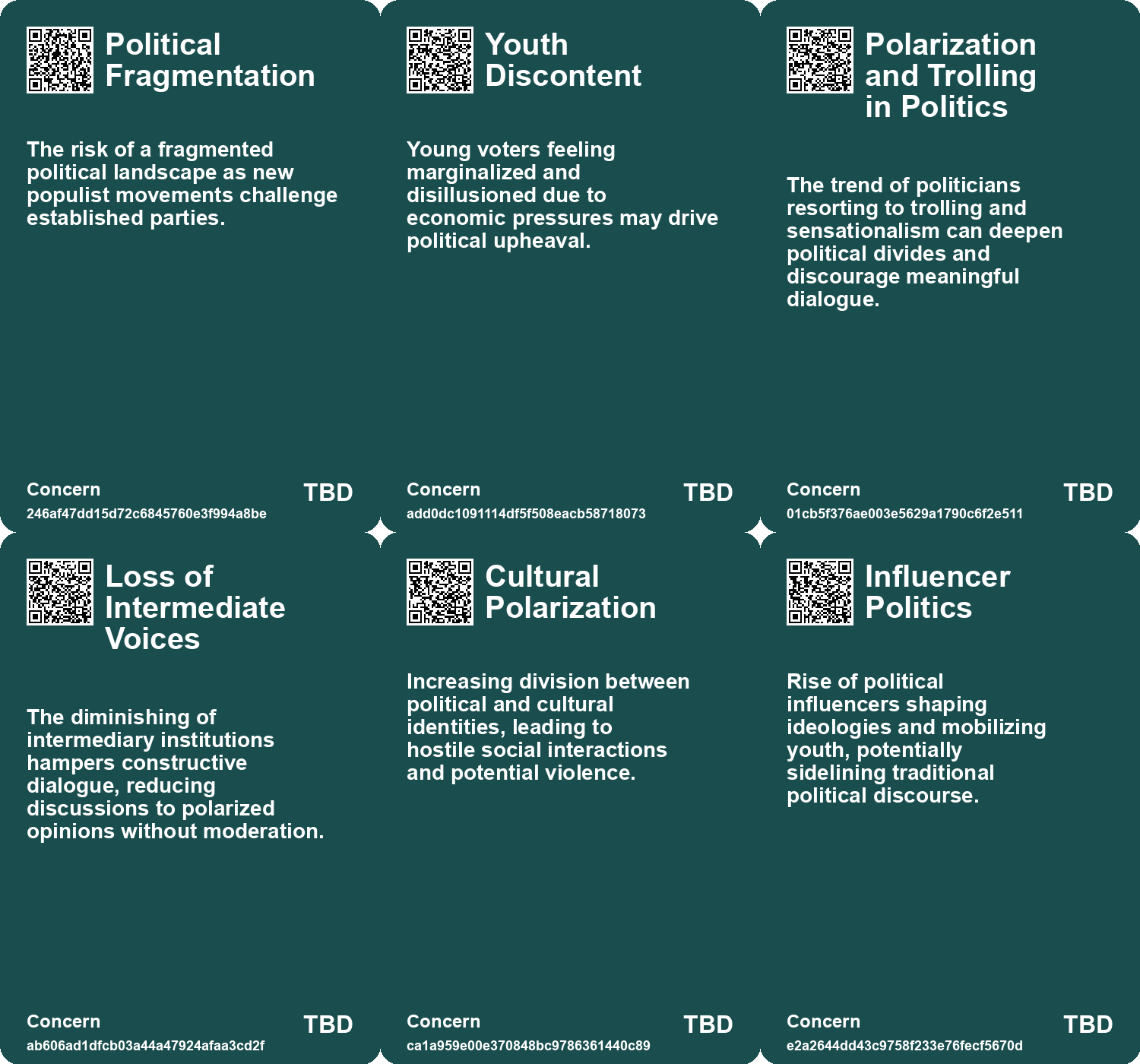
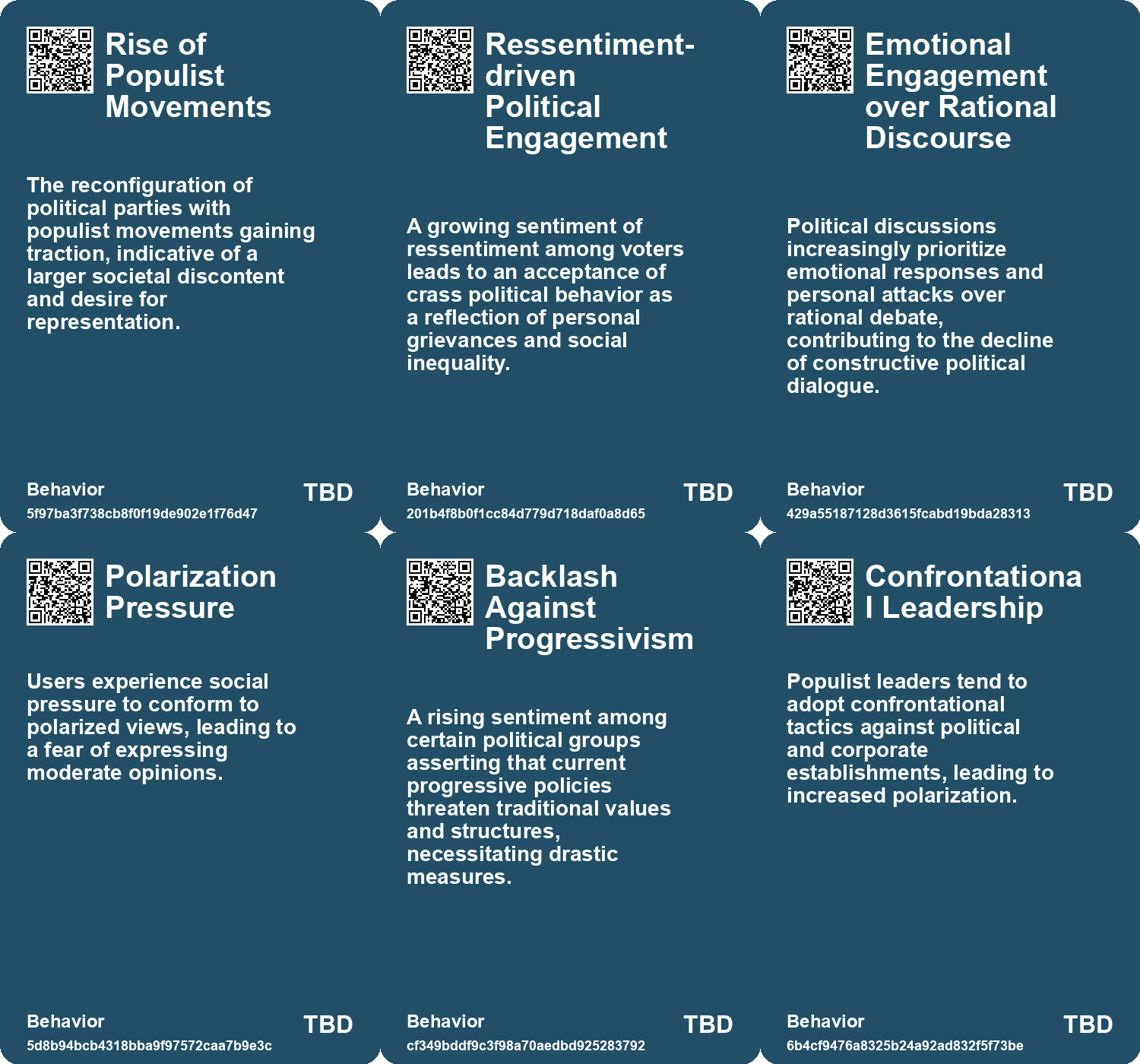
Behaviors
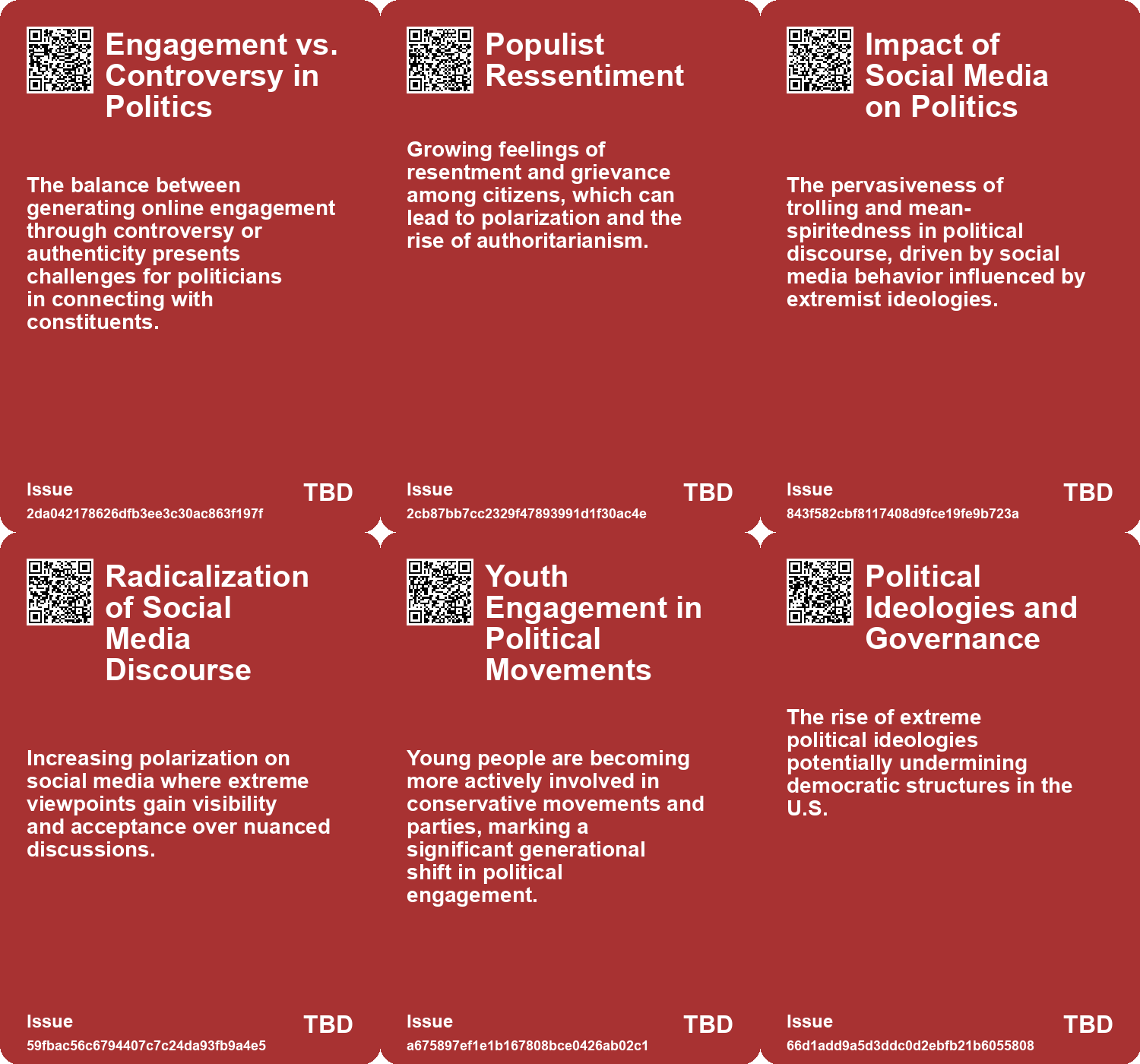
Issue
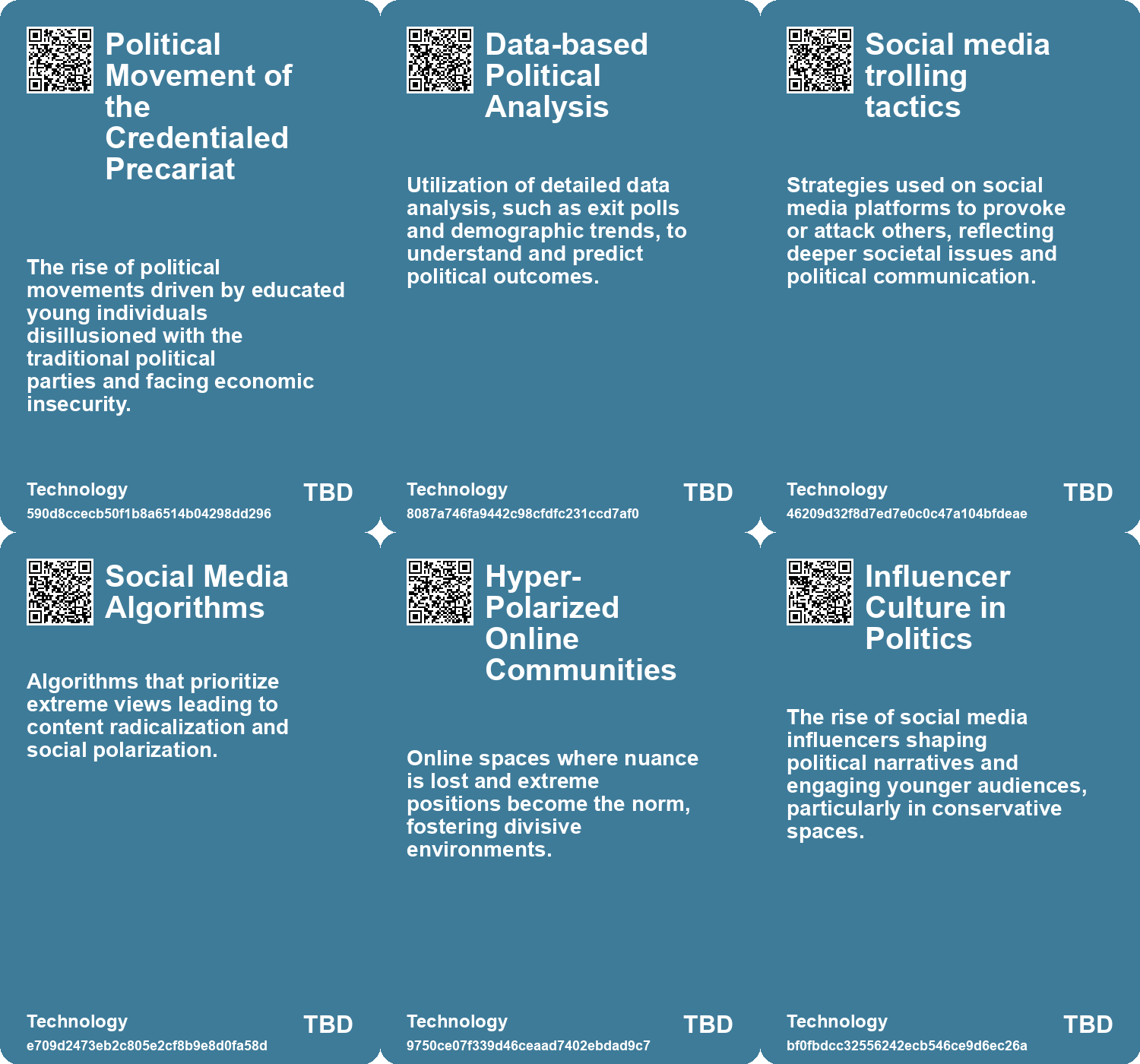
Technology
Links
- Study Reveals Shift in Political Bias of ChatGPT Towards the Right
- The Interplay of Democracy, Work, and Economic Justice in Modern Society
- Zohran Mamdani’s Campaign: A Refreshing Approach to Politics Against Establishment Norms
- Russell Vought’s Ideological War Against Government and the Rise of the Addiction Economy
- Understanding Populism: Its Rise, Characteristics, and Implications in Today’s Politics
- Transformative Changes from 2014 to Today: AI, Energy, and Nationalism
- Zohran Mamdani’s Victory: A Reflection of Rising Credentialed Precariat and Political Change in NYC
- Exploring Attitudes Towards Climate Change and the Planetary Crisis Through the Polak Game
- The Shift from Political Engagement to Escapism in Post-Election America
- Exploring Six Narratives on Trump’s 2024 Election Victory and Quincy Jones’ Creative Philosophy
- Addressing Threats to Democracy: Strategies for Resilience Against Misinformation and Manipulation
- The Decline of Political Maturity in America: A Call for Responsible Citizenship
- The UK’s Declining Geopolitical Relevance and Elite Inaction: A Historical Perspective
- Addressing Generative AI Threats in the Upcoming UK General Election
- The Illusion of Online Activism in the Age of Trump: Embracing Real-World Action Instead
- The Unraveling of Progressive Politics: Economic Shifts and Growing Conflicts
- AI and Facial Recognition: Predicting Political Orientation from Facial Features
- Global Experts’ Pessimistic Outlook for the Next Decade: Key Survey Findings
- Navigating Climate Change: The Need for Community Resilience and Social Trust
- Navigating the Climate Crisis: The Importance of Community and Social Trust in Adapting to Change
- Youthful Conservatism: Celebrations and Shifts in Trump’s Second Inauguration
- U.S. Intel: Russia Continues to Favor Trump in Election Influence Efforts
- Understanding the Casino Economy: How Financialization Shapes Our Lives and Beliefs
- Understanding Polarization: Healing Our Relationship with Technology and Embracing Diverse Perspectives