Futures
Topic: Erosion of Trust in Institutions
Summary
The decline of democratic institutions and the rise of autocratic governance are increasingly evident in various global contexts. The Future Risks Report highlights the fragmentation of power and the growing skepticism towards public authorities, reflecting a broader trend of social fragmentation. This erosion of trust is compounded by the rise of misinformation, particularly through digital media, where the authenticity of information is often questioned. The phenomenon of “deep doubt” illustrates how advanced technologies, such as AI-generated content, contribute to public skepticism and misinformation.
Economic challenges are also a significant theme, with the UK facing a crisis marked by declining productivity and investment. The recent turmoil in British financial markets, triggered by a controversial budget proposal, underscores the impact of external factors like the energy crisis stemming from geopolitical tensions. This situation serves as a cautionary tale for Europe, where high energy prices threaten economic stability across the continent.
Infrastructure plays a crucial role in societal well-being, yet its degradation can lead to severe consequences. The recent flash floods in the Indian Himalayas exemplify how failing infrastructure can exacerbate the effects of climate change and social inequality. The need for sustainable and equitable infrastructure development is urgent, as historical patterns show that infrastructure projects have often perpetuated colonial and revolutionary dynamics.
The ethical landscape of corporate governance is under scrutiny, with experts warning of the signs of ethical collapse in organizations. Factors such as pressure to perform, lack of accountability, and weak leadership contribute to a culture where ethical breaches become commonplace. Emphasizing the importance of long-term thinking and strong ethical frameworks, experts advocate for a shift towards responsible corporate behavior to prevent moral failures.
In education, the integration of AI tools raises concerns about the decline of critical thinking and cognitive abilities among students. The reliance on technology for academic tasks can lead to a diminished capacity for deep learning and reasoning. This trend is mirrored in the broader societal context, where technology’s influence on communication and information dissemination challenges traditional educational practices.
The illegal sand mining industry highlights the environmental and security risks associated with resource extraction. As the demand for sand in construction grows, unsustainable practices lead to habitat destruction and increased corruption. Addressing these issues requires international cooperation and stricter regulations to protect vital ecosystems.
Finally, the evolving nature of risk in disaster management emphasizes the interconnectedness of various threats. Traditional models that treat disasters as isolated events are outdated, necessitating a comprehensive approach that considers the interdependence of systems. Local resilience is crucial, but systemic support is essential for effectively managing complex risks in an increasingly vulnerable world.
Seeds
| name | description | change | 10-year | driving-force | |
|---|---|---|---|---|---|
| 0 | Emergence of Misinformation as a Hazard | Misinformation undermines trust in emergency responses and complicates disaster management efforts. | Addressing misinformation shifts from an informational issue to a fundamental cognitive hazard. | Systems to counter misinformation will evolve, enhancing public trust and response effectiveness. | The influence of social media and algorithm-driven content complicates risk communication. |
| 1 | Erosion of Public Trust in Authorities | Confidence in public authorities to manage crises is declining. | Public confidence shifts from trust in authorities to skepticism regarding their capabilities. | In 10 years, communities may largely rely on local initiatives rather than central authorities for crisis management. | Increasing complexity and frequency of crises erodes public trust in government effectiveness and preparedness. |
| 2 | Erosion of Trust in Public Authorities | Public confidence in authorities’ ability to manage risks like climate change is declining. | Declining public trust from a view of competent governance to growing skepticism. | In a decade, this erosion may lead to increased civil unrest and demand for alternative governance structures. | Recurring failures in crisis management contributing to public distrust. |
| 3 | Erosion of Democratic Institutions | Decline of democratic frameworks, with rising autocracies filling governance gaps in Western nations. | Shift from democratic governance to autocratic regimes, reflecting disillusionment with liberal democracies. | By 2034, citizens may accept autocratic structures as alternatives to perceived inefficiencies in democracy. | Disillusionment with current democratic processes may lead to a preference for perceived stability and order. |
| 4 | Impact of Misinformation on Politics | Growing recognition of misinformation’s damaging effects on political institutions. | Shift from limited awareness to recognition of misinformation as a critical risk. | In ten years, misinformation could lead to fundamental changes in political processes and trust. | Increased digital communication and social media influence on public opinion. |
| 5 | Intergenerational Elite Disconnect | The elite’s inability to adapt to modern challenges leads to governance issues. | Recognition of necessity for adaptive governance in the face of decline. | In a decade, the UK may need new leadership models to address complexity in governance. | Failure to adapt to changing economic and geopolitical landscapes pushes for reform. |
| 6 | Conspiracy Theories Amplification | Rise in conspiracy theories fueled by AI-generated media and deep doubt. | Shift from skepticism towards specific events to broader distrust in all media narratives. | Conspiracy theories may become mainstream, affecting public trust in institutions and media. | The intersection of technology, misinformation, and social media dynamics. |
| 7 | Growing Distrust in Institutions | Workers exhibit increasing distrust towards institutions, paralleling political electoral abstention. | Shift from trust and engagement in institutions to a sense of disillusionment and disengagement. | Potential rise in alternative governance models or community-led initiatives in response to institutional failures. | Continuous failure of traditional institutions to address people’s needs and concerns. |
| 8 | Growing list of ethical collapses | An increasing number of reputable companies are experiencing ethical failures, indicating systemic issues. | Transitioning from isolated incidents of ethical collapse to a widespread trend across many organizations. | In ten years, corporate culture may prioritize ethics, leading to a decline in scandals and improved trust. | Increased public scrutiny and demand for corporate accountability are driving the emphasis on ethics. |
| 9 | Culture of conflicts of interest | Prevalence of conflicts of interest undermines ethical decision-making in organizations. | Moving from a culture of accepted conflicts to one that prioritizes transparency and conflict management. | In ten years, companies may implement stringent conflict-of-interest policies, fostering better practices. | Heightened awareness and regulatory scrutiny regarding conflicts of interest are driving this change. |
Concerns
| name | description | |
|---|---|---|
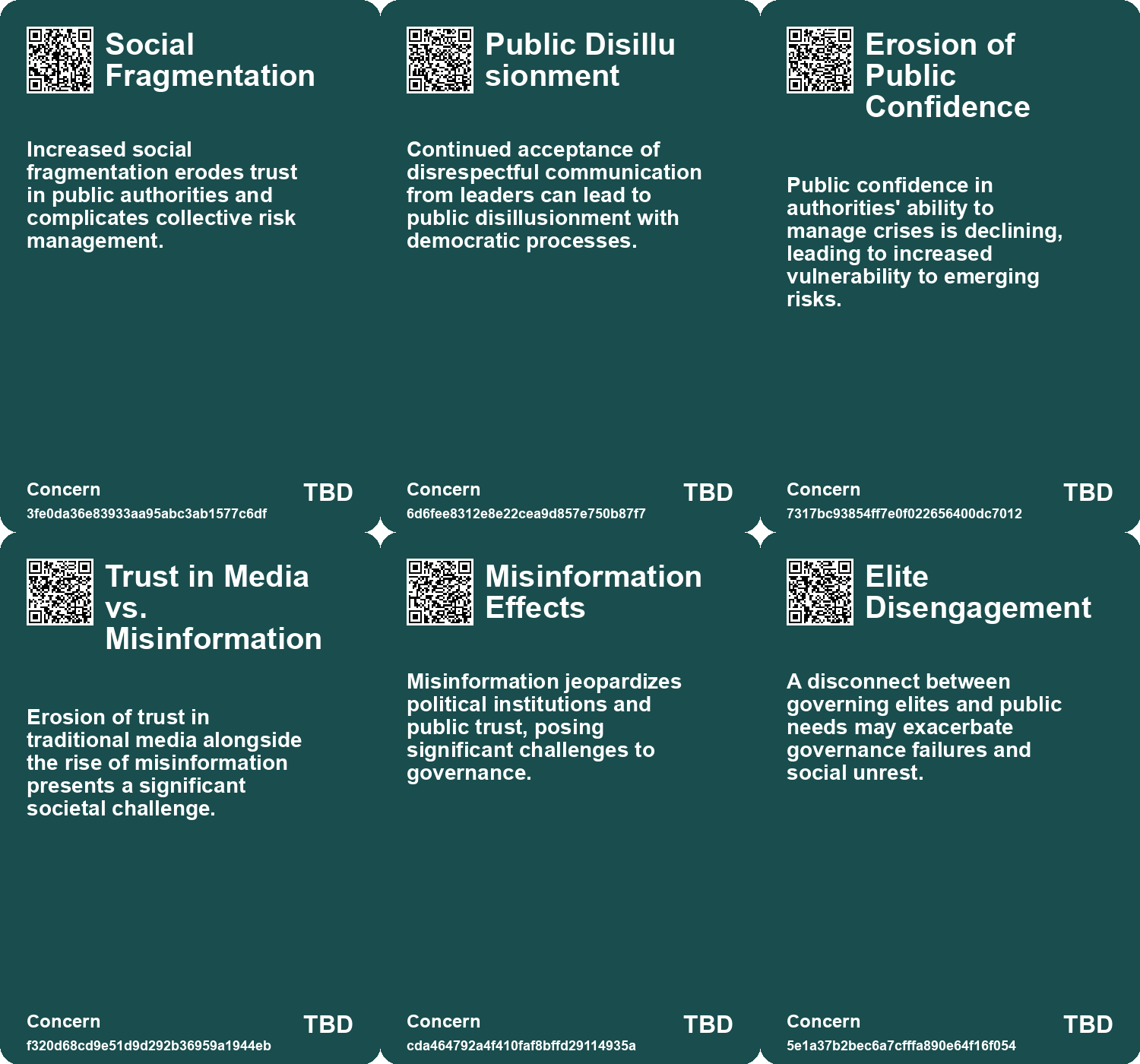
| 0 | Social Fragmentation | Increased social fragmentation erodes trust in public authorities and complicates collective risk management. |
| 1 | Public Disillusionment | Continued acceptance of disrespectful communication from leaders can lead to public disillusionment with democratic processes. |
| 2 | Erosion of Public Confidence | Public confidence in authorities’ ability to manage crises is declining, leading to increased vulnerability to emerging risks. |
| 3 | Trust in Media vs. Misinformation | Erosion of trust in traditional media alongside the rise of misinformation presents a significant societal challenge. |
| 4 | Misinformation Effects | Misinformation jeopardizes political institutions and public trust, posing significant challenges to governance. |
| 5 | Elite Disengagement | A disconnect between governing elites and public needs may exacerbate governance failures and social unrest. |
| 6 | Vulnerability to Social Media Manipulation | Attack vectors designed to manipulate user behavior can erode individual agency and societal norms. |
| 7 | Erosion of Faith in Economic Systems | Growing public distrust in economic systems due to consistent hidden price hikes and poor service quality from monopolies. |
| 8 | Democratic Deficit | Rapid policy changes, such as those regarding the mink cull, could lead to perceptions of diminished public trust in democratic processes. |
| 9 | Exposure to Misinformation | As political polarization increases, collective responses to misinformation could weaken the societal trust that has been built over time. |
Cards
Concerns
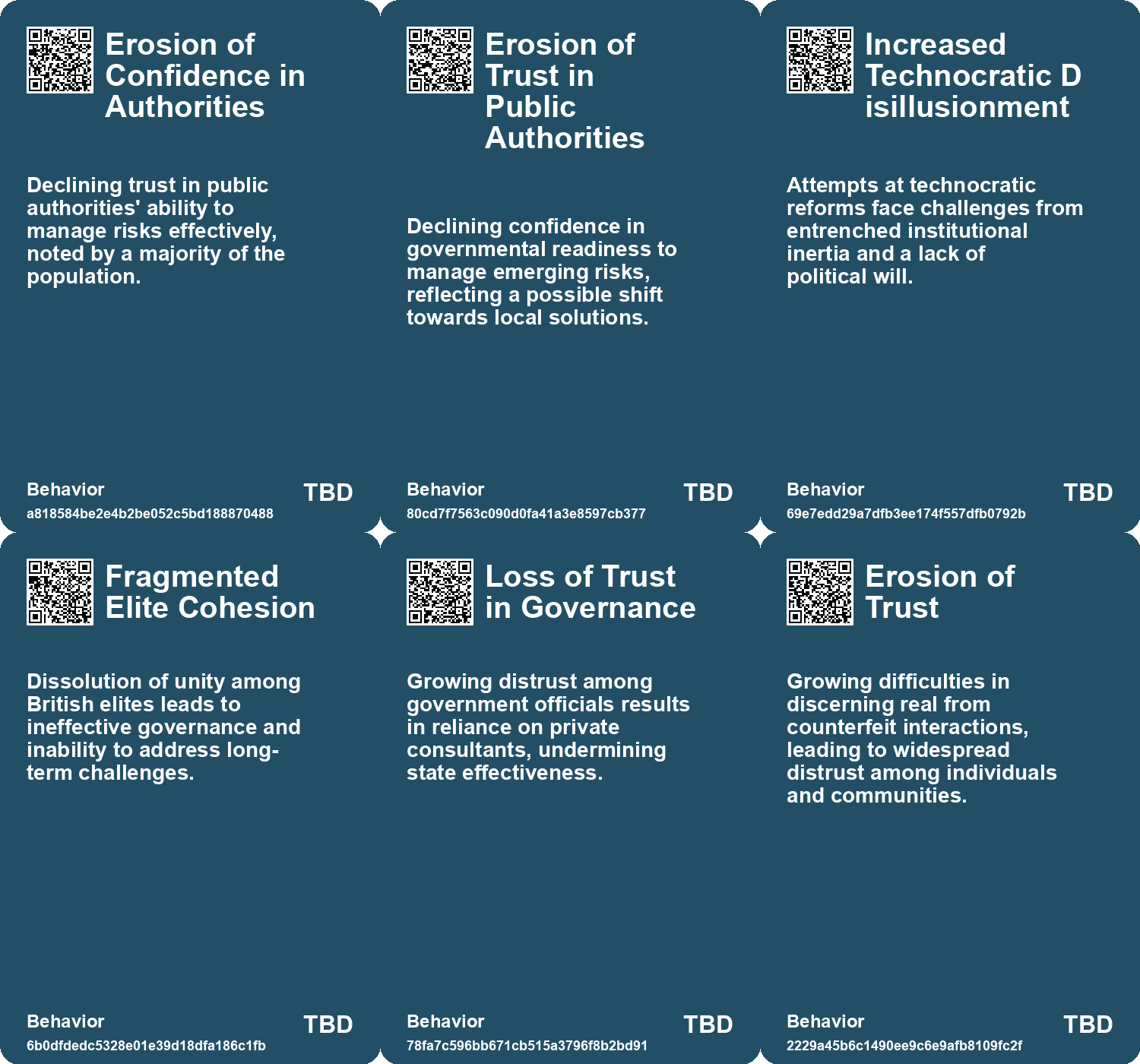
Behaviors
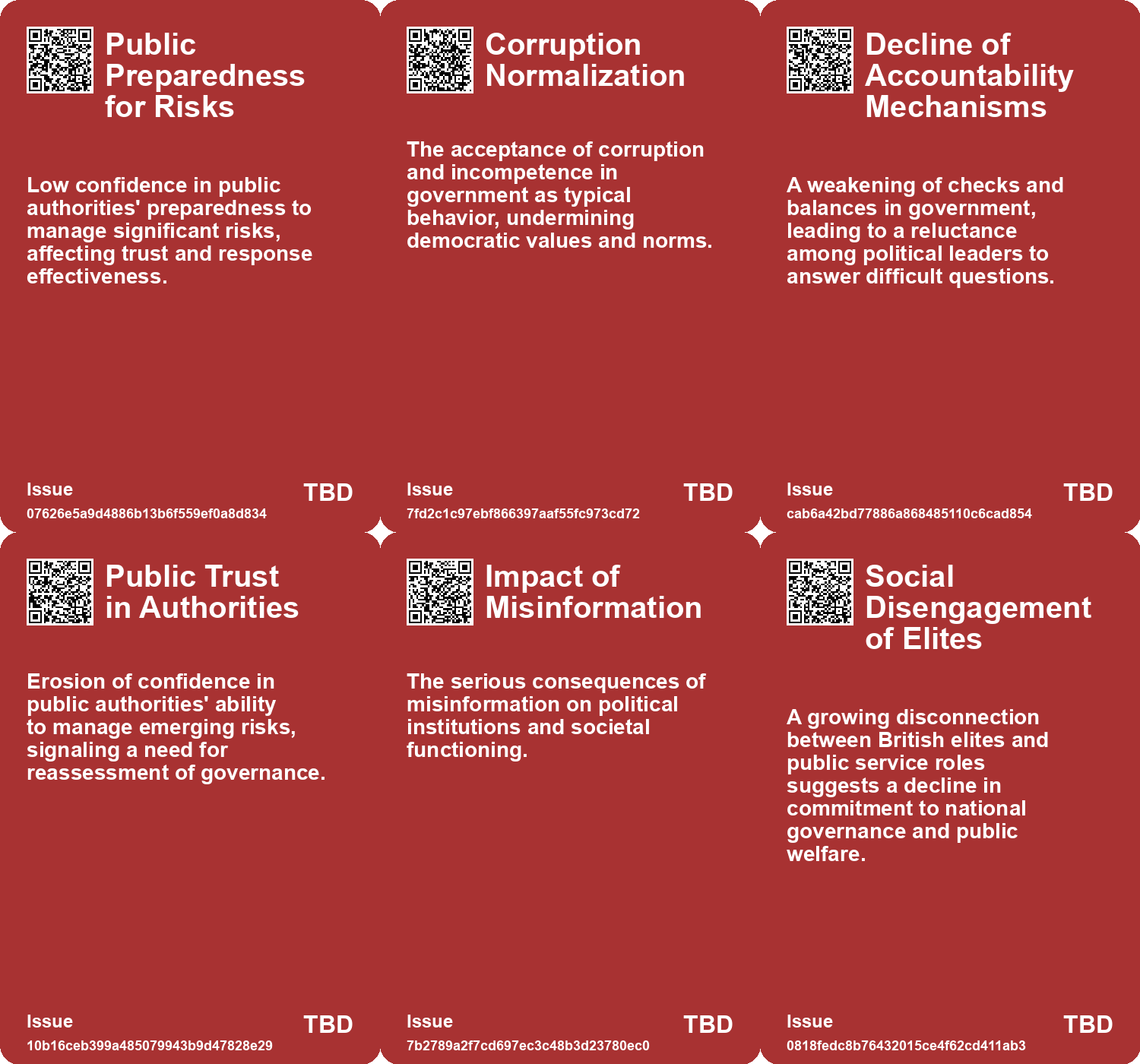
Issue
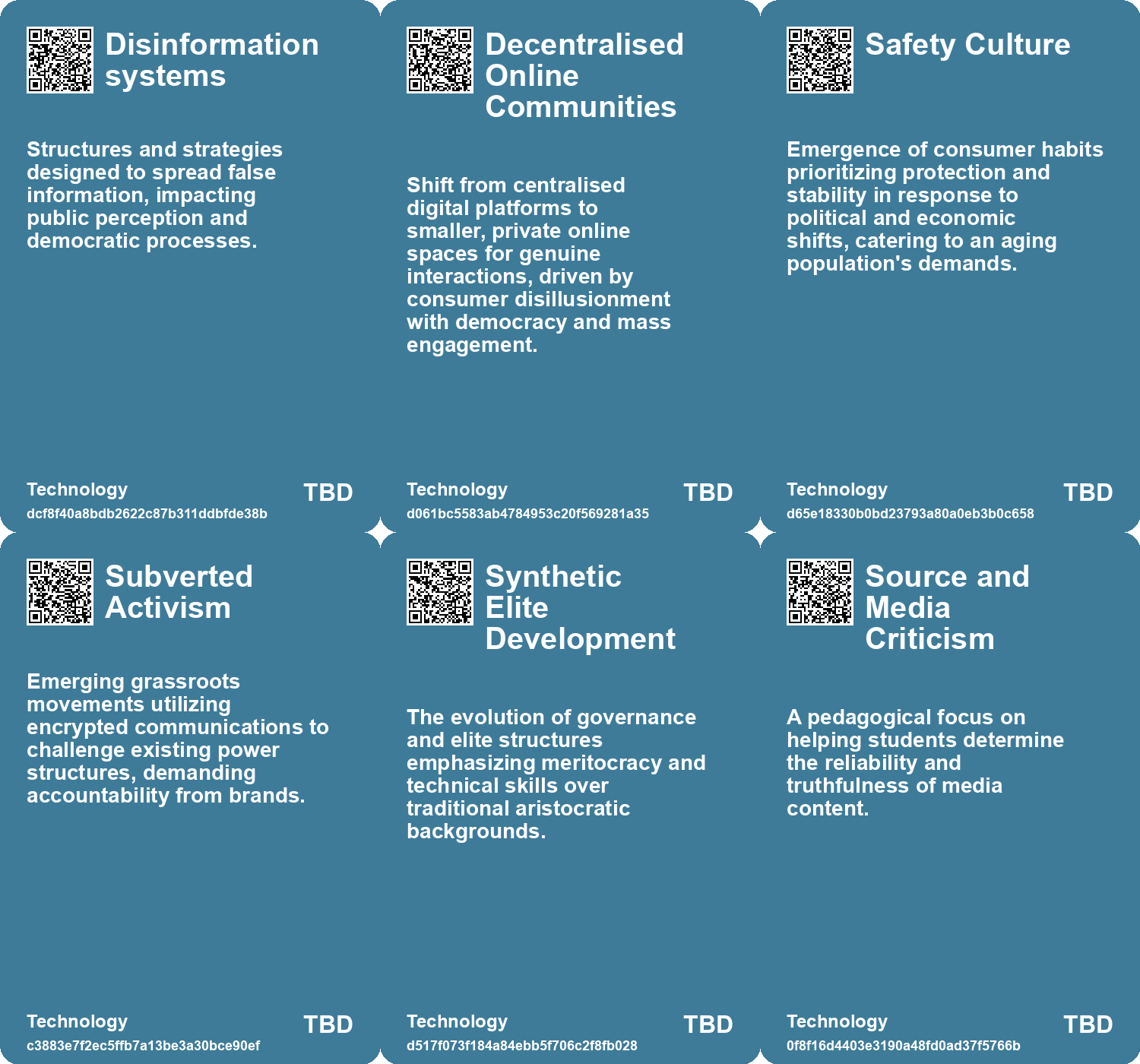
Technology
Links
- The Interplay of Democracy, Work, and Economic Justice in Modern Society
- Emerging Global Risks: Climate Change, Geopolitical Tensions, and Technological Threats in 2025
- Exploring the Modern Entertainment Landscape and Its Societal Implications
- The Disruption of Education by AI: An Intellectual Crisis
- Exploring the Rise of ‘Deep Doubt’ Amidst AI-Generated Media Content
- Finland’s Innovative Approach to Combating Fake News Through Education
- Exploring the Consequences of Abandonment in Rural Bulgaria and Nature’s Response
- Google’s Transition to Remote Work and the Evolution of Information Security
- From Household Gods to Machine Gods: The Evolution of Human Dependence on Idols and AI
- Critique of Climate Litigation: Overreach and Misguided Legal Strategies in the Fight for Climate Justice
- The Decline of Human Thinking in the Age of AI: A Call for Educational Reform
- Understanding Economic Termites: Hidden Monopolies Driving Up Costs and Eroding Trust
- Future Risks Report 2025: Increasing Global Crises and Emerging Risks Analysis
- Future Risks Report 2024: Key Findings on Emerging Global Challenges
- Addressing Threats to Democracy: Strategies for Resilience Against Misinformation and Manipulation
- Understanding Corporate Ethical Collapse: Key Signs and Preventive Measures
- Growing Cybersecurity Threats to Water Infrastructure Demand Immediate Action and Collaboration
- The Decline of Political Maturity in America: A Call for Responsible Citizenship
- Reimagining Infrastructure: Towards a Redistributive and Ecologically Sound Future
- The UK’s Declining Geopolitical Relevance and Elite Inaction: A Historical Perspective
- The Underreported Crisis of Illegal Sand Mining and Its Environmental Consequences
- Economic Turmoil in Britain Signals Broader Crisis for Europe Due to Energy War
- The Unraveling of Progressive Politics: Economic Shifts and Growing Conflicts
- Evolving Perspectives on Risk Management in the Context of Modern Disasters
- Future Trends Post-2024: Declining Democracies and Emerging Cultural Shifts
- Understanding Polarization: Healing Our Relationship with Technology and Embracing Diverse Perspectives
- Exploring Trust in Denmark: A Nation Built on Goodwill and Equality