Futures
Topic: Resilience in Food & Drink
Summary
The evolving landscape of consumer behavior is evident in the rising trend of alcohol-free drinks, particularly among younger generations. This shift, often referred to as the “sober movement,” reflects a growing awareness of health, self-image, and mental well-being. As individuals seek alternatives to traditional alcoholic beverages, the beverage market is adapting to meet these changing preferences. Companies are responding by developing non-alcoholic options that aim to provide similar experiences without the drawbacks of alcohol consumption.
Climate change remains a pressing concern, particularly regarding its impact on global food systems and freshwater resources. Studies highlight the underestimated risks of simultaneous harvest failures in major food-producing regions, which could lead to food insecurity and civil unrest. The looming freshwater crisis, exacerbated by increasing demand and unsustainable consumption patterns, poses a significant threat to global stability. Urgent action is needed to address these challenges, including investments in water-saving technologies and sustainable agricultural practices.
The importance of resilience in various sectors is underscored by discussions on infrastructure and disaster management. Airports, for instance, are increasingly vulnerable to extreme weather events, necessitating a proactive approach to resilience through innovative design and technology. Similarly, the concept of resilience extends to personal and organizational strategies, emphasizing the need for flexibility in the face of uncertainty.
In the food industry, the significance of planning is gaining recognition as stakeholders confront challenges related to production, labor, and dietary inequalities. Effective planning can facilitate necessary changes without imposing excessive restrictions. The UK’s food system, in particular, requires a comprehensive strategy to ensure sustainability and equity.
Technological advancements are playing a crucial role in addressing water management challenges. The integration of AI, data analytics, and smart irrigation technologies is essential for creating efficient and sustainable water systems. As the global population faces increasing water stress, the fusion of technology and sustainable practices will be vital for future resource management.
The rise of non-drinking culture is also reflected in the emergence of non-alcoholic products and spaces that prioritize social connection without alcohol. Brands are exploring innovative ways to cater to this demographic, although challenges remain regarding pricing and consumer expectations. As discretionary spending tightens, the market for non-alcoholic beverages may face scrutiny over its pricing strategies.
Finally, the narrative of food as activism is highlighted through historical examples, such as the Cooperative des Croque-Fruits during World War II. This story illustrates the power of community and resilience in the face of adversity, emphasizing the role of food in fostering social connections and resistance. The ongoing dialogue around food, health, and community underscores the interconnectedness of these themes in contemporary society.
Seeds
| name | description | change | 10-year | driving-force | |
|---|---|---|---|---|---|
| 0 | Resilience in Food & Drink Industry | The food industry is focusing on resilience to weather future challenges. | From reactive strategies to proactive, resilient approaches in operations. | Food brands may prioritize sustainable sourcing and innovative solutions to enhance resilience. | Consumer demand for sustainability and resilience pushes the industry forward. |
| 1 | Collaboration between Industry and Researchers | Need for cooperation between food industry and researchers to innovate sustainable packaging solutions. | From isolated research to collaborative development of practical and scalable packaging technologies. | In ten years, collaborative networks may drive rapid innovation in sustainable food packaging. | The urgency of addressing environmental issues and waste management challenges. |
| 2 | Rise of Non-Alcoholic Culture | An increasing number of people are embracing non-drinking lifestyles and products. | Shifting from traditional alcohol consumption to non-alcoholic alternatives. | A significant portion of social gatherings will feature non-alcoholic drinks as the standard. | Changing social norms and health-conscious lifestyles among consumers. |
| 3 | Systemic flaws in global food systems | Awareness of underlying issues in food systems causing volatility and price hikes. | Shifts towards addressing systemic flaws rather than temporary fixes for food insecurity. | Potential for reforming global food systems to promote sustainability and equity. | Call for more regulation and transparency in food markets to stabilize prices and access. |
| 4 | Health and Gut Health Trends | Increased focus on foods promoting gut health among younger generations. | Growing preference for foods that contribute positively to health. | Gut health may dominate food trends, influencing product development. | Rising awareness of health and wellness issues among consumers. |
| 5 | Refrigeration’s Impact on Food Culture | Refrigeration has transformed dining experiences, influencing food production and consumption habits. | Shift from fresh, local food consumption to reliance on refrigerated and preserved foods. | In 10 years, food culture may see a blend of fresh and preserved with advanced refrigeration tech. | Increasing demand for convenience and global food supply chains drives refrigeration reliance. |
| 6 | Community resilience through food production | Food co-ops can foster community spirit and resilience during crises. | From individual survival to collective support through shared resources and efforts. | Food co-ops may become more prevalent in urban areas facing social or economic challenges. | Growing awareness of food security and community engagement in urban settings. |
| 7 | Culinary activism | Using food production as a means of political resistance and activism. | From passive consumption to active engagement in social issues through food. | Food will increasingly be used as a tool for activism, raising awareness of social causes. | The intersection of food culture and social justice movements gaining visibility. |
| 8 | Cultural heritage through food | Reviving traditional recipes and ingredients to maintain cultural identity. | From loss of cultural identity to preservation and celebration through culinary practices. | Traditional food practices may see a resurgence as communities seek to preserve their heritage. | Globalization’s impact prompting a counter-movement towards local and traditional foods. |
| 9 | Innovation in survival food production | Creativity in food production to address shortages and needs during crises. | From scarcity-driven rationing to innovative food solutions that meet community needs. | Food production methods may evolve to prioritize sustainability and resilience in crises. | Increased focus on food security and sustainable practices in food systems. |
Concerns
| name | description | |
|---|---|---|
| 0 | Food & Drink Industry Resilience | The need for the food and drink industry to adapt to resilience-focused innovations to meet emerging consumer expectations by 2026. |
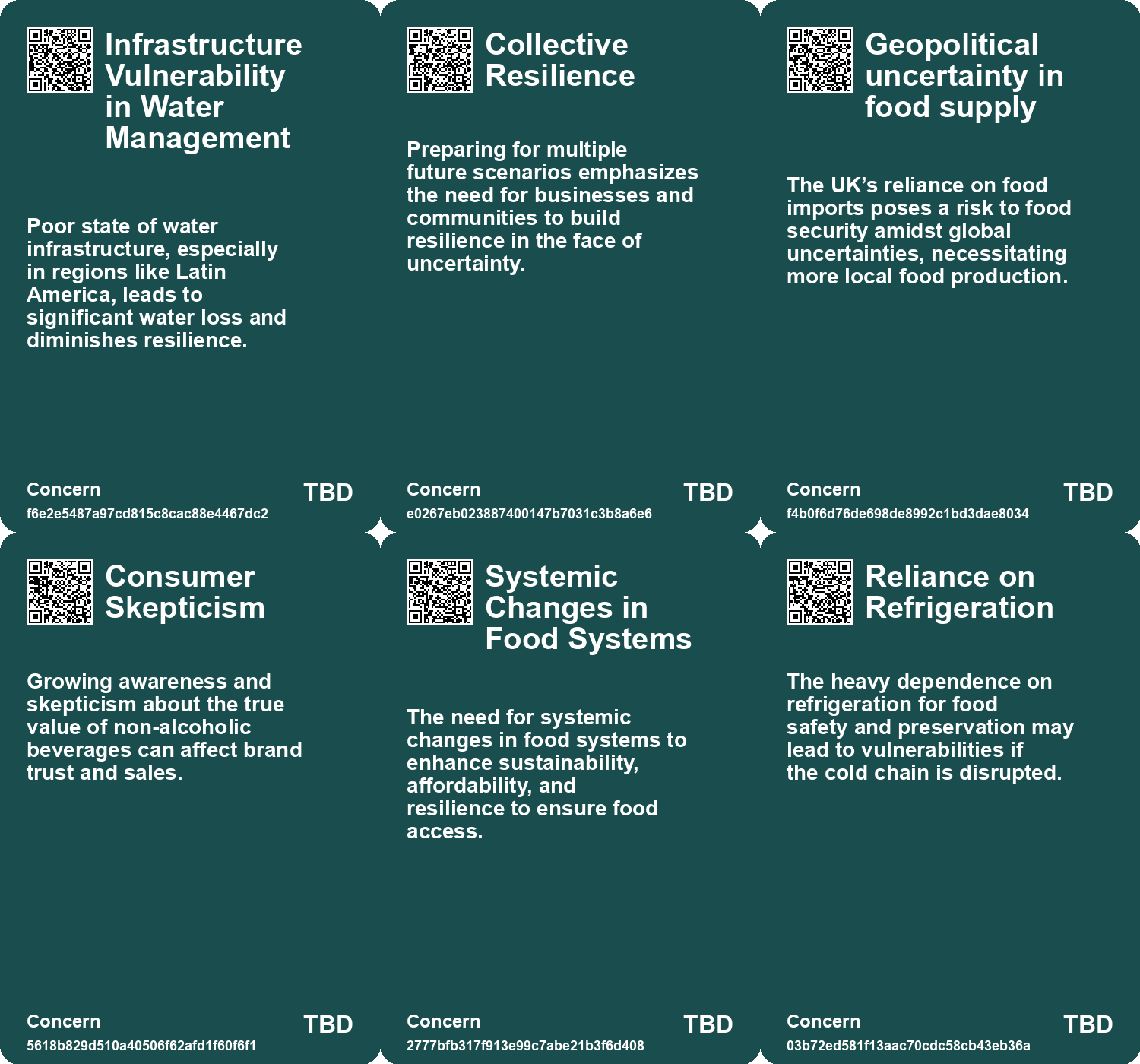
| 1 | Infrastructure Vulnerability in Water Management | Poor state of water infrastructure, especially in regions like Latin America, leads to significant water loss and diminishes resilience. |
| 2 | Collective Resilience | Preparing for multiple future scenarios emphasizes the need for businesses and communities to build resilience in the face of uncertainty. |
| 3 | Geopolitical uncertainty in food supply | The UK’s reliance on food imports poses a risk to food security amidst global uncertainties, necessitating more local food production. |
| 4 | Consumer Skepticism | Growing awareness and skepticism about the true value of non-alcoholic beverages can affect brand trust and sales. |
| 5 | Systemic Changes in Food Systems | The need for systemic changes in food systems to enhance sustainability, affordability, and resilience to ensure food access. |
| 6 | Reliance on Refrigeration | The heavy dependence on refrigeration for food safety and preservation may lead to vulnerabilities if the cold chain is disrupted. |
| 7 | Rise of Health-Conscious Consumerism | Increasing demand for healthier food options might lead to significant changes in food production and agriculture. |
| 8 | Quality of Alcohol-Free Alternatives | As the popularity of alcohol-free drinks rises, concerns about whether they can match the taste and experience of traditional alcoholic beverages are emerging. |
| 9 | Market Impact of Alcohol-Free Trend | The growing alcohol-free drink market may disrupt traditional alcohol industries, affecting jobs and economic stability in regions reliant on alcohol production. |
Cards
Concerns
Behaviors
Issue
Technology
Links
- Pernod Ricard’s 2050 Future Scenarios: Navigating Climate Change’s Impact on Society
- Resilience 2.0: A Strategic Foresight Report for the EU’s Future Security and Growth
- Urgent Need for Global Food Systems that Prioritize Human Rights and Security
- Biodegradable Films from Cranberry Pomace: A Sustainable Alternative to Plastic Packaging
- The Urgent Need for Effective Food Planning in the UK: Addressing Key Issues for Public Health and Equity
- Reimagining Learning: Embracing Slow Learning in an Accelerated World
- Addressing Water Shortages in England: Future Supply Solutions and Challenges
- 2025 Water Management: The Crucial Role of Digital Transformation in Addressing Global Water Challenges
- Oma’s Soep Launches Campaign to Combat Loneliness Through Grocery Store Interactions
- Exploring the Pricing Dilemma of Non-Alcoholic Spirits and Mocktails
- The Shift in Drinking Culture: Reflections on Alcohol, Literature, and Nostalgia
- Freshwater Crisis: World Risks Depletion by 2040 Amid Soaring Consumption Rates
- 2026 Global Predictions: Consumer Behavior and Industry Trends Shaping the Future
- The Conflict Between Optimization and Resilience in Organizational Systems
- Enhancing Airport Resilience to Climate Change: Strategies and Solutions for the Future
- Evolving Perspectives on Risk Management in the Context of Modern Disasters
- The Cooperative des Croque-Fruits: A Symbol of Resistance and Community During WWII in Marseille
- Study Highlights Underestimated Risks of Simultaneous Harvest Failures Due to Climate Change
- The Rising Trend of Alcohol-Free Drinks: A Business Perspective on Consumer Choices
- Food Manufacturers Innovate to Counter Declining Sales from Weight-Loss Drug Users
- The Rise of Pickles: A Reflection of Gen Z’s Food Trends and Social Dynamics
- Exploring the Impact of Refrigeration on American Food Culture and Safety
- Understanding the Rise of Sobriety Among Young Adults: Trends and Reasons Behind Alcohol Avoidance