Futures
Topic: Crisis of Authenticity in Social
Summary
Loneliness and Social Connection
A growing public health crisis of loneliness is affecting many Americans, with 58% reporting feelings of isolation. This issue is particularly pronounced among younger generations, leading to significant mental and emotional health consequences. The U.S. Surgeon General’s report emphasizes the importance of fostering social connections, urging individuals and businesses to prioritize authentic relationships. In response, technology companies may develop apps focused on social health metrics, while traditional hobbies and community-centric strategies could see a resurgence.
Anonymity and Online Culture
Younger generations, particularly Gen Z, are increasingly embracing anonymity online. This trend arises from security concerns and a desire to escape the pressures of maintaining a personal brand. Platforms like Discord and Tumblr cater to users seeking pseudonymous interactions, reflecting a shift towards valuing privacy and authenticity over personal exposure. This cultural shift also coincides with a decline in influencer culture and a nostalgia for earlier internet experiences.
The Futility of Online Engagement
The critique of online engagement highlights its ineffectiveness in addressing power dynamics, particularly during politically charged times. Social media interactions often distract from meaningful political action, fostering apathy and division. The call for building real-life, trusted networks emphasizes the importance of grassroots movements in addressing local issues. This perspective advocates for a reassessment of how we engage with information, prioritizing collective action over reactive posting.
The Pressure of Personal Branding
Creative individuals face increasing pressure to develop personal brands and engage in self-promotion to succeed in competitive markets. This phenomenon stems from corporate consolidation in industries like publishing and music, which has diminished artists’ earnings. The rise of social media complicates matters, as artists must master marketing techniques to gain visibility. This shift has led to a cultural landscape where commercial viability often overshadows artistic integrity.
The Impact of Technology on Society
The influence of technology on society is profound, with discussions around the negative effects of digital advancements. The author suggests that a cultural shift towards prioritizing attention over availability can help counteract these effects. Embracing multiple perspectives, as seen in the Talmudic approach, may provide a remedy for polarization and disconnection. The need for self-actualization and finding purpose in life is emphasized, critiquing the commodification of social issues and the manipulation of desires by media and advertising.
Authenticity in the Age of AI
The rise of AI-generated content has led to skepticism regarding the authenticity of digital media. This “deep doubt” phenomenon questions the validity of new media and fuels misinformation. The concept of “liar’s dividend” illustrates how deceptive technologies can undermine genuine evidence. As society grapples with these challenges, the importance of authenticity and the value of real human interactions become increasingly critical.
The Future of Democracy
Democracy faces significant threats from groups adept at spreading misinformation and exploiting cognitive biases. The development of immunity activators, such as public media platforms and media literacy strategies, is essential for promoting transparency and social cohesion. Addressing these challenges requires a collective effort to combat digital deception and foster pro-social online behaviors.
The Decline of Institutions
The UK is experiencing a decline in productivity, investment, and growth, attributed to a synthetic elite and a lack of technical expertise in its administrative class. This decline reflects intergenerational failure and a breakdown of trust and common goals. The inability to find solutions to these challenges has led to a structural lock-in of decline, raising questions about the future of British institutions and their capacity to adapt.
Seeds
| name | description | change | 10-year | driving-force | |
|---|---|---|---|---|---|
| 0 | Rise of Verified Information Ecosystems | Communities prioritizing verified identities for authentic interactions are emerging. | Shift from public social media to trusted networks centered on identity verification. | Verified ecosystems may lead to more trusted, actionable market intelligence. | Organizations strive for authenticity and competitive advantage in the face of digital manipulation. |
| 1 | Crisis of Information Integrity | Social media platforms viewed as compromised sources, leading to trust erosion. | Decline in reliance on traditional social media for genuine sentiment analysis. | Shift towards private, authenticated channels for genuine market insights. | Consumer skepticism towards manipulated content elevates demand for trustworthy information sources. |
| 2 | Blending of Reality and Fiction | Modern culture has blurred the lines between what is real and what is fictional, impacting perceptions. | Moving from clear distinctions between reality and fiction to a seamless integration of both. | In a decade, experiences may favor hyperreal interactions over genuine reality, impacting social dynamics. | Technological advancements enable immersive experiences that synthesize reality and fiction, redefining engagement. |
| 3 | Memetic epidemics | Social media is plagued by bots and harassment, leading to widespread distrust. | Deterioration of public trust in online interactions and platforms. | In ten years, society may incorporate stricter regulations and design principles to combat online toxicity. | The need for healthier online environments amidst growing challenges of misinformation and aggression. |
| 4 | Emergence of the Cozyweb | People are forming smaller online networks that emphasize trust and intimacy. | Shift from public, chaotic online platforms to private, reliable social environments. | In a decade, we may see a rise of technology that fosters these smaller, vetted communities. | Desire for genuine social connections in a landscape filled with noise and hostility. |
| 5 | The Role of Authentic Connections | Focus on maintaining genuine social interactions beyond commercial influences. | Shift from superficial interactions driven by AI to meaningful, authentic connections. | Cultural value placed on authentic relationships will redefine social engagement norms. | A societal backlash against commodification and a desire for deeper connections. |
| 6 | Rise of Anonymity Culture | Younger generations are increasingly valuing anonymity over personal branding online. | Shift from valuing personal branding and visibility to preferring anonymity and privacy. | A future where online identities are predominantly anonymous, fostering different social interactions and communities. | Young people’s frustration with surveillance and the pressures of attention-seeking behavior. |
| 7 | Critique of Surveillance Culture | A growing skepticism about constant surveillance via smartphones and social media. | Transition from acceptance of surveillance to active resistance against it. | In ten years, there could be new laws and technologies aimed at protecting personal privacy from digital surveillance. | Public demand for privacy and autonomy in response to the pervasive nature of digital tracking. |
| 8 | Deep Doubt Era | Increasing public skepticism towards the authenticity of media due to AI-generated content. | Shift from trust in media to widespread skepticism about the authenticity of visuals. | In 10 years, media consumption may prioritize transparency and verification tools over traditional sources. | The proliferation of advanced AI tools that enable easy creation of convincing fake media. |
| 9 | Growth of Alternative Platforms | New social media apps are emerging to cater to users’ desire for authenticity and privacy. | Emergence of platforms like BeReal that focus on more genuine sharing. | Diverse social media platforms may thrive based on authenticity and community. | The search for alternatives to mainstream social media giants like Instagram. |
Concerns
| name | description | |
|---|---|---|
| 0 | Identity Crisis | Extended exposure to hyperreality might lead to a loss of individual identity and originality, as users increasingly consume artificial representations of life. |
| 1 | Cognitive Overload in Networking | As social networks scale beyond Dunbar’s Number, individuals face cognitive limits in maintaining relationships, leading to potential trust breakdowns. |
| 2 | Loss of High-Trust Communities | As social media grows, individuals may retreat to smaller, high-trust communities, potentially fragmenting society further. |
| 3 | Loss of Personal Identity | As anonymity rises, individuals may struggle to form coherent personal identities online, leading to a fragmented sense of self. |
| 4 | Social Media Dependency | A growing reliance on social media for validation may overshadow and devalue real-life interactions, affecting mental health. |
| 5 | Loss of Authenticity | As our online personas are increasingly crafted by algorithms, there is a risk of losing the authenticity of individual identity. |
| 6 | Authenticity Crisis | As generative AI blurs lines between genuine and artificial experiences, the value of perceived authenticity may diminish, leading to confusion about ‘real’ experiences. |
| 7 | Isolation through Technology | While seeking authenticity, users may become more isolated, relying on AI for interactions instead of engaging in communal or shared experiences. |
| 8 | Conflict of Values | The conflict between true beliefs and consumerism may result in a fragmented sense of identity and genuine values. |
| 9 | Loss of Authentic Interactions | The prevalence of technology has diminished authentic, spontaneous social interactions and reliance on personal connections. |
Cards
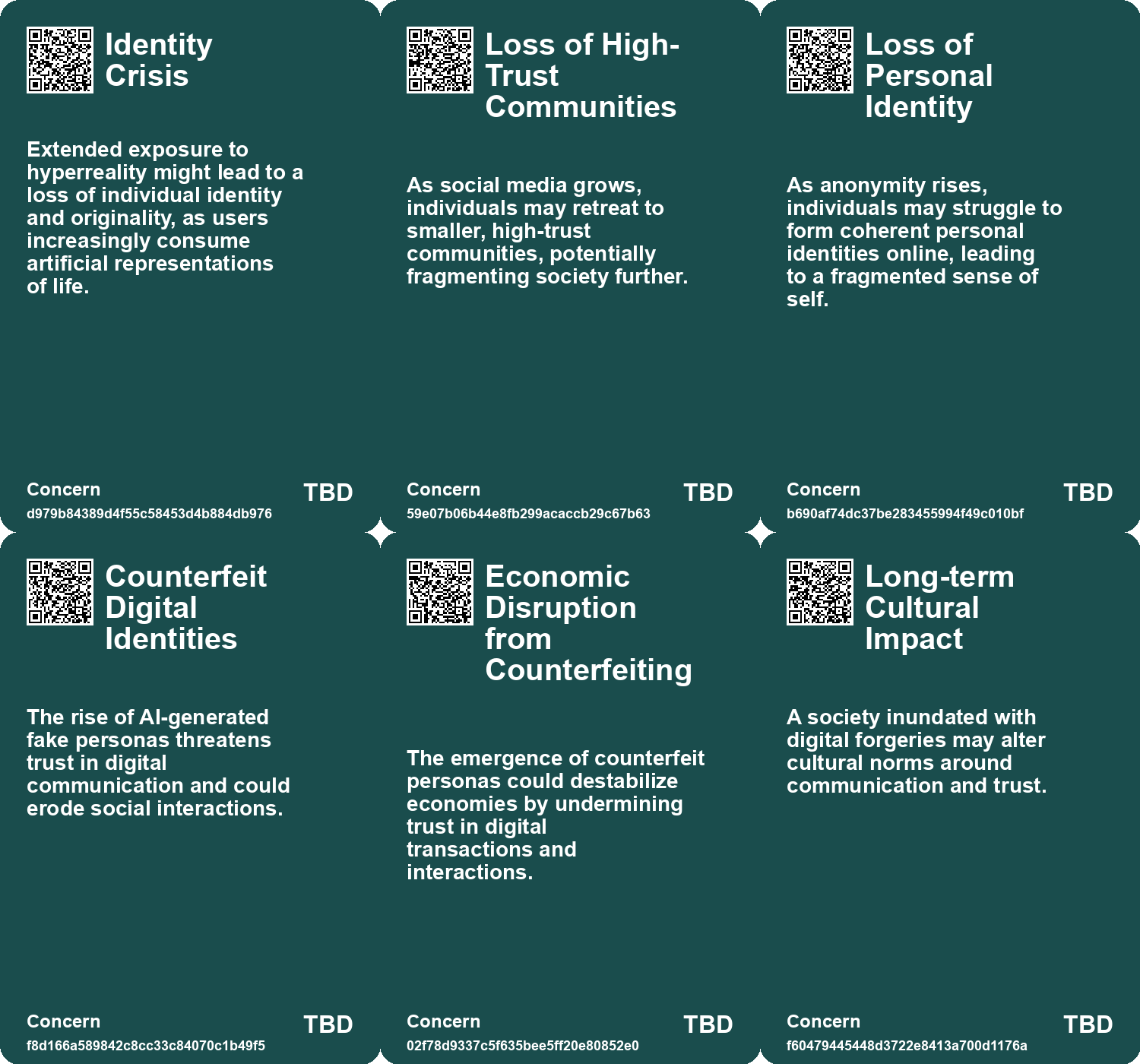
Concerns
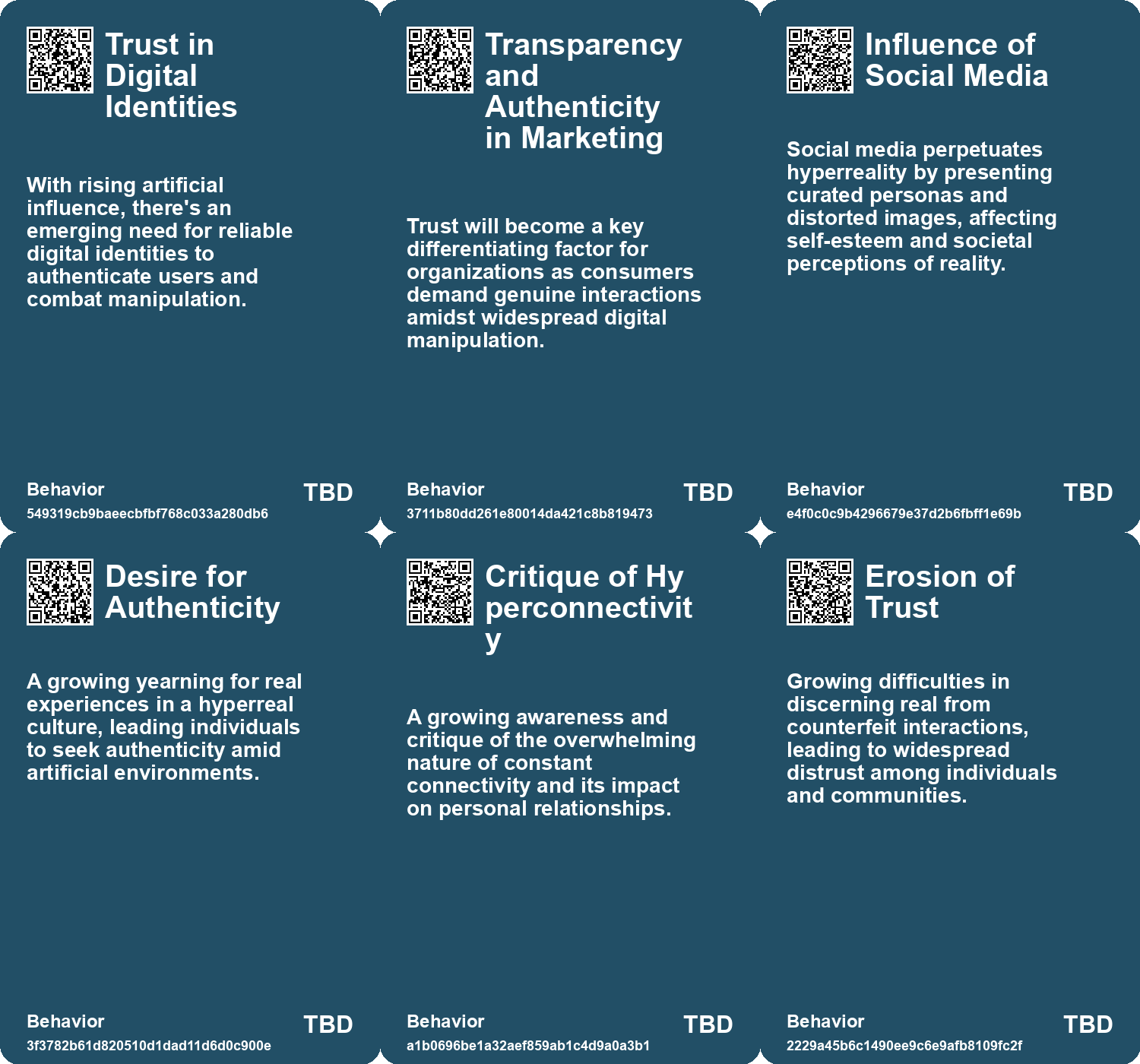
Behaviors
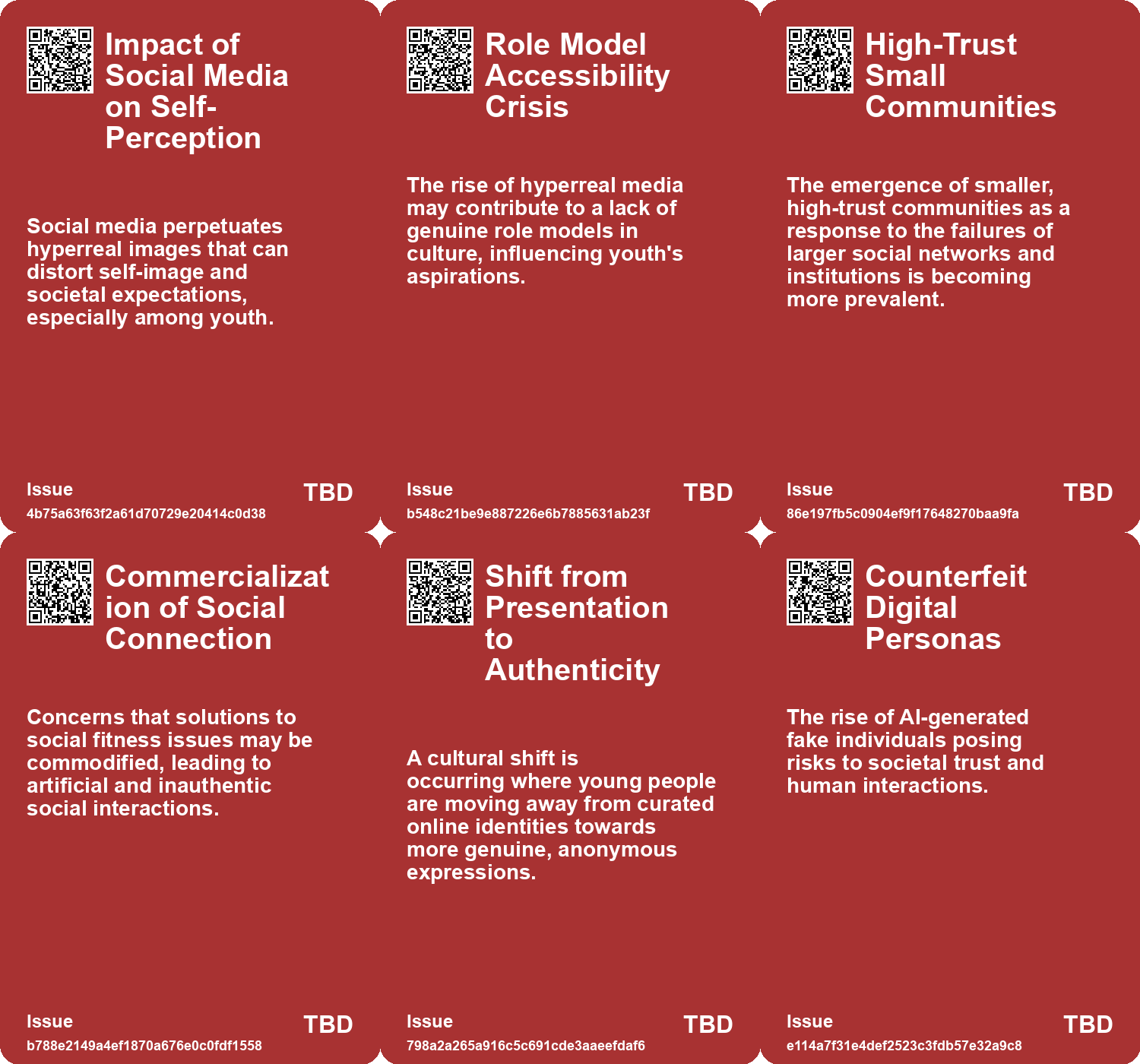
Issue
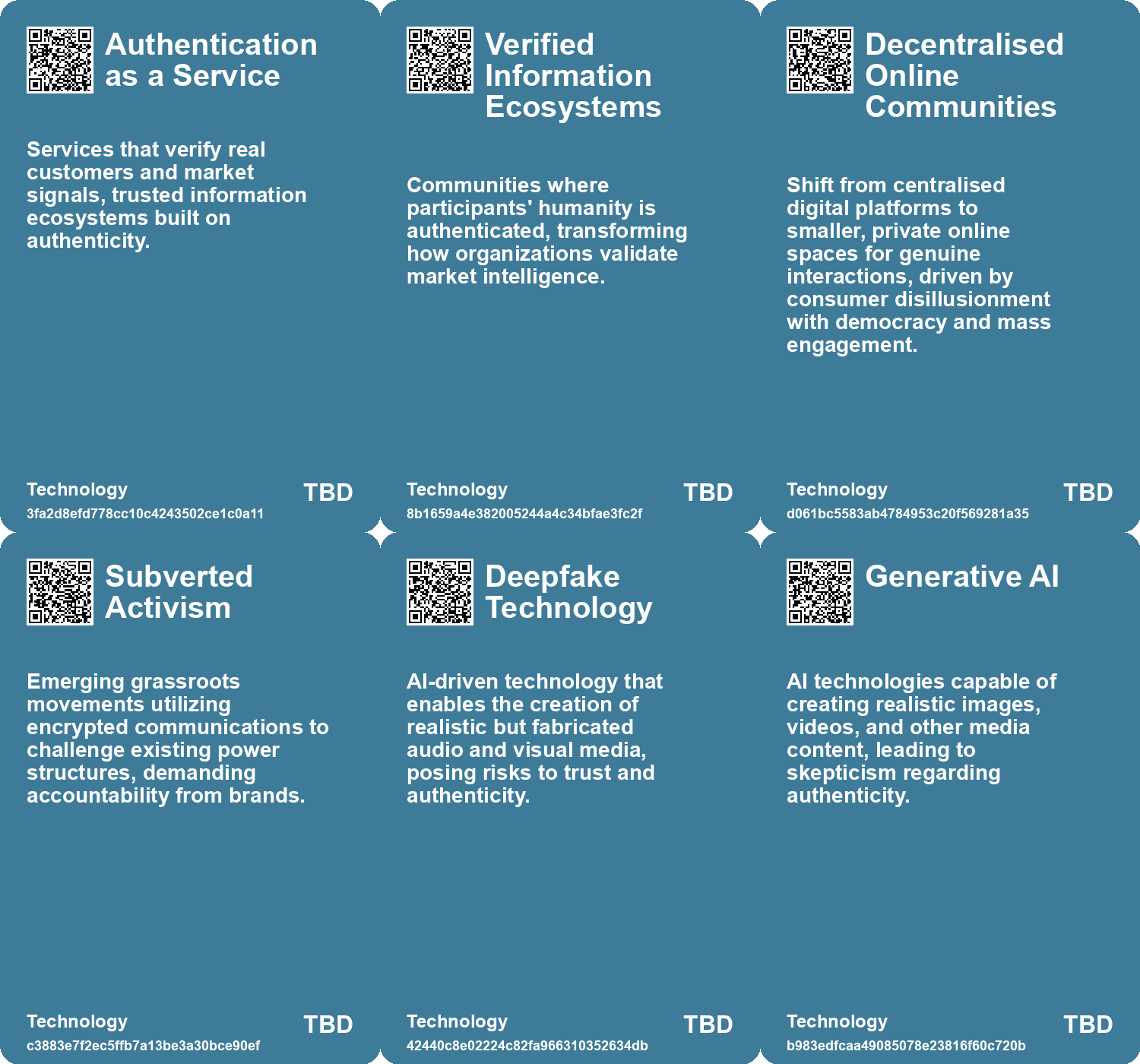
Technology
Links
- The Rise of Anonymity: Gen Z’s Shift from Personal Branding to Privacy Online
- The Burden of Self-Promotion: Navigating Art in the Age of Personal Branding
- Understanding ‘Failure to Launch’: The Cultural and Economic Struggles of Young American Men
- Exploring the Modern Entertainment Landscape and Its Societal Implications
- Nostalgia for Pre-Smartphone Era: A Reflection on Simpler Times
- Exploring the Rise of ‘Deep Doubt’ Amidst AI-Generated Media Content
- Addressing the Social Fitness Crisis: The Need for Connection in Modern Society
- Exploring Goal Flexibility and AI’s Impact on Creativity and Connection
- The Facade of Corporate Jobs: Navigating the Illusion of Meaning in the Workplace
- Future Risks Report 2024: Key Findings on Emerging Global Challenges
- The Rise of Industrialized Sentiment Manipulation and the Need for Digital Identity Verification
- Addressing Threats to Democracy: Strategies for Resilience Against Misinformation and Manipulation
- The Shift from Public Instagram to Private Community Sharing: A New Era in Social Media
- Understanding Corporate Ethical Collapse: Key Signs and Preventive Measures
- Nostalgia for Simplicity: The Burden of Infinite Choice in Modern Life
- The Psychological Impact of Algorithmic Profiling and Surveillance on Self-Identity in the Digital Age
- The UK’s Declining Geopolitical Relevance and Elite Inaction: A Historical Perspective
- The Impact of Continuous Partial Attention on Networking and Relationships in a Digital World
- The Illusion of Online Activism in the Age of Trump: Embracing Real-World Action Instead
- Exploring Networked Counterculture: Artists Subverting Social Media Algorithms for Authenticity
- Polaroid’s Shift: From Creativity to Authenticity in the Age of AI
- Understanding Hyperreality: The Blurring Lines Between Reality and Fiction in Culture
- Future Trends Post-2024: Declining Democracies and Emerging Cultural Shifts
- Understanding Dunbar’s Number: The Limits of Human Social Relationships and Modern Technology’s Impact
- Understanding Polarization: Healing Our Relationship with Technology and Embracing Diverse Perspectives
- Exploring the Dangers of Outsourcing Happiness and Personal Fulfillment in Modern Society